Archive

December 2025

Browsing

Russian President Vladimir Putin said Friday that Moscow would refrain from launching new attacks on other nations provided his country is treated ‘with respect.’

The Kremlin made the remarks during his annual televised press conference in Moscow as concerns persist among European nations that Russia poses a security threat, Agence France-Presse (AFP) reported.

‘Will there be new special military operations? There will be no operations if you treat us with respect, if you observe our interests, just as we have constantly tried to observe yours,’ Putin said.

Putin uses the phrase ‘special military operation’ to describe Russia’s offensive in Ukraine, according to AFP.

He added there would be no further Russian invasions ‘if you don’t cheat us like you cheated us with NATO’s eastward expansion,’ according to the BBC.

The Russian leader also claimed he was ‘ready and willing’ to end the war in Ukraine ‘peacefully,’ though he offered few details suggesting a willingness to compromise, the BBC reported.

The yearly news conference, which typically runs at least four hours, features questions from reporters and members of the public across Russia. 

More than 2.5 million questions were submitted for this year’s event, which focused heavily on the war in Ukraine, Reuters reported.

Putin also noted during the event that the nation’s ‘troops are advancing’ and expressed confidence that Russia will accomplish its objectives through military means if Ukraine does not assent to Russia’s terms during peace talks, according to The Associated Press.

‘Our troops are advancing all across the line of contact, faster in some areas or slower in some others, but the enemy is retreating in all sectors,’ Putin declared.

As the war drags on, the European Union has just agreed to provide Ukraine with a loan of over $105 billion.

Fox News Digital’s Alex Nitzberg contributed to this report.

This post appeared first on FOX NEWS

It’s not just Minnesota.

The past few weeks have made clear that fraudsters stole billions of dollars from states’ welfare programs, much of it from Medicaid. It also appears that Democratic politicians tolerated the heist for their own political benefit. 

Yet politicians in virtually every state have let waste, fraud and abuse spread like wildfire in Medicaid, putting taxpayers on the hook for an estimated $2 trillion in improper spending over the next decade alone. 

Thankfully, President Donald Trump and congressional Republicans have given states a reason to clean up this mess and spare taxpayers that pain.

In a new paper, I show how Democrats have turned Medicaid into one of the most fraud-ridden programs in America — and how Republicans are fixing it. While Medicaid has long been plagued with improper spending, Democrats supercharged this crisis in the Obama years.

ObamaCare added tens of millions of able-bodied adults to the program, yet that population is much more likely to be ineligible.

The Obama administration refused to rigorously check eligibility, and the Biden administration adopted the same policy, deliberately hiding an explosion in waste, fraud and abuse. Meanwhile, states refused to police their Medicaid programs, confident that the federal government would look the other way and cover the tab.

The first Trump administration found that 27.4% of federal Medicaid spending was improper in 2020, or about $120 billion at the time. The administration also found that four out of every five improper payments were the result of eligibility errors. This money flowed to people who shouldn’t have been on Medicaid and therefore diverted money and care away from its intended recipients. Five years later, it’s highly likely that at least one in five Medicaid dollars is still wrongly spent.

Call this what it is — an assault on taxpayers. It’s also a clear violation of federal law. States are legally required to reimburse the federal government for Washington’s share of Medicaid payments if their improper payment rates are above 3%, a far cry from the 27.4% rate in 2020.

The Trump administration is once again conducting eligibility checks, but even without that info, it’s all but certain that every state already exceeds the 3% threshold. The only reason they’ve avoided a budget blowout is by receiving so-called ‘good faith waivers’ from Washington. Essentially, states have promised that they’ll tackle fraud and abuse, even when they have no intention of doing so.

Republicans called time on this rigged game in the law President Trump signed July 4. They effectively eliminated good-faith waivers and told states that, starting in 2030, they will be forced to cover the federal share of any improper payments above 3%. While five years may seem like an eternity, it’s an acknowledgment that states have a mountain to climb to bring their error rates into the low single digits. 

Consider Ohio. In 2019, it had an improper payment rate of nearly 45%, giving the Buckeye State the worst record in the nation for waste, fraud and abuse. Based on its most recent spending levels, Ohio would be on the hook for $9.7 billion, equal to roughly 15% of its current state budget. Illinois, with a 35.4% rate, would pay $6.4 billion, a tough ask given the state’s famous fiscal woes. Even states with lower improper payment rates, like Pennsylvania, Michigan and Missouri, would still be looking at annual costs of more than $1 or $2 billion.

Without reform, I estimate that states will pay a combined $100 billion in penalties beginning in 2030. Their only hope to avoid this fiscal pain is to immediately start rooting out waste, fraud and abuse. In the state legislative sessions that start in January, lawmakers should focus on several key reforms.

First, stop allowing Medicaid recipients to self-attest their income, address and other personal information. Using the honor system invites abuse.

Second, review recipients’ eligibility at least twice a year for able-bodied adults and once a year for everyone else, thereby removing ineligible individuals early and often.

Third, cross-check Medicaid data with easily accessible information such as wage, hiring and tax records; returned mail and changes of address; out-of-state food stamp transactions; and prison and death records. These basic good government measures can quickly identify people wrongly receiving taxpayer money.

Waiting to tackle Medicaid fraud is the most foolish thing states can do. So is hoping that Democrats get their wish and successfully repeal Republicans’ Medicaid reforms. That won’t happen while Trump is president. And if states wait to see the outcome of the 2028 election, they may be disappointed. At that point, they’d face an even steeper hill with barely a year to get their act together.

There’s no avoiding the reality that Democrats broke Medicaid — in Minnesota and everywhere else — or that Republicans have given states an urgent mandate to finally root out the waste, fraud and abuse.

 Michael Greibrok is a Senior Research Fellow at the Foundation for Government Accountability.

This post appeared first on FOX NEWS

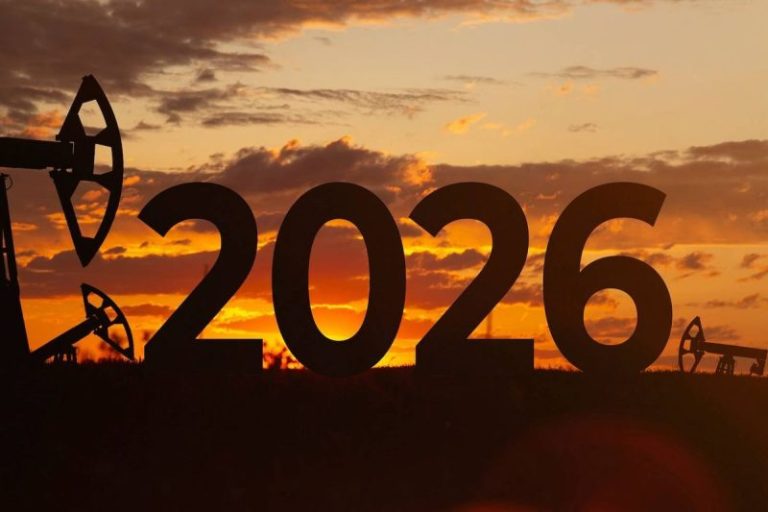
The oil and gas market was punctuated with volatility in 2025.

Oil prices softened as supply outpaced demand and inventories built. Brent and West Texas Intermediate (WTI) crude slipped in late 2025, with Brent dipping below US$60 per barrel and WTI hovering at US$55.

Production increases from non-OPEC producers — including record US output — and higher OPEC+ quotas have contributed to a notable supply overhang, pressuring crude toward four year lows.

Starting the year above US$70, both Brent and WTI prices have now seen steep declines of more than 20 percent amid signs of weaker demand in major economies like China and elevated global stocks.

Meanwhile, the natural gas market saw price shifts driven by weather and storage dynamics.

Prices started the year at US$3.64 per million British thermal units and slipped to a seasonal low of US$2.74 in August. Values peaked at US$5.31 on December 5, and have since retreated to the US$3.94 level.

The US Energy Information Administration (EIA) raised its outlook for late 2025 and early 2026 gas prices after an early cold snap bolstered heating demand, even as forecasts have moderated Henry Hub projections for 2025 to 2026.

Oil market battles persistent headwinds

2025 saw oil prices fluctuate between highs of US$81.86 (Brent) and US$78.99 (WTI) and lows of US$59.41 and US$55.56, respectively, as the energy market served as a barometer of global political and trade tensions.

“Throughout the year, prices have continued the downtrend they began in April (2024) as OPEC+ continued to hike output and China’s economy continued to struggle under the weight of a flailing property sector, downbeat consumer confidence, overindebted local governments and flagging external demand,” he added.

While the oil market isn’t new to volatility, this year proved different as US President Donald Trump’s on-again, off-again tariffs infused global uncertainty into the energy market.

“We can see that Trump’s ‘Liberation Day’ tariffs pushed prices down to a level from which they’ve not recovered from, barring a spike in June as a result of the 12 day Iran-Israel war,” said Cunningham.

“Since then, Brent crude oil prices have continued to fall as OPEC+ caught the market off guard with its aggressive output hikes, which were designed to win back market share from non-cartel producers.’

Demand growth, underinvestment reshape oil outlook

Meanwhile, OPEC is approaching full production capacity, with Saudi Arabia being the main exception.

“Even though people are talking about lots of supply, demand is still growing,” Schachter said, noting that global oil demand rose roughly 1.3 million barrels per day in 2025 and is expected to increase by about 1.2 million in 2026.

New supply additions are limited, he explained, mentioning Guyana’s offshore discoveries by ExxonMobil (NYSE:XOM), some output from Brazil and minor contributions from Canada.

“Most basins are tired, and not enough money is being spent to bring on production,” Schachter said, predicting that global inventory drawdowns in 2026 will support higher prices.

Despite lack of investment at the exploration level, FocusEconomics panelists are forecasting a rise in both oil and gas supply in 2026 fueled by output growth at existing operations.

Cunningham pointed to organizations like the EIA and International Energy Agency (IEA), which “hiked their forecasts in recent months in response to OPEC+ increasing output unexpectedly fast and the recent surge in demand for US LNG.”

“The real question is not if oil and gas production will increase, but by how much,” said Cunningham.

A ramp up could be curtailed by geopolitical disruptions, he went on to note.

“Recent frictions between members of the OPEC+ cartel will persist, with Russia likely to favor lower production levels given US sanctions and countries like Saudi Arabia and the United Arab Emirates eager to push production higher given their excess capacity and desire to win back market share from non-OPEC+ producers,” he said.

“Moreover, countries like Kazakhstan and Iraq continue to overshoot their quotas, and in late 2023 Angola left the cartel due to disputes over its allowed production level.”

Transport and petrochemicals driving oil demand

Global oil demand is expected to rise in 2026, driven primarily by transportation fuels and petrochemical feedstocks.

Gasoline is projected to lead the increase, supported by recovering air travel and road mobility, while diesel and other products also contribute. Non-OECD regions, particularly China and India, will account for most of the growth, with expanding petrochemical capacity in major economies boosting crude-derived feedstock demand.

Overall, transport and industrial activity remain the key engines behind the expected rise in oil consumption.

“Our panelists see world oil production rising 1.1 percent in 2026 as non-OPEC+ countries such as Guyana and the US hike output,” said FocusEconomics’ Cunningham.

LNG expansion fuels gas growth

Similar to the trajectory for oil, natural gas demand is expected to rise in 2026 as global consumption rebounds and LNG exports expand sharply. “The IEA (is) estimating growth at around 2 percent with consumption at an all-time high on higher demand in the industrial and electricity sectors,” said Cunningham.

Rising LNG supply — with new export capacity coming online in the US, Canada and Qatar — is projected to support stronger import growth, particularly in Asia, where demand is expected to rebound after a 2025 slowdown.

“Asia is hungry for LNG; the IEA estimates the region’s natural gas demand will rise over 4 percent in 2026, with LNG imports up by 10 percent,” the expert said. Increased use of natural gas in power generation and industrial sectors will also contribute to growth, helping push global gas demand toward a new peak next year.

“Of course, these forecasts could change quickly if the world economy or the oil and gas sector is subject to further shocks, which is why we recommend regularly checking the latest forecasts that are available,” Cunningham added.

Further ahead, Schachter argued that rising global power needs will underpin long-term demand for natural gas, particularly as alternatives struggle to scale. Aging power grids are another constraint. Much of the world’s electricity infrastructure has not been meaningfully upgraded, and expanding capacity will require major investment in transmission — driving demand for copper, steel and aluminum alongside new generation.

Against that backdrop, Schachter sees LNG as central to meeting near- and medium-term power needs.

“The demand for LNG is the story,” he said, adding that natural gas is increasingly viewed not as a temporary transition fuel, but as “the most efficient, from a climate and environmental point of view.”

He also highlighted Canada’s advantage as producers invest heavily in emissions-reduction technologies, including methane mitigation. That positioning could make Canadian LNG more attractive to import-dependent nations such as Japan and South Korea.

While new supply from Qatar and the US will add capacity, Schachter cautioned that LNG development is rarely linear, pointing to Canada’s decades-long path to its first operating export terminal. Despite inevitable delays and short-term imbalances, he said the long-term outlook remains clear: “The industry’s fundamentals are very, very positive.”

Cunningham also pointed to increased output from the US and Qatar as key areas to watch in 2026.

“The big Qatari and US LNG projects will help natural gas prices converge globally — our Consensus Forecast is for the percentage difference between US gas prices (which tend to be lower due to huge domestic production) and those in Asia and Europe to ease to the lowest level since 2020, the year the pandemic sent gas demand plummeting,” said Cunningham, adding, “In short, record US LNG shipments will send up prices at home and lower them abroad.”

Cunningham went on to explain that unlike oil, in the natural gas market there tends to be more price divergence between regions as natural gas is harder to transport over large distances. Oil can be poured into a barrel and shipped, whereas natural gas first needs to be liquified if it’s to be sent overseas. Greater LNG capacity will help bridge this gap.

Oil and gas price forecast for 2026

Schachter expects WTI to average over US$70 in 2026, with Brent around US$73 to US$74.

He anticipates some volatility early in the new year, saying that in Q1 he expects trading to be “still sloppy between US$56 and US$66,” before prices rise in Q2 to US$62 to US$72. From there, he sees prices reaching US$68 to US$78 in the year’s third quarter as inventories tighten and market fundamentals assert themselves.

“People think we’re going back to US$80 today. US$58 oil — it ain’t going to US$80. But when the industry is in rational supply and demand, prices climb, especially when inventories draw down quickly,” Schachter said, recalling the 2008 peak in oil prices near US$147 during extreme supply shortages.

Looking at the year ahead, FocusEconomics expects the trends of 2025 to continue.

“Average Brent crude oil prices will ease further to a post-pandemic low, while US natural gas prices will increase to the highest average level since 2014 barring 2022’s Russia-Ukraine-war-driven spike,” said Cunningham.

“OPEC+ is set to continue raising output — after a pause in Q1 2026 — and the global economy should slow as the boost from export front-loading ahead of US tariff wanes.”

Securities Disclosure: I, Georgia Williams, hold no direct investment interest in any company mentioned in this article.

This post appeared first on investingnews.com

Senate Republicans confirmed nearly 100 of President Donald Trump’s nominees, leapfrogging previous administrations and his own first term in the process in their sprint to finish off the year. 

The confirmation of 97 of Trump’s picks on Thursday with a 53-43 vote marked one of the final bits of floor action in the upper chamber following a blistering pace set out by Senate Majority Leader John Thune, R-S.D., once Republicans gained control of the Senate in January.

Senate Republicans overcame several obstacles throughout the year, including mending intra-party rifts to pass the president’s signature legislation, the ‘one big, beautiful bill,’ and reopening the government after the longest shutdown in history.

But it was confirming Trump’s nominees that proved near impossible within the confines of Senate rules, given that Senate Democrats laid out a blanket objection to even the lowest level positions throughout the government.

Senate Majority Whip John Barrasso, R-Wyo., noted that Republicans kicked off the year by confirming Trump’s Cabinet at a breakneck pace, but they soon slammed into a wall of ‘unprecedented obstruction from the Democratic minority.’

‘We began the year by confirming President Trump’s Cabinet faster than any Senate in modern history,’ Barrasso said. ‘And by week’s end, President Trump will have 417 nominees confirmed by the Senate this year. That’s far more than the 365 that Joe Biden had in his first year in office.’

In response, Republicans turned to the nuclear option in September and changed the vote threshold for confirming sub-Cabinet-level positions, and have since confirmed 417 of Trump’s picks.

Thune argued that Senate Democrats, led by Senate Minority Leader Chuck Schumer, D-N.Y., were engaging in ‘nothing more than petty politics,’ not allowing nominees through the typical fast-track processes, like voice votes or unanimous consent, to install low-level presidential nominations.

‘Democrats cannot deal with the fact that the American people elected President Trump, and so they’ve engaged in this pointless political obstruction in revenge,’ Thune said.

With the latest batch of confirmations, Senate Republicans have nearly cleared the backlog of nominees that over the summer had ballooned to nearly 150 picks awaiting lawmakers’ decision. Now, there are only 15 picks left to be confirmed.

Among the list of now-confirmed nominees are former Rep. Anthony D’Esposito, R-N.Y., to serve as inspector general at the Department of Labor and two picks for the National Labor Relations Board, James Murphy and Scott Mayer, along with several others in nearly every federal agency.

Lawmakers are set to tee up another nominee, Joshua Simmons, who Trump tapped to be the CIA’s special counsel, before the night is over. And they’re still working to move forward with a colossal spending package that ties five appropriations bills together. 

But some Senate Democrats are objecting to the minibus spending package, jeopardizing its chances of hitting the floor before lawmakers flee Capitol Hill. Conversations between Republicans and Democrats are ongoing, and could go deep into the night on a path forward. 

Thune, as he walked onto the Senate floor Thursday night, said that the plan was to at least knock out the nominees package first. 

‘We’ll see where it goes from there,’ he said.

This post appeared first on FOX NEWS

Joint Task Force Southern Spear forces struck two alleged narco-terrorist vessels moving along a major drug corridor in the Eastern Pacific on Thursday, killing five militants without suffering any U.S. casualties.

U.S. Southern Command (SOUTHCOM) released a video on X showing the opening strike and the aftermath, with the targeted boat engulfed in flames.

‘On Dec. 18, at the direction of [Secretary of War] Pete Hegseth, Joint Task Force Southern Spear conducted lethal kinetic strikes on two vessels operated by Designated Terrorist Organizations in international waters,’ the post read. ‘Intelligence confirmed that the vessels were transiting along known narco-trafficking routes in the Eastern Pacific and were engaged in narco-trafficking operations.

‘A total of five male narco-terrorists were killed during these actions — three in the first vessel and two in the second vessel,’ SOUTHCOM added. ‘No U.S. military forces were harmed.’

Joint Task Force Southern Spear was established to help unify Navy, Coast Guard, intelligence and special operations assets to rapidly strike time-sensitive targets at sea.

The Pentagon has not released the identities of the four narco-terrorists killed or the specific terrorist organization involved.

The U.S. has conducted dozens of strikes on suspected drug-trafficking vessels in the Eastern Pacific and Caribbean to dismantle narco-terrorist networks, targeting groups such as Venezuela’s Tren de Aragua and Colombia’s Ejército de Liberación Nacional.

The campaign began Sept. 2 with a strike that killed 11 alleged members of Tren de Aragua, followed by additional operations that reportedly eliminated dozens more across known trafficking routes.

U.S. forces have reportedly hit various types of vessels, including submersibles, fishing boats and high-speed vessels.

Earlier this month, the Trump administration launched its ‘Fentanyl Free America’ plan, with the Drug Enforcement Administration (DEA) reporting that strikes on suspected Caribbean drug vessels are helping curb the flow of illegal drugs into the U.S.

Fox News Digital’s Bonny Chu contributed to this report.

This post appeared first on FOX NEWS

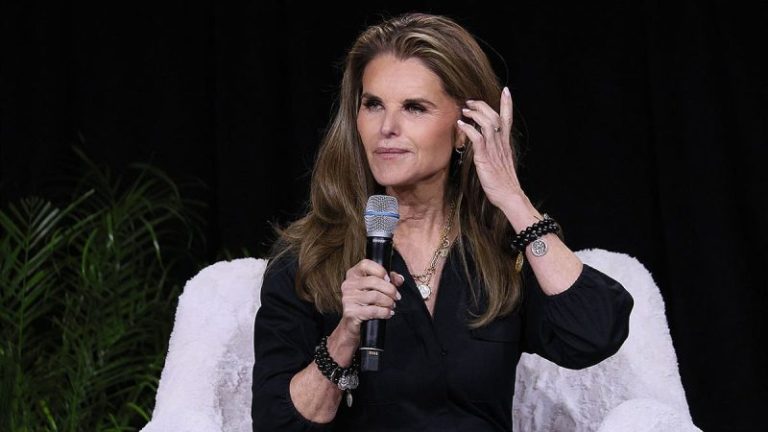
Maria Shriver slammed President Donald Trump on Thursday after the Kennedy Center’s board voted unanimously to rename the institution to the ‘Trump-Kennedy Center,’ accusing him of trying to attach his name to a memorial dedicated to her uncle, President John F. Kennedy.

Shriver, a high-profile member of the Kennedy family, said it is ‘beyond comprehension’ to change the center’s name, accusing Trump of staining JFK’s legacy in art, culture and education.

‘It is beyond comprehension that this sitting president has sought to rename this great memorial dedicated to President Kennedy,’ Shriver wrote on X. ‘It is beyond wild that he would think adding his name in front of President Kennedy’s name is acceptable. It is not.’

Kennedy Center vice president of public relations Roma Daravi told Fox Digital Thursday that the unanimous vote ‘recognizes’ Trump’s work to pull the center out of financial straits while working to also update the building originally constructed in the 1960s, and opened in 1971.

Shriver argued that adding Trump’s name was not ‘dignified’ or ‘funny,’ and ‘is way beneath the stature of the job.’

‘Just when you think someone can’t stoop any lower, down they go,’ she said.

The former First Lady of California quipped that Trump might want to rename JFK Airport or make other changes, including the ‘Trump Lincoln Memorial,’ ‘Trump Jefferson Memorial’ and ‘Trump Smithsonian.’

‘Can we not see what is happening here?’ Shriver said. ‘C’mon, my fellow Americans! Wake up!’

President Trump said on Thursday he was ‘honored’ and ‘surprised’ by the update. 

‘We’re saving the building. We saved the building. The building was in such bad shape, physically, financially, in every other way. And now it’s very solid, very strong. We have something going on television, I guess on the 23rd December. I think it’s going to get very big ratings and the Kennedy Center is really, really back strongly,’ he told reporters.

Other members of the Kennedy family, including JFK’s great-nephew, Joe Kennedy III, weighed in on the name change, arguing that federal law protects the center’s name from being changed.

‘It can no sooner be renamed than can someone rename the Lincoln Memorial, no matter what anyone says,’ he wrote on X.

The name change follows recent precedent, a Kennedy Center official told Fox News Digital, noting that the State Department’s decided earlier this month to add Trump’s name to the U.S. Institute of Peace and to past presidential administrations that have renamed military bases.

Fox News Digital has reached out to the White House for comment.

Fox News Digital’s Ashley Carnahan and Emma Colton contributed to this report.

This post appeared first on FOX NEWS

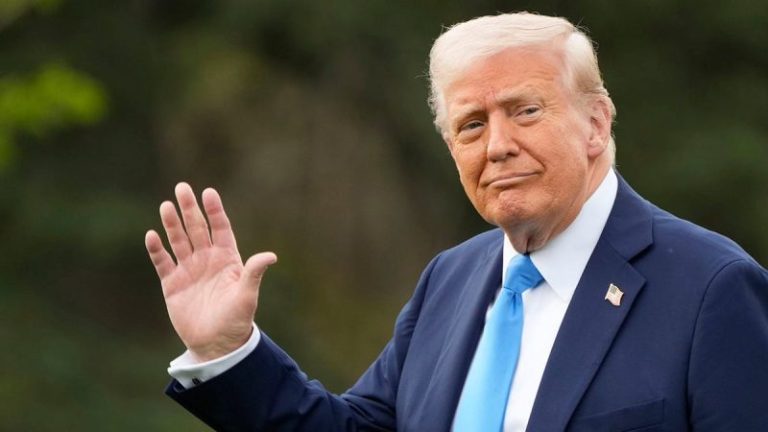
President Trump signed into law a nearly $1 trillion defense policy bill Thursday and approved what looks to be the largest military spending package in U.S. history.

The fiscal 2026 National Defense Authorization Act authorizes $901 billion in military spending, roughly $8 billion more than the administration requested, according to Reuters.

It also delivers a nearly 4% pay raise for troops, provides new funding for Ukraine and the Baltic States and includes measures designed to scale back security commitments abroad.

In a release shared online, Rep. Rick Allen, R-Ga., said, ‘With President Trump’s signature, the FY2026 NDAA officially delivers on our peace-through-strength agenda with a generational investment in our national defense.

‘Not only does this bipartisan bill ensure America’s warfighters are the most lethal and capable fighting force in the world, but it also improves the quality of life for our service members in the 12th District and nationwide.’

As previously reported by Fox News Digital, the Senate passed the NDAA Wednesday, sending the compromise bill approved with bipartisan support to the president’s desk. 

Trump signed it quietly Thursday evening, according to Reuters.

The NDAA includes $800 million for Ukraine over the next two years as part of the Ukraine Security Assistance Initiative, which pays U.S. firms for weapons for Ukraine’s military.

It also includes $175 million for the Baltic Security Initiative, which supports Latvia, Lithuania and Estonia.

The bill prohibits reducing U.S. troop levels in Europe below 76,000 for more than 45 days without formal certification by Congress.

The legislation also restricts the administration from reducing U.S. forces in South Korea below 28,500 troops.

Trump ultimately backed the bill in part because it codifies some of his executive orders, including funding the Golden Dome missile defense system and getting rid of diversity, equity and inclusion programs, per Reuters.

‘Under President Trump, the U.S. is rebuilding strength, restoring deterrence and proving America will not back down. President Trump and Republicans promised peace through strength. The FY26 NDAA delivers it,’ House Speaker Mike Johnson had said in a statement Dec. 7 on the new measures.

Fox News Digital has reached out to the White House for comment.

This post appeared first on FOX NEWS