Archive

December 2025

Browsing

President Donald Trump is on board with releasing the video footage of the second strike targeting an alleged drug boat on Sept. 2. 

The Trump administration is currently facing heightened scrutiny for its strikes against alleged drug smugglers in the Caribbean, amid confirmation from the White House that the U.S. military conducted a second strike against one of the vessels after the first strike left survivors. 

Trump shared footage of the first strike, and said Wednesday he supported releasing documentation of the second strike as well. 

‘I don’t know what they have, but whatever they have we’d certainly release. No problem,’ Trump told reporters on Wednesday.

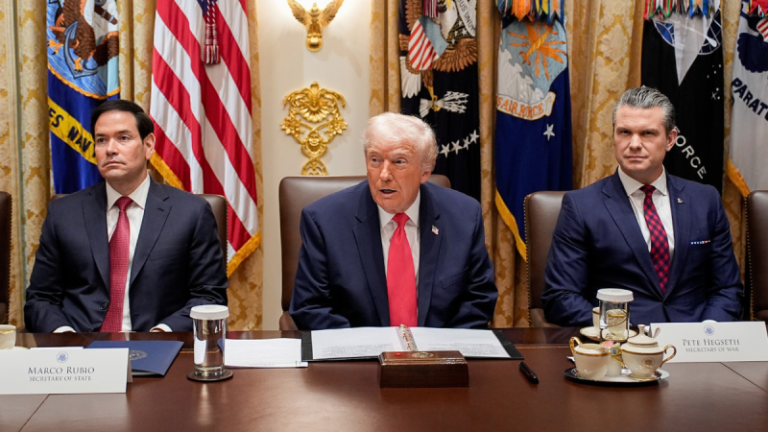
Secretary of War Pete Hegseth told reporters Tuesday that he watched the first strike live, but left for a meeting and did not learn of the second strike until later. 

The White House said Monday that Hegseth had authorized Adm. Frank ‘Mitch’ Bradley to conduct the strikes, and that Bradley was the one who ordered and directed the second one. 

At the time of the Sept. 2 strike, Bradley was serving as the commander of Joint Special Operations Command, which falls under U.S. Special Operations Command. He is now the head of U.S. Special Operations Command.

According to Hegseth, conducting the subsequent strike against the alleged drug boat was the right call. 

‘Admiral Bradley made the correct decision to ultimately sink the boat and eliminate the threat,’ Hegseth said Tuesday. 

Hegseth and the White House have faced additional questions about the legality of the strikes targeting alleged drug smugglers, after the Washington Post reported on Friday that Hegseth verbally ordered everyone onboard the alleged drug boat to be killed in a Sept. 2 operation.

The Post reported that a second strike was conducted to take out the remaining survivors on the boat. 

Meanwhile, the White House has disputed that Hegseth ever gave an initial order to ensure that everyone on board was killed, when asked specifically about Hegseth’s instructions.

On Capitol Hill though, lawmakers on both sides of the aisle are pushing for greater oversight and accountability on the strikes, amid concerns the second strike targeting survivors was illegal. 

Despite previous efforts in recent months to introduce a war powers resolution to curb Trump’s ability to conduct these strikes that failed to garner enough Republican support for passage, Senate Minority Leader Chuck Schumer, D-N.Y., Tim Kaine, D-Va., Adam Schiff, D-Calif., and Rand Paul, R-Ky., introduced another war powers resolution on Wednesday to bar Trump from using U.S. armed forces to engage in hostilities within or against Venezuela.

‘Although President Trump campaigned on no more wars, he and his Administration are unilaterally moving us closer to one with Venezuela — and they are doing so without providing critical information to the American people about the campaign’s overall strategy, its legal rationale, and the potential fallout from a prolonged conflict, which includes increased migration to our border,’ Kaine said in a statement on Wednesday. 

The Trump administration has conducted more than 20 strikes against alleged drug boats in Latin American waters, and has enhanced its military presence in the Caribbean to align with Trump’s goal to crack down on drugs entering the U.S.

This post appeared first on FOX NEWS

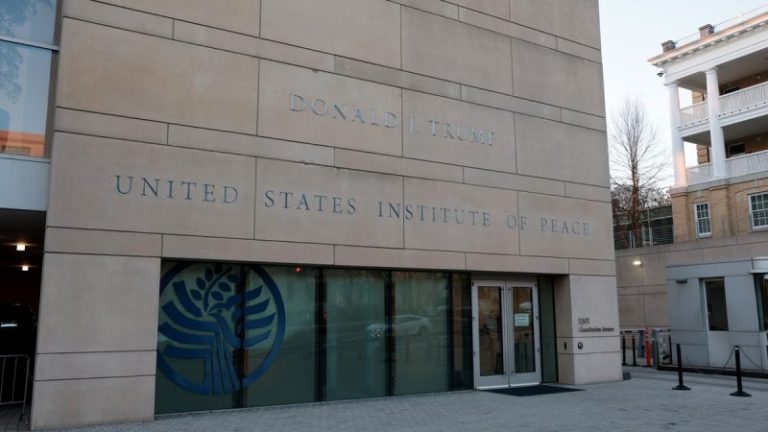
The U.S. Institute of Peace has been formally rebranded as the Donald J. Trump Institute of Peace, marking the latest step in the president’s months-long effort to dismantle the congressionally created agency.

The name change comes after a turbulent year for the organization, which the Trump administration has sought to shut down while shifting its authority to the Department of Government Efficiency (DOGE).

The institute has been fighting the move in federal court, but layoffs proceeded after an appeals court stayed a lower-court ruling that temporarily blocked the administration’s plan.

The agency’s website briefly went offline Wednesday morning before returning with promotion for Trump’s upcoming peace-agreement ceremony between the Democratic Republic of Congo and Rwanda.

White House spokesperson Anna Kelly defended the renaming, telling Fox News Digital the former institute had been ‘a bloated, useless entity that blew $50 million per year while delivering no peace.’

‘Now, the Donald J. Trump Institute of Peace, which is both beautifully and aptly named after a President who ended eight wars in less than a year, will stand as a powerful reminder of what strong leadership can accomplish for global stability,’ Kelly said. 

She added Trump ‘ended eight wars in less than a year,’ framing the institute’s new name as recognition of his ‘peace through strength’ approach.

‘Congratulations, world!’ Kelly said.

Secretary Marco Rubio echoed that sentiment in a post responding to the announcement.

‘President Trump will be remembered by history as the President of Peace,’ Rubio wrote. ‘It’s time our State Department display that.’

The U.S. Institute of Peace was created by Congress in 1984 as a nonpartisan organization supporting conflict-prevention and peace-building efforts abroad. The dismantling and rebranding into a Trump-named entity represents one of the most sweeping agency overhauls of Trump’s second term.

Earlier this year, U.S. District Judge Beryl Howell ruled that the administration’s shutdown effort was unlawful. But the ruling was stayed on appeal, clearing the way for terminations to move forward in July as the administration restructured the agency and continued transferring functions elsewhere.

The institute did not immediately respond to Axios’ request for comment on the rebranding or the status of its ongoing legal challenge.

The State Department did not immediately respond to Fox News Digital’s request for comment.

This post appeared first on FOX NEWS

Absent direct military action, President Donald Trump is running low on options amid his standoff with Venezuelan President Nicolás Maduro, according to experts.

Strikes near Venezuelan waters aimed at drug traffickers, sanctions and a $50 million bounty have so far been unsuccessful in forcing Maduro, whom the U.S. has designated as a leader of the Tren de Aragua drug cartel, to step down from power.

After repeated threats, adversaries may now view a lack of direct military action as a sign of weakness from the U.S. But Maduro is in an equally difficult position — his own military capabilities are dwarfed in comparison to Trump’s, and experts say China and Russia lack the will to directly challenge the U.S. in its own hemisphere.

Meanwhile, the clock is ticking: Trump’s unprecedented military buildup in the Caribbean — including sending the world’s largest aircraft carrier to the region — is taking away resources from other theaters.

Katherine Thompson, a senior fellow in defense and foreign policy studies at the libertarian think tank the Cato Institute, said that there are very few tools left at Trump’s disposal to oust Maduro, aside from a targeted strike against the Venezuelan leader or a land invasion. 

While the White House has not directly said that it is seeking regime change, recent media reports indicate that Trump and Maduro have spoken about the Venezuelan leader departing his post.

Thompson noted that previous efforts to squeeze out Maduro, including imposing sanctions on Venezuela and backing opposition leader Juan Guaidó during Trump’s first term, have proven unsuccessful. 

‘It does not seem like there is — outside of the military option — anything new on the table that hasn’t really been tried,’ Thompson said.

Even so, Thompson cast doubt on whether military action would prove successful. 

‘If the offer on the table from the Trump administration is we’re going to potentially execute an invasion unless you talk to us, perhaps that’s a strong enough diplomatic, strategic move that gets Maduro to capitulate,’ Thompson said. ‘But it just doesn’t seem like we’re picking up that many signals from the Maduro regime that that is going to be palatable.’ 

Meanwhile, Thompson said that adversaries like Russia and China are probably confused about why the Trump administration has fixated on the Maduro regime, which doesn’t jeopardize U.S. interests as much as other actors, when the Trump administration has adopted an ‘American First’ mantra. 

‘I imagine for them, it’s probably a bit puzzling, if they’re looking at it through a real, brass tacks, realist lens, why this administration would be prioritizing ousting the Maduro regime, as opposed to conflicts in other theaters,’ Thompson said.

As a result, the Trump administration’s actions focusing on Venezuela likely leave a bit of ‘befuddlement’ on the part of Russia and China about how serious the U.S. is about putting American interests first, Thompson said.

She added that China may be wondering if the U.S. diverting resources, such as directing the aircraft carrier USS Gerald R. Ford to the Caribbean, could provide an opportunity for it to invade Taiwan if the U.S. is tied up with operations in Venezuela. Multiple U.S. officials have said they believe China will be capable of invading Taiwan by 2027. 

Will Russia and China back Venezuela? 

While there may be greater interest from China to take action within its own theater, experts agreed it was unlikely that Russia or China would actually get involved and back Venezuela should military operations between the U.S. and Caracas escalate — even though Moscow and Beijing are strategic allies with Venezuela. 

Some analysts said Maduro would find himself largely isolated if Trump launched military strikes against Venezuela. Russia, still consumed by its war in Ukraine, is unlikely to offer anything beyond denunciations of U.S. action, and China, despite years of deep economic engagement with Caracas, is also expected to stop well short of military involvement, they said. 

From Moscow’s perspective, there is both ideological and strategic discomfort with an American intervention — but little appetite or capability to counter it.

‘Moscow opposes unilateral U.S. military intervention, especially when aimed at toppling a friendly authoritarian regime. That said, Russia lacks the will and ability to stop U.S. intervention in this part of the world should Trump decide to go that route,’ said John Hardie, a Russian military analyst at the Foundation for Defense of Democracies (FDD).

Hardie said Russia is watching Washington’s internal debate carefully. 

‘Analysts in Moscow interpret the internal debate in Washington over Venezuela as evidence that although Republican views on foreign policy are shifting, the more traditional, hawkish camp still retains influence,’ Hardie said. ‘This whole episode probably also reinforces Russian views of Trump as unpredictable and impulsive, though I suspect Moscow is glad to see Trump prioritizing the Western Hemisphere over other regions more central to Russian interests.’

China’s likely response would mirror its recent behavior in other conflicts. Beijing has major financial stakes in Venezuela but has shown little willingness to risk confrontation with the United States, especially in the Western Hemisphere.

Jack Burnham, a China analyst at FDD, said Maduro should take note of how China behaved during the 12-Day War, when Iran came under intense U.S.- and Israeli-led strikes.

‘If Maduro is expecting support from China, he should have had his expectations corrected by Tehran’s recent experience under fire,’ Burnham said. ‘Despite China providing key war-related materials to Iran prior to the 12 Day War, once the conflict escalated, Beijing stood down, content to stand on the sidelines and offer statements.’

Burnham said that same pattern would likely apply now: ‘If American military action accelerates, look for Beijing to engage in a war of words rather than send badly needed supplies to Caracas.’

Trump’s crusade against drugs

The Trump administration has beefed up its military presence off the coast of Venezuela and has adopted a hard-line approach to address the flow of drugs into the U.S. For example, it designated drug cartel groups like Tren de Aragua, Sinaloa and others as foreign terrorist organizations in February.

The Trump administration has repeatedly said it does not recognize Maduro as a legitimate head of state, but instead, a leader of a drug cartel. In August, the Trump administration upped the reward for information leading to Maduro’s arrest to $50 million, labeling him ‘one of the largest narco-traffickers in the world.’

On Sunday, Trump confirmed that he spoke to Maduro over the phone last week, after the New York Times reported that the two had talked, but declined to provide specifics on what they discussed. However, The Miami Herald reported on Sunday that Trump gave Maduro an ultimatum, guaranteeing the Venezuelan leader and his family safety — if he resigned immediately. 

The White House did not provide comment when asked if the Trump administration is pushing a regime change, and whether Maduro had been offered any incentives to step down. However, the officials said all options are on the table to mitigate the influx of drugs into the U.S. 

‘President Trump has been clear in his message to Maduro: stop sending drugs and criminals to our country,’ White House spokesperson Anna Kelly said in a statement to Fox News Digital on Tuesday. ‘The President is prepared to use every element of American power to stop drugs from flooding in to our country.’

The White House did not respond to a request for comment from Fox News Digital on The Miami Herald’s report. 

Additionally, the New York Post reported on Tuesday that U.S. officials are discussing potentially sending Maduro to Qatar, although officials familiar with Qatar’s role in the negotiations said Maduro will not head there. It’s unclear where Maduro would flee to, and no countries have confirmed they will accept him. 

Trump’s reported negotiation with Maduro comes as the strikes in the Caribbean are facing heightened scrutiny from the legal community and lawmakers.

While lawmakers have questioned the legality of the strikes since the beginning, the attacks have come under renewed scrutiny after the Washington Post reported on Friday that Secretary of War Pete Hegseth verbally ordered everyone onboard the alleged drug boat to be killed in a Sept. 2 operation. The Post reported that a second strike was conducted to take out the remaining survivors on the boat. 

On Monday, the White House confirmed that a second strike had occurred, but disputed that Hegseth ever gave an initial order to ensure that everyone on board was killed when asked specifically about Hegseth’s instructions.

The White House also said Monday that Hegseth had authorized Adm. Frank ‘Mitch’ Bradley to conduct the strikes, and that Bradley was the one who ordered and directed the second one. 

At the time of the Sept. 2 strike, Bradley was serving as the commander of Joint Special Operations Command, which falls under U.S. Special Operations Command. He is now the head of U.S. Special Operations Command. 

According to Hegseth, carrying out a subsequent strike on the alleged drug boat was the right call. 

‘Admiral Bradley made the correct decision to ultimately sink the boat and eliminate the threat,’ Hegseth said Tuesday. 

Altogether, the Trump administration has conducted more than 20 strikes against alleged drug boats in Latin American waters, and has enhanced its military presence in the Caribbean to align with Trump’s goal to crack down on drugs entering the U.S.

The last confirmed strike occurred on Nov. 15. Hegseth said Tuesday that although there has been a pause in strikes in the Caribbean because alleged drug boats are becoming harder to find, the Trump administration’s crusade against drugs will continue. 

‘We’ve only just begun striking narco-boats and putting narco-terrorists at the bottom of the ocean because they’ve been poisoning the American people,’ Hegseth said Tuesday. 

This post appeared first on FOX NEWS

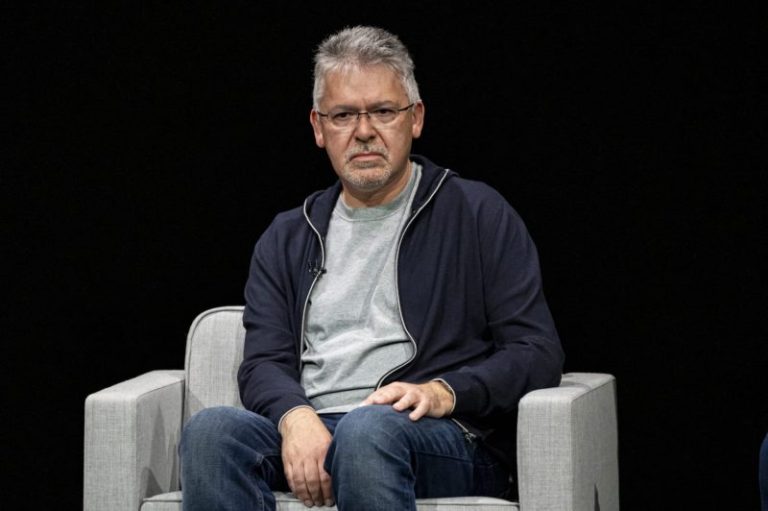
Apple’s top artificial intelligence executive is stepping down and will retire in 2026, the company announced Monday.

John Giannandrea had been at Apple since 2018, where his official title was senior vice president for machine learning and AI strategy.

He will be replaced by Amar Subramanya, who comes to Apple after a brief stint as corporate vice president of AI at Microsoft and more than a decade at Google.

Subramanya will report to one of CEO Tim Cook’s deputies, Craig Federighi, rather than to Cook directly, as Giannandrea had.

‘AI has long been central to Apple’s strategy, and we are pleased to welcome Amar to Craig’s leadership team and to bring his extraordinary AI expertise to Apple,’ Cook said Monday.

The abrupt change at a company known for its careful succession planning highlights Apple’s challenge as it tries to compete with top AI developers such as Google, ChatGPT owner OpenAI, Meta and Microsoft.

Earlier this year, Apple delayed the release of an upgraded version of Siri with AI powered features. At the time, it said it was going to ‘take us longer than we thought’ to develop the new version.

The company said it anticipated rolling out new features ‘in the coming year,’ but it has not offered any more specifics.

‘We’re making good progress on it, and, as we’ve shared, we expect to release it next year,’ Cook said on the company’s quarterly earnings call in late October.

“With Apple Intelligence, we’ve introduced dozens of new features that are powerful, intuitive, private and deeply integrated into the things people do every day,” Cook said on the Oct. 30 call

The company is targeting the spring to release the upgraded Siri, Bloomberg News recently reported.

When a user grants permission, Siri can tap into ChatGPT’s broad world knowledge and present an answer directly.Apple

While Apple’s iOS and macOS are integrated with ChatGPT, those features are somewhat limited.

In recent weeks, Apple has reportedly neared deals to integrate with Google’s Gemini, as well as AI models from Perplexity and Anthropic.

Apple introduced Apple Intelligence on June 10, 2024.Apple

Apple’s stock has also felt the effect of what some perceive to be its lagging AI services.

This year, Apple shares have returned 13%, which tops both Amazon and Microsoft. But shares of Oracle have popped 20%, Nvidia has surged 34%, and Google parent company Alphabet has soared 65%.

Still, Apple remains the world’s second-largest publicly traded company, with a market value of $4.2 trillion, behind only Nvidia.

Overall, the S&P 500 has risen almost 16% this year.

This post appeared first on NBC NEWS

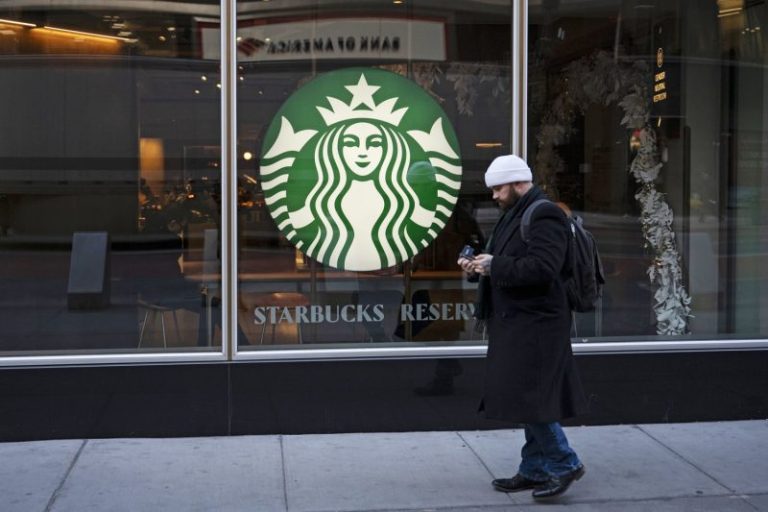
Starbucks will pay about $35 million to more than 15,000 New York City workers to settle claims it denied them stable schedules and arbitrarily cut their hours, city officials announced Monday.

The company will also pay $3.4 million in civil penalties under the agreement with the city’s Department of Consumer and Worker Protection. It also agrees to comply with the city’s Fair Workweek law going forward.

A company spokeswoman said Starbucks is committed to operating responsibly and in compliance with all applicable local laws and regulations in every market where it does business, but also noted the complexities of the city’s law.

“This (law) is notoriously challenging to manage and this isn’t just a Starbucks issue, nearly every retailer in the city faces these roadblocks,” spokeswoman Jaci Anderson said.

Most of the affected employees who held hourly positions will receive $50 for each week worked from July 2021 through July 2024, the department said. Workers who experienced a violation after that may be eligible for compensation by filing a complaint with the department.

The $38.9 million settlement also guarantees employees laid off during recent store closings in the city will get the chance for reinstatement at other company locations.

The city began investigating in 2022 after receiving dozens of worker complaints against several Starbucks locations, and eventually expanded its investigation to the hundreds of stores in the city. The probe found most Starbucks employees never got regular schedules and the company routinely reduced employees’ hours by more than 15%, making it difficult for staffers to know their regular weekly earnings and plan other commitments, such as child care, education or other jobs.

The company also routinely denied workers the chance to pick up extra shifts, leaving them involuntarily in part-time status, according to the city.

Starbucks Workers United members and supporters picket outside a Starbucks in New York on Nov. 21.Michael Nagle / Bloomberg via Getty Images

The agreement with New York comes as Starbucks’ union continues a nationwide strike at dozens of locations that began last month. The number of affected stores and the strike’s impact remain in dispute by the two sides.

This post appeared first on NBC NEWS

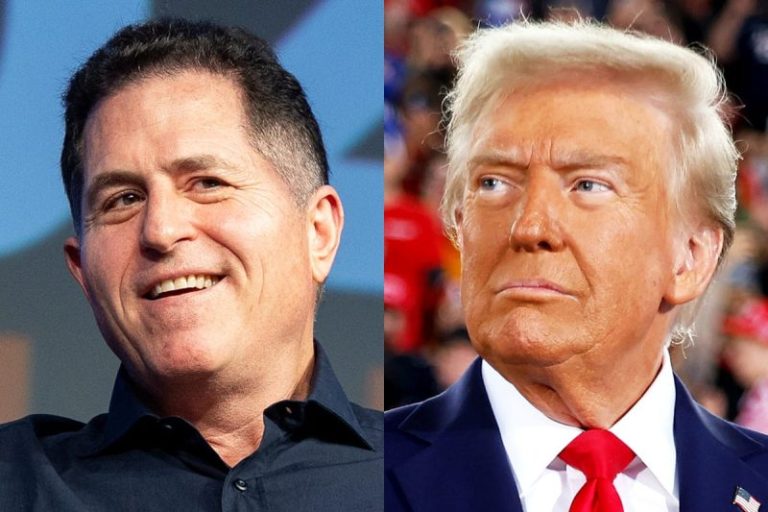
Tech billionaires Michael and Susan Dell announced Tuesday that they are pledging $6.25 billion to create some 25 million additional ‘Trump Accounts’ for children across the country.

These accounts will be seeded with $250 each, and available for children who missed the eligibility cutoff for the $1,000 federally funded ‘Trump Accounts’ for babies born after Jan. 1, 2025.

Children living in ZIP codes with median incomes below $150,000 will be the first to receive the funds, the White House said.

‘The greatest investment that we could possibly make is in children,’ Susan Dell said alongside President Donald Trump at the White House.

‘It’s really an amazing moment that two people would do that kind of a contribution,’ Trump said.

The president said he was also talking to other wealthy donors and friends to potentially make similar contributions.

Michael Dell; President Donald Trump.Errich Petersen; Chip Somodevilla / Getty Images

Asked how this donation came to be, Michael Dell said: ‘We started talking about Texas only at the beginning. And then we thought about it some more, and we went back and forth, as we do on these things, and this is where we ended up.’

The Dells said they considered making the pledge for a long time. But they said they didn’t want the pledge to be the end of their involvement.

Michael Dell encouraged states to ‘really grow financial literacy’ to help educate families about how the accounts and markets work.

‘These deposits will reach the accounts of most children age 10 and under who were born prior to the qualifying date for the federal newborn contribution,’ the Dells said in a statement issued by their foundation.

‘Children older than 10 may benefit, too, if funds remain available after initial sign-ups,’ the Dell family said. ‘It is an incredibly practical and direct step to help families begin saving today.’

The Dells say they ‘believe this effort will expand opportunity, strengthen communities, and help more children take ownership of their future.’

The Dell family gift “is expected to reach nearly 80% of children age 10 and under across 75% of U.S. zip codes,” according to the nonprofit Invest America.

Children born after Jan. 1 and until Dec. 31, 2028, will receive an account infused with a $1,000 investment from the U.S. Treasury, as part of the recently passed One Big Beautiful Bill.

The accounts will open and begin accepting contributions starting on July 4, 2026. The accounts will initially be held by a financial firm designated by the Treasury Department, but later will be able to be transferred to any brokerage firm.

Those accounts will also be eligible for additional contributions of up to $5,000 per year until the beneficiary child reaches age 18. Withdrawals from the accounts are not permitted until the children reach that age.

Trump accounts can be invested only in low-cost index funds or ETFs that either mirror the S&P 500 or ‘another American stock index,’ according to the White House Council of Economic Advisers.

‘These investment accounts are simple, secure, and structured to grow in value through market returns over time,’ the Dell family said.

‘Trump Accounts represent a potentially valuable tool for building up savings and tapping the power of compound growth for the young,’ Charles Schwab tax planning director Hayden Adams recently wrote.

If a family could contribute and invest the maximum $5,000 per year in the accounts, and with a reasonable growth rate of about 6%, ‘by age 18, the child’s account would hold around $191,000 in assets.’

Once a child turns 18, the accounts are eligible to be converted to a traditional individual retirement account, ‘meaning it could continue to accumulate potential gains on a tax-free basis’ for many years.

The Dells are one of the wealthiest families in America, with a fortune of nearly $150 billion, according to Bloomberg Billionaires. The family’s primary source of wealth is Dell Technologies, the company founded by Michael Dell in 1984.

In recent years, the value of Dell shares have been fueled by the booming AI revolution, for which Dell is a supplier of servers and other technology.

This post appeared first on NBC NEWS

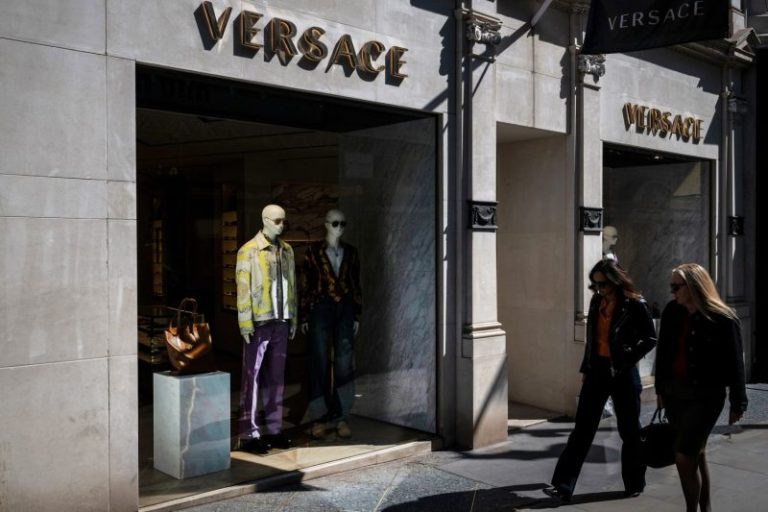
MILAN — The Prada Group announced Tuesday that it has officially purchased Milan fashion rival Versace in a 1.25 billion euro (nearly $1.4 billion) deal that puts the fashion house known for its sexy silhouettes under the same roof as Prada’s “ugly chic” aesthetic and Miu Miu’s youth-driven appeal.

The highly anticipated deal is expected to relaunch Versace’s fortunes, after middling post-pandemic performance as part of the U.S. luxury group Capri Holdings.

Prada said in a one-line statement that the acquisition had been completed after receiving all regulatory clearances.

Prada heir Lorenzo Bertelli will steer Versace’s next phase as executive chairman, in addition to his roles as group marketing director and sustainability chief.

The son of co-creative director Miuccia Prada and longtime Prada Group chairman Patrizio Bertelli has said he doesn’t expect to make any swift executive changes at Versace. But Bertelli has said that the company, which places among the top 10 most recognized brands in the world, has long been underperforming in the market.

Prada has underlined that the 47-year-old Versace brand offered “significant untapped growth potential.’’

Versace has been in the midst of a creative relaunch under a new designer, Dario Vitale, who previewed his first collection during Milan Fashion Week in September. He had previously been head of design at Miu Miu, but his move to Versace was unrelated to the Prada deal, executives have said.

Capri Holdings, which owns Michael Kors and Jimmy Choo, paid $2 billion for Versace in 2018, but had been struggling to position Versace’s bold profile in the recent era of “quiet luxury.″

Versace represented 20% of Capri Holdings 2024 revenue of 5.2 billion euros. An analyst presentation for the Prada deal said that Versace would represent 13% of the Prada Group’s pro-forma revenues, with Miu Miu coming in at 22% and Prada at 64%. The Prada Group, which also includes Church’s footwear, reported a 17% boost in revenues to 5.4 billion euros last year.

The Prada Group has already begun preparations to incorporate crosstown rival Versace into its Italian manufacturing system, a point of pride for the group.

“Making a bag for one brand or another, the know-how is the same,″ Bertelli told reporters last week at the group’s Scandicci leather goods factory, which already makes bags for the Prada and Miu Miu brands and will soon add Versace.

The Prada Group’s has invested 60 million euros in its supply chain this year, including a new leather goods factory near Siena, a new knitwear factory near Perugia as well as increasing production at its factory Church’s footwear factory in Britain and expanding another Tuscan factory. That’s on top of 200 million euros in investments from 2019-24.

Prada’s efforts include an academy that has trained some 570 new artisans over the last 25 years in an in-house training academy operating in the Tuscany, Marche, Veneto and Umbria regions.

Last year, Prada hired 70% of the 120 artisans who trained in the academy. The number of trainees rose by 28% to 152 this year.

This post appeared first on NBC NEWS

Outages on Shopify’s e-commerce platform have been resolved, the company said late Monday, bringing to an end a daylong glitch on the annual ‘Cyber Monday’ shopping day.

Some merchants that use Shopify’s service to sell goods online said they experienced issues with checkouts through the company’s point-of-sale system.

Businesses that run on Shopify also had trouble logging into their administrative portals.

In a statement, Shopify said: ‘We had a system degradation that has now been mitigated.’

Throughout the day, business owners posted angry messages directed at the company on X, where Shopify President Harvey Finkelstein had posted ‘HAPPY CYBER MONDAY! Let’s finish strong!’ earlier in the day, with an emoji of a flexed arm.

One business, Costack Spices, based in London, replied: ‘How??? [We] cannot fulfill orders or log on,’ with three red-faced emojis. In a follow-up, the company posted, ‘This is unbelievable.’

Another user wrote, ‘@ShopifySupport I haven’t been able to access it for the last couple hours.’

Shopify replied to most users on X with the same message: ‘We are aware of an issue with Admins impacting selected stores, and are working to resolve it.’

In 2024, merchants using Shopify services recorded $11.5 billion in sales from Black Friday through Cyber Monday, the company said, with more than 76 million customers buying from businesses powered by the platform.

Shopify provides website design tools, online checkout services and digital advertising products to businesses of all sizes. The company says that millions of merchants use its services.

While Shopify’s share of Cyber Monday sales may be limited, smaller businesses that rely on the company to process their transactions may have missed out on crucial sales at the start of the all-important holiday season.

Total Cyber Monday sales are expected to be more than $53 billion, according to Salesforce.

Shopify stock ended the trading day down 5.9%.

This post appeared first on NBC NEWS

Goldgroup Mining (TSXV:GGA, OTC:GGAZF) is a Canadian gold company advancing a portfolio of high-quality producing and development assets in Mexico. With 100 percent ownership of Cerro Prieto, Pinos and the newly acquired San Francisco mine, the company is positioned for disciplined, near-term production growth.

Goldgroup’s strategy is clear: optimize and expand production at its flagship Cerro Prieto mine, advance Pinos toward a production decision, and restart the large-scale San Francisco mine. Together, these projects target over 100,000 ounces of annual production, with additional upside from exploration, resource growth, and future acquisitions.

The company is led by an experienced team with deep expertise in developing and optimizing Mexican mines. Backed by strong financial support from the Calu Group and Luca Mining founders, Goldgroup benefits from a proven track record in value creation through mine development, operational turnarounds, and strategic M&A.

Company Highlights

  • Two operating or near-term production gold assets in Mexico, 100-percent-owned and fully permitted.
  • Cerro Prieto expansion completed, increasing from ~12,500 oz/year to 30,000+ oz/year during 2026 and beyond, including tailings re-processing.
  • Its second asset, Pinos, is a fully permitted high-grade underground development project with historical resources and +90 percent metallurgical recoveries.
  • San Francisco acquisition in progress, a past producer capable of ~40,000 oz/year with significant exploration upside.
  • Aggressive M&A strategy aimed at fast-tracking Goldgroup into the mid-tier producer category with advanced due diligence nearing completion. .
  • Backed by the Calu Group and the founders of Luca Mining, bringing extensive operational and financing expertise in Mexico.

This GoldGroup Mining profile is part of a paid investor education campaign.*

Click here to connect with GoldGroup Mining (TSXV:GGA) to receive an Investor Presentation

This post appeared first on investingnews.com

Here’s a quick recap of the crypto landscape for Monday (December 1) as of 9:00 p.m. UTC.

Get the latest insights on Bitcoin, Ether and altcoins, along with a round-up of key cryptocurrency market news.

Bitcoin and Ether price update

Bitcoin (BTC) was priced at US$85,482.46, down by 6.4 percent over 24 hours.

Bitcoin price performance, December 1, 2025.

Chart via TradingView.

Bitcoin marked its largest single-day decline in a month, continuing a sell-off that started in November.

This sharp downturn was influenced largely by rising expectations of a Bank of Japan rate hike at its December meeting, which triggered a surge in Japanese bond yields, strengthening the yen and prompting global investors to pull capital from risk assets like Bitcoin. This caused liquidations of speculative long positions and created downward price pressure.

However, significant technical support levels lie around US$86,000 to US$79,600, with further downside possible to US$67,700 and major support between US$45,000 and US$70,000 if bearish momentum persists. Holding above roughly US$85,200 is critical to avoid deeper bearish territory.

Farzam Ehsani, CEO of cryptocurrency exchange VALR, added that concerns about MSCI potentially excluding major crypto-holding companies such as Strategy from global indices are adding pressure through expected forced sell-offs, further weakening market structure and liquidity.

“The recovery of the cryptocurrency market, and Bitcoin in particular, after the decline of the last month and a half, will take some time. The main questions at the moment are how the market will close out this year and whether Bitcoin will recover above $100,000 in December.”

Ether (ETH) also experienced a steep decline, priced at US$2,757.79, down by 8.9 percent over 24 hours.

Derivatives data

Derivatives data showed US$10.93 million liquidated in BTC shorts positions over the final four hours of trading, indicating short sellers getting squeezed out as price stabilized rather than accelerating lower.

Open interest edged up 0.50 percent to US$57.63 billion, showing fresh positions entering despite the dip, which often signals sustained trader interest and potential stabilization or rebound setup.

A funding rate of -0.001 percent reflects mild bearish sentiment, common in corrections but not extreme enough to indicate panic selling. BTC’s RSI at 32.58 marks deeply oversold territory, suggesting selling may be nearing a climax and creating conditions for a short-term bounce if support holds.

Altcoin price update

  • XRP (XRP) was priced at US$2.02, down by eight percent over 24 hours.
  • Solana (SOL) was trading at US$124.54, down by 9.3 percent over 24 hours.

Today’s crypto news to know

Bitcoin’s weekend slide wipes out US$637 million in leveraged positions

Bitcoin’s latest downturn over the weekend triggered a wave of liquidations that erased roughly US$637 million across futures markets.

The selloff pushed Bitcoin to an intraday low near US$85,700, extending its monthly decline past 21 percent and dragging Ethereum, XRP, and other majors sharply lower. The slump began as momentum-driven selling forced heavily leveraged longs to unwind, turning a routine correction into a fast, disorderly slide.

Comments from Strategy CEO Phong Le about potentially selling part of the company’s sizable Bitcoin holdings added to jitters, even though prediction markets continue to see a low probability of actual disposals this year.

“We can sell Bitcoin, and we would sell Bitcoin if needed to fund our dividend payments below 1x mNAV,” Le said in a podcast.

The company currently controls 649,870 BTC, which valued at about US$56.26 billion at current prices.

Further, China’s central bank reiterating its hard line against crypto activity further weighed on sentiment heading into the final month of the year.

Goldman Sachs boosts ETF offerings with Innovator Capital acquisition

Goldman Sachs (NYSE:GS) has agreed to buy Innovator Capital Management, a company specializing in defined outcome ETFs, in a deal worth about US$2 billion in cash and stock, according to a Monday announcement.

Defined outcome ETFs are special funds that limit losses or cap gains for investors using options contracts.

Innovator’s US$28 billion in assets and 159 ETFs will significantly enhance Goldman Sachs Asset Management’s ETF portfolio, increasing that bank’s total ETF lineup from US$51 billion to US$79 billion.

The acquisition payment partly depends on Innovator meeting certain performance targets after the deal closes, which were not publicly disclosed. The deal is expected to close in Q2 2026, subject to regulatory approval and other usual conditions.

Goldman Sachs will fully own the Innovator business, integrating its 60-plus employees into Goldman’s teams. However, Innovator’s investment managers and services will remain unchanged.

Tether blasts S&P after fresh downgrade

Tether pushed back forcefully this week after S&P Global cut its assessment of USDT’s peg stability, assigning the stablecoin the lowest score on the agency’s scale.

S&P pointed to weaker reserve quality, shrinking cash-equivalent holdings, and rising exposure to secured loans and Bitcoin as reasons for the downgrade.

The report noted that Tether’s Bitcoin holdings now exceed the cushion meant to absorb volatility, increasing the risk that a sharp price drop could leave the token undercollateralized.

Tether’s leadership dismissed the rating as biased and politically motivated.

‘Some influencers are either bad at math or have the incentive to push our competitors,’ Tether CEO Paolo Ardoino said in a recent post on X.

After the downgrade last week, Ardoino also maintained that ‘the traditional finance propaganda machine is growing worried when any company tries to defy the force of gravity of the broken financial system.’

The downgrade also comes as Tether’s mining affiliate winds down operations in Uruguay after months of unpaid power bills and stalled expansion plans.

Japan prepares 20 percent flat tax on crypto gains

Japan is moving toward a flat 20 percent tax on cryptocurrency gains, a change that would replace the current progressive regime that can push rates above 50 percent for active traders.

Nikkei Asia reported that under the proposal, crypto income would be placed into a separate category similar to equities, with the goal of reducing distortions that discourage trading or push users offshore.

Lawmakers backing the plan say aligning digital assets with other investment products could draw liquidity back to domestic exchanges and boost overall tax receipts.

The reform is expected to be finalized as part of the country’s 2026 tax framework, with revenue split between the national and local governments.

Securities Disclosure: I, Giann Liguid, hold no direct investment interest in any company mentioned in this article.

Securities Disclosure: I, Meagen Seatter, hold no direct investment interest in any company mentioned in this article.

This post appeared first on investingnews.com