Archive

January 2026

Browsing

The Government of Ontario, Canada, announced on Tuesday (January 13) that it was accelerating permitting and development on Canada Nickel Company’s (TSXV:CNC,OTCQX:CNIKF) Crawford nickel project near Timmins, as part of its “One Project, One Process” framework.

The designation will help the project attract C$5 billion in investment funding to develop the mine and a nickel processing plant that will provide materials for the stainless steel and electric vehicle markets.

Once complete, the mine will create 1,300 jobs and support an additional 3,000 workers throughout the community and supply chain.

On the international stage, Canadian representatives, including Prime Minister Mark Carney, travelled to China this week for a four-day visit in hopes of improving relations between the two countries.

Among the results of the visit was a softening of tariffs on Chinese electric vehicles entering Canada. Under the new terms, Chinese companies will be allowed to sell up to 49,000 automobiles per year in Canada at a 6.1 percent tariff. In exchange, China has loosened its tariffs on Canadian canola to 15 percent, and removed all tariffs on canola meal, lobsters, crab and peas.

Additionally, the Canadian government announced on Friday (January 16) that it had reaffirmed a memorandum of understanding with China’s National Energy Administration. The MoU sees both countries strengthen cooperation over energy initiatives and advance dialogue over the energy transition; conventional, clean and nuclear energy; and uranium resources.

South of the border, on Sunday (January 11) US Federal Reserve Chair Jerome Powell issued a rare statement on his relationship with the Trump administration when he revealed that he had received subpoenas from the Department of Justice.

According to his remarks, US Attorney and Trump appointee Jeanine Pirro had opened an investigation into Powell’s oversight of the Federal Reserve’s building renovation project.

Although no charges have been laid, the investigation illustrates a deepening rift between the Fed Chairman and the Trump administration. Powell said he believes the investigation is related to the administration’s frustration over what it claims is a slow pace of interest rate cuts.

The president has previously stated his desire to replace Powell as the Fed’s chair, but because the Fed is independent, he can only do so with the support of Congress. While Powell’s term as chairman ends in May, his term as a Fed governor doesn’t end until January 2028, which may stymie Trump’s plan to gain greater control over the agency and its policy direction.

For more on what’s moving markets this week, check out our top market news round-up.

Markets and commodities react

Canadian equity markets were on the rise this week.

The S&P/TSX Composite Index (INDEXTSI:OSPTX) gained 1.8 percent over the week to close Friday at 33,040.55, while the S&P/TSX Venture Composite Index (INDEXTSI:JX) fared even better, rising 4.28 percent to 1,091.13. The CSE Composite Index (CSE:CSECOMP) also gained ground, rising 2.61 percent to close at 188.29.

The gold price continued to trade at all-time highs this week, reaching US$4,639 per ounce amid heightened tensions in the Middle East over protests in Iran and as the US contemplated military involvement. Overall, it gained 2.32 percent during the week, closing the week at US$4,582.81 per ounce on Friday at 4:00 p.m. EST.

The silver price performed even stronger, trading above US$93 per ounce on Wednesday at new highs. Although the price pulled back slightly by the end of the week, it still posted a weekly gain of 16.08 percent, closing Friday at US$89.36.

In base metals, the Comex copper price recorded a 2 percent drop this week to US$5.88.

The S&P Goldman Sachs Commodities Index (INDEXSP:SPGSCI) rose 1.45 percent to end Friday at 562.91.

Top Canadian mining stocks this week

How did mining stocks perform against this backdrop?

Take a look at this week’s five best-performing Canadian mining stocks below.

Stocks data for this article was retrieved at 4:00 p.m. EST on Friday using TradingView’s stock screener. Only companies trading on the TSX, TSXV and CSE with market caps greater than C$10 million are included. Mineral companies within the non-energy minerals, energy minerals, process industry and producer manufacturing sectors were considered.

1. Homeland Nickel (TSXV:SHL)

Weekly gain: 135.71 percent
Market cap: C$65.57 million
Share price: C$0.33

Homeland Nickel has a portfolio of nickel projects in Oregon, US: Red Flat, Cleopatra, Eight Dollar Mountain and Shamrock.

In addition, the company holds investments in mining companies with nickel projects, including Benton Resources (TSXV:BEX,OTCPL:BNTRF), Canada Nickel Company and Noble Mineral Exploration (TSXV:NOB,OTCQB:NLPXF).

Shares in Homeland surged this week following news on Tuesday that Canada Nickel’s Crawford project in Ontario was selected for the province’s “One Project, One Process” review framework, which will allow for an accelerated timetable for permitting and development of the asset.

Canada Nickel is Homeland’s top investment, holding 742,095 shares valued at C$1.08 million.

Homeland did not release news of its own this week, but its share price has also been supported by rising nickel prices, which climbed from a low of US$14,255 per metric ton in the middle of December to as high as US$18,785 on Wednesday.

2. Eskay Mining (TSXV:ESK)

Weekly gain: 89.66 percent
Market cap: C$108.21 million
Share price: C$0.55

Eskay Mining is an exploration company advancing its namesake project in the Golden Triangle region of British Columbia, Canada.

The property located in the province’s northwest sits on a land package of 130,000 acres, and hosts several gold and silver volcanogenic massive sulfide and magmatic nickel, copper and platinum group metals targets.

Final assay results from its summer 2025 sampling program at the site were released on November 7. The company said the batch consisted of 121 rock chip and channel samples, with 11 returning grades over 20 g/t gold and 31 with grades over 1 g/t.

At the time, the company said mineralization bears similarities to discoveries at Goliath Resources’ (TSXV:GOT,OTCQB:GOTRF) Surebet and Juggernaut Exploration’s (TSXV:JUGR,OTCPL:JUGRF) Big One projects. Eskay added that it can see a path to a maiden drill program in 2026.

The most recent news from Eskay came on Monday when it announced that Clinton Smyth had been hired as the company’s chief geologist for its 2026 exploration program. Smyth has spent 25 years in the industry working for Anglo American (LSE:AAL,OTCQX:NGLOY) and Minorco.

3. Batero Gold (TSXV:BAT)

Weekly gain: 86.36 percent
Market cap: C$23.61 million
Share price: C$0.205

Batero Gold is an exploration company focused on advancing its Quinchia project in the Department of Risaralda, Colombia.

The property is composed of one tenement covering 1,407 hectares, with an additional 155 hectare concession under application. A September 2022 mineral resource estimate was included in its management discussion and analysis for the year ending August 2025.

Across three zones, the project’s La Cumbre deposit hosts a contained measured and indicated resource of 2.2 million ounces of gold and 6.43 million ounces of silver from 51.73 million metric tons of ore with average grades of 0.5 g/t gold and 1.47 g/t silver.

The company has not released news in the past week, but its share price has surged amid significant gains in precious metals prices since the start of 2026.

4. Auric Minerals (CSE:AUMC)

Weekly gain: 82.14 percent
Market cap: C$11.22 million
Share price: C$0.51

Auric Minerals is a uranium exploration company focused on its Route 500 and Bub properties in Newfoundland and Labrador, Canada.

The projects are both located in Labrador’s Central Mineral Belt, with Route 500 consisting of 441 mineral claims across 11,025 hectares and Bub consisting of 318 claims across 7,949 hectares.

The more advanced Route 500 project hosts surface showings with high-grade uranium mineralization, while Bub includes strong radiometric anomalies covering 30 square kilometers and 20 square kilometers.

Auric announced on December 31 that it had acquired a 100 percent interest in the English Lake, Otter Lake and Kan projects, all located in Labrador, in exchange for 22 million common shares at C$0.315 per share, 8 million warrants, cash payments of C$32,000 and a 2.5 percent net smelter return.

According to the same release, the company also amended its option agreements for the Route 500, Bub and Portage properties deal to waive its additional obligations, including future cash payments, share issuances, and exploration expenditures, in exchange for 500,000 shares to each of the optioners for a total of 1.5 million shares.

On January 8, Auric officially acquired 100 percent of the three properties after issuing the shares.

5. Patagonia Gold (TSXV:PGDC)

Weekly gain: 80.22 percent
Market cap: C$432.5 million
Share price: C$0.82

Patagonia Gold is a precious metals production and development company primarily focused on advancing its Cap-Oeste and Calcatreu underground projects in Argentina.

Located in Santa Cruz province, Cap-Oeste hosted open-pit mining operations until 2018. While Patagonia is working on the exploration and development of the underground resource at the site, it has been able to recover gold and silver from residual leaching on site.

According to the company’s website, a 2018 mineral resource estimate for Cap-Oeste reported measured and indicated values of 704,300 ounces of gold and 21.43 million ounces of silver from 10.56 million metric tons of ore with average grades of 2.07 grams per metric ton (g/t) gold and 63.2 g/t silver.

Its Calcatreu project, located in the Rio Negro province, is currently under construction. Calcatreu hosts a measured and indicated resource of 669,000 ounces of gold and 6.28 million ounces of silver from 9.84 million metric tons of ore, with average grades of 2.11 g/t gold and 19.8 g/t silver.

The most recent news from the company came on Thursday when it provided an update on construction activities at Calcatreu, which it has resumed following a holiday break.

In the announcement, Patagonia said it has extracted and stockpiled 40,000 metric tons of mineralized material from the Veta 49 pit. Of the material, the company said that 5,200 metric tons are expected to be stacked on the leach pad following electric leak detection tests later in January.

Additionally, Patagonia expects the carbon-in-column circuit construction will also be completed in January. After stockpiled material begins being leached and processed, the metal doré product will be sent to Canada to be refined in Ontario.

Patagonia expects to release an updated technical report for the project during the second quarter of the year.

FAQs for Canadian mining stocks

What is the difference between the TSX and TSXV?

The TSX, or Toronto Stock Exchange, is used by senior companies with larger market caps, and the TSXV, or TSX Venture Exchange, is used by smaller-cap companies. Companies listed on the TSXV can graduate to the senior exchange.

How many mining companies are listed on the TSX and TSXV?

As of May 2025, there were 1,565 companies listed on the TSXV, 910 of which were mining companies. Comparatively, the TSX was home to 1,899 companies, with 181 of those being mining companies.

Together, the TSX and TSXV host around 40 percent of the world’s public mining companies.

How much does it cost to list on the TSXV?

There are a variety of different fees that companies must pay to list on the TSXV, and according to the exchange, they can vary based on the transaction’s nature and complexity. The listing fee alone will most likely cost between C$10,000 to C$70,000. Accounting and auditing fees could rack up between C$25,000 and C$100,000, while legal fees are expected to be over C$75,000 and an underwriters’ commission may hit up to 12 percent.

The exchange lists a handful of other fees and expenses companies can expect, including but not limited to security commission and transfer agency fees, investor relations costs and director and officer liability insurance.

These are all just for the initial listing, of course. There are ongoing expenses once companies are trading, such as sustaining fees and additional listing fees, plus the costs associated with filing regular reports.

How do you trade on the TSXV?

Investors can trade on the TSXV the way they would trade stocks on any exchange. This means they can use a stock broker or an individual investment account to buy and sell shares of TSXV-listed companies during the exchange’s trading hours.

Article by Dean Belder; FAQs by Lauren Kelly.

Securities Disclosure: I, Dean Belder, hold no direct investment interest in any company mentioned in this article.

Securities Disclosure: I, Lauren Kelly, hold no direct investment interest in any company mentioned in this article.
This post appeared first on investingnews.com

Gold and silver are wrapping up yet another record-setting week that’s seen economic uncertainty and geopolitical tensions combine to push prices upward.

The yellow metal moved decisively through US$4,600 per ounce on Monday (January 12), trading above that level for a decent amount of the week.

For its part, silver reached what’s perhaps an even more impressive price milestone, surging past US$90 per ounce and breaking US$93 on Wednesday (January 14).

At this point, there’s a very long list of factors providing support for the precious metals, and we don’t have time to touch on all of them today. Instead let’s take a look at a few that have been making headlines over the past week or so and break them down.

First, there’s the latest news in the clash between US President Donald Trump and Federal Reserve Chair Jerome Powell. On Sunday (January 11), Powell said that two days earlier, the Department of Justice had served the Fed with grand jury subpoenas threatening a criminal indictment.

I had the chance to speak with Mario Innecco, who runs the @maneco64 channel on YouTube, not long after Powell’s statement — here’s how he summed it up:

‘They’ve subpoenaed documents, and it’s supposed to be related to the renovation of the Fed’s headquarters in Washington, DC. But Jay Powell came out and said it’s not, it’s basically because they want him to cut rates.

‘And he’s probably right. I think they’re using any kind of, let’s say tricks, to try to get rid of him, because I think the administration, even though they talk about how the economy is doing so great, they are desperate.’

Trump himself has said he had no knowledge of the investigation, and has also asserted that he’s not interested in firing Powell, whose term as Fed chair wraps up in May.

Nevertheless, the situation has reignited concerns about Fed independence, and has provided support for gold and silver, which tend to fare better when rates are lower. The next Fed chair, who has not yet been appointed, is widely expected to fall in line with Trump.

In addition to that, geopolitical tensions have remained high. Venezuela is still in the spotlight after its former president was removed by the US last week, and this week Trump warned that the US would intervene in Iran if its executions of anti-government protesters did not stop.

Iran responded by saying it would strike US bases if that happened.

Those events and others are boosting safe-haven demand for gold, as well as silver, but I want to hone in on a couple more points on the silver side that I think are worth looking at.

One of those is the news that the US plans to hold off on new critical minerals tariffs after receiving the results of a Section 232 investigation launched last year.

While a presidential proclamation states that imports of processed critical minerals and their derivative products do constitute a national security risk for the US, the country will first take steps such as negotiating supply agreements with other nations.

Silver was recently designated a critical mineral in the US, and some market watchers believe this news out of the US was responsible for a midweek price dip for the white metal. However, others continue to highlight silver’s deeper underlying drivers.

I heard recently from Andy Schectman of Miles Franklin, who emphasized that a key element supporting silver right now is the fact that more and more entities are standing for physical delivery.

Here’s how he explained what he’s seeing:

‘For years I’ve been saying … that the most well-informed, well-funded traders — and I’ll highlight well informed, that being the central banks — have been standing for delivery since 2020. Very unusual, because really no one ever stood for delivery. And this started to accelerate. But all along, the US was not part of this game. We were seeing it in the Global South with the BRICs. And now all of a sudden we are seeing the most well-informed traders in North America stand for delivery in massive amounts.’

Gold ended the week just below US$4,600, while silver was slightly above US$90.

Securities Disclosure: I, Charlotte McLeod, hold no direct investment interest in any company mentioned in this article.
This post appeared first on investingnews.com

Hunter Biden’s ex has reopened a 2019 paternity suit in Arkansas, alleging that the former first son hasn’t followed through on his child support obligations and claiming he ‘ghosted’ their daughter, Navy Joan Roberts.  

Lawyers for Lunden Roberts wrote in the new motion filed Tuesday that, in getting his child support payments reduced, Biden had agreed to give their daughter a ‘specified number of paintings he had created and that she had selected,’ court documents obtained by Fox News Digital said.

Lunden said the agreement was made because the paintings might carry monetary value due to his fame, and she considered it a way for him to bond with his daughter over their shared love of art.

When Roberts ‘gave Mr. Biden artwork by the parties’ daughter that the child had specifically created for her father’ after showing up unannounced at a past deposition, the ‘simple, pure act of love brought Mr. Biden to tears and was the sui generis of his idea for he and [his daughter] to ‘bond over [their] shared love of art,” the documents claimed.

That arrangement brought her family ‘joy’ because her daughter had ‘desperately longed for, talked about, and dreamed of a relationship with her father,’ the motion claimed.

His daughter had even allegedly said she ‘‘could not wait to get to heaven’ so she could ‘be with [her] dad’ because her dad does not see or talk to her because her dad ‘lives far away and is really busy’.’

Biden and his daughter began to bond, the motion claimed, but he quickly ‘ghosted’ her after Roberts wrote a memoir in 2024 about her relationship with him, but she didn’t ‘disparage’ him in it. 

She now believes his sentiment was for the purpose of getting his child support payments lowered.

Despite getting upset at a wedding when she realized ‘that her dad would not walk her down the aisle or dance with her at her own wedding reception,’ the motion claimed that Biden’s daughter is ‘grateful’ for how much he loves her half-brother, Beau Biden, Jr., whom Biden shares with his current wife.

He also shares three older children with his first wife. 

The little girl has even ‘defended the reputation of her grandfather, former President Joe Biden, against bullies,’ the motion claimed.

‘Ms. Roberts has reached out to Mr. Biden numerous times about [their daughter] asking to speak with him, but the defendant, in classic, classless form, refuses to respond,’ the documents said.

And while Biden has given her some paintings, the motion claims that his daughter hasn’t been able to pick out any herself, which was allegedly part of the child support agreement.

The motion urged the court to force Biden to ‘communicate with his child’ and to jail him ‘as a civil penalty until he purges his contempt by complying with this court’s orders.’

Her lawyers noted that Biden’s four other children live a lifestyle ‘above that of the average American,’ including their daughter.

‘It is axiomatic that no one can force Mr. Biden into being a good dad for [his daughter], but this court can make it so that [his daughter] has, at least, the same level of support as [her] younger half-brother,’ the motion added.

Biden first denied he was Navy’s father until a court ordered him to take a paternity test in 2019.

The 55-year-old was also convicted in a felony gun case last year for illegally owning a gun while using drugs, but he was pardoned by his father before he left office.

Fox News Digital has reached out to Biden’s lawyer for comment. 

This post appeared first on FOX NEWS

President Donald Trump signaled why he’s held off on military strikes on Iran amid nationwide protests after claiming the country had canceled executions for hundreds of Iranians. 

When asked if Arab and Israeli officials ‘convinced’ him to not strike Iran, Trump told reporters Friday he convinced himself and cited the canceled hangings. Trump also expressed similar sentiments on social media Friday. 

‘I greatly respect the fact that all scheduled hangings, which were to take place yesterday (Over 800 of them), have been cancelled by the leadership of Iran. Thank you!’ Trump said in a post on Truth Social Friday. 

The statement echoes what White House press secretary Karoline Leavitt told reporters Thursday about the canceled executions. She maintained that all options remained on the table when it comes to dealing with Iran.

‘What I will say with respect to Iran is that the president and his team have communicated to the Iranian regime that if the killing continues, there will be grave consequences,’ Leavitt told reporters Thursday. 

‘And the president received a message as he revealed to all of you and the whole world yesterday that the killing and the executions will stop. And the president understands today that 800 executions that were scheduled and supposed to take place yesterday were halted.’ 

It’s unclear from Trump’s post if he was referring to the 800 executions that were already canceled or whether there have been two consecutive days when 800 executions have been called off. 

The White House did not immediately respond to a request for comment from Fox News Digital on how many executions have been canceled or whether military strikes are completely off the table now. 

Fox News Digital reached out to a spokesperson for the Islamic Republic of Iran’s permanent mission to the United Nations for additional comment but did not immediately receive a reply.

Protests broke out across Iran in December 2025 in response to the country’s economic hardships as well as a referendum against Iran’s theocratic regime.

More than 2,000 people — including at least nine children — have died in the recent protests, the U.S.-based Human Rights Activists News Agency reported Tuesday. 

The Associated Press contributed to this report. 

This post appeared first on FOX NEWS

President Donald Trump is celebrating an increase in funding for healthcare focused particularly on rural communities across the country, a move was made possible by cutting ‘waste, fraud and abuse from Medicaid.’

‘As part of the Great Big Beautiful Bill, we’ve increased … funding for the healthcare by an unprecedented $50 billion. That’s rural healthcare. Nobody thought that was going to happen,’ Trump said during a roundtable Friday.

The One Big Beautiful Bill Act directs half of the rural health funding to be distributed evenly among all 50 states, with the remaining funds allocated based on state-specific factors, including the condition of rural hospitals.

‘We increased funding for rural health care by an unprecedented, record-setting $50 billion over five years, which will benefit Americans in all 50 states, and this was made possible by cutting massive waste, fraud and abuse from Medicaid and reinvesting those funds to revitalize hospitals in our cherished rural communities,’ he added.

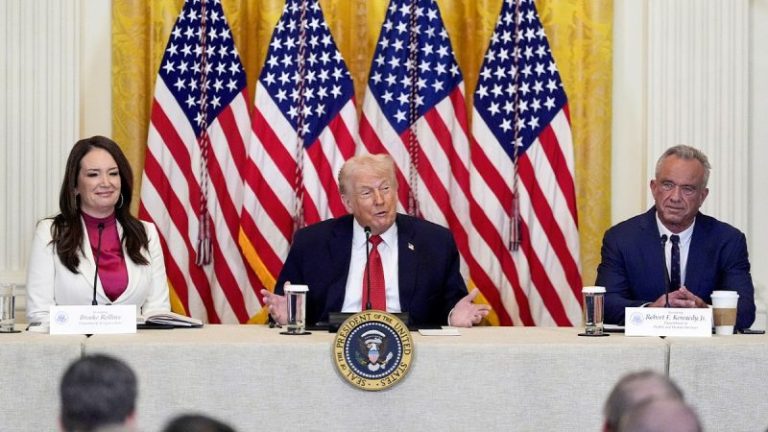
The roundtable, which included Health and Human Services Secretary Robert F. Kennedy Jr., Agriculture Secretary Brooke Rollins and Centers for Medicare & Medicaid Services Administrator Mehmet Oz, was aimed at promoting the Trump administration’s Great Healthcare Plan, which was announced during a White House press briefing Thursday.

Some have described the proposal as an effort by Trump to shape Republican messaging ahead of the 2026 midterm elections as the party tries to hold onto its slim majorities in the House and Senate.

In its fact sheet on the plan, the White House highlighted several main points, including lowering drug prices, lowering insurance premiums, holding insurance companies accountable and maximizing price transparency. Trump touched on several of the elements of the plan during the roundtable and said that hospitals that accept Medicaid and Medicare will be required to prominently post prices so that patients are aware of the cost of their care.

During the roundtable Friday, Trump implored Congress to enact the Great Healthcare Plan, but the president said he was confident Republicans would back it.

This post appeared first on FOX NEWS

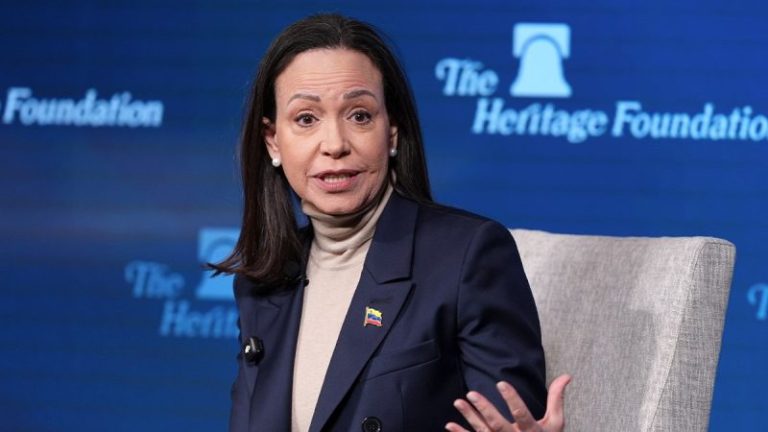
Venezuelan opposition leader María Corina Machado on Friday issued a warning to the Trump administration that interim Venezuela President Delcy Rodríguez does not represent the views of the people.

‘I want to insist on this: Delcy Rodriguez, yes, she’s a communist. She’s the main ally and representation of the Russian regime, the Chinese and the Iranians, but that’s not the Venezuelan people and that’s not the armed forces, as well,’ Machado said while addressing a crowd at an event organized by the Heritage Foundation. 

Machado said that the situation was complex as allies of Nicolás Maduro continued to do ‘dirty work’ after his capture by the U.S. on Jan. 3. However, the opposition leader said that she is ‘profoundly confident’ that there will be an orderly transition of power.

‘This is a complex place we are right now. Some of the dirty work is being done by them, but then the result of a stable transition will be a proud Venezuela, who is going to be the best ally the United States has ever had in the Americas,’ she said.

The opposition leader’s comments came amid reports that CIA Director John Ratcliffe met with Rodriguez in Caracas.

Ratcliffe and Rodriguez reportedly discussed intelligence cooperation, economic stability and the need to ensure that Venezuela would no longer be a ‘safe haven for America’s adversaries.’ 

On Wednesday, Rodriguez, a Maduro ally who served as his vice president, announced that the government would continue the release of political prisoners detained under Maduro in an initiative she touted as a ‘new political moment,’ according to The Associated Press.

Just days before Rodriguez made the announcement, the interim government freed at least four U.S. citizens detained in Venezuela, marking the first known release of American prisoners since Maduro was ousted in a U.S. military operation earlier this month.

While speaking at the Heritage Foundation event, the opposition leader vowed that Venezuela would become ‘the best ally the United States has ever had in the Americas.’ Machado said that she believes Venezuelans are cohesive and joined by shared values but have been forced by the regime to make difficult choices and suffer severe hardships.

Following the capture of Maduro on Jan. 3, President Donald Trump said that the U.S. would ‘run’ Venezuela temporarily, though he did not detail further plans regarding transfers of power.

Trump, who met with Machado on Thursday, has yet to back the opposition leader and has even expressed doubts about the amount of support she has among the people of Venezuela. Despite not having his clear support, Machado praised Trump and emphasized the critical role that he and his administration would play in the future of Venezuela.

‘The only thing I want to assure the Venezuelans people is that Venezuela is going to be free and that’s going to be achieved with the support of the people of the United States and the president, Donald Trump of the United States,’ Machado told the crowd at the Heritage Foundation event.

She also commented early in her remarks that the Venezuelan people were grateful for Trump and his team’s historic mission to capture Maduro. Machado said that it ‘took a lot of courage’ to pull off the operation.

This post appeared first on FOX NEWS

In an exclusive interview with Fox News Digital, U.S. ambassador to NATO Matthew Whitaker pushed back against growing European backlash over Washington’s focus on Greenland after France announced new military exercises with Denmark, saying Arctic security is a core American defense interest and that Europe ‘has a tendency to overreact.’

Asked whether the dispute reflects American pressure or European inaction, Whitaker said, ‘This is ultimately an issue between the United States, Denmark and Greenland.’

Whitaker said Greenland’s importance has been clear for years as the ice melts, it reshapes the Arctic and opens new routes. ‘The security of the high north, which I’ve talked about a lot before this ever happened, is the most important issue,’ he said. ‘As the ice thaws and as routes open up in the Arctic, Arctic security, and therefore the security of Greenland, which is the northern flank of the continental United States, is crucial.’

He stressed that Greenland’s location makes it central to U.S. defense planning. ‘If you think about Greenland as part of the access to the naval assets, that monitoring and awareness and fortification of that part of the Western Hemisphere is crucial for the long-term security of the United States,’ Whitaker said.

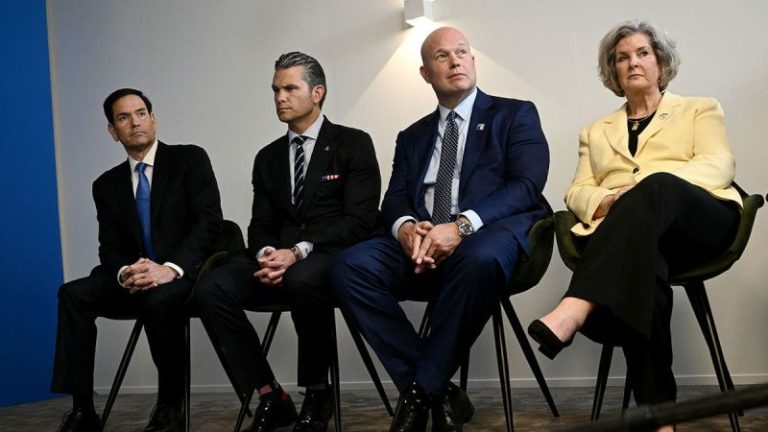
Whitaker said recent diplomacy shows the issue can be addressed without escalation. ‘I know that a very successful meeting happened between the Danes and Greenland and Vice President Vance and Secretary of State Rubio, so I think it’s going to be constructive,’ he said.

Still, he cautioned European allies against inflaming tensions. ‘Europe sometimes has a tendency to overreact anytime that an issue is put out on the table,’ Whitaker said. ‘This is one of those things where cooler heads need to prevail.’

US COMMANDER SAYS RUSSIA AND CHINA’S ARCTIC PATROLS ARE ‘NOT FOR PEACEFUL PURPOSES’

NATO, deterrence and the ‘Reagan spirit’

Speaking from the Ronald Reagan Presidential Library, Whitaker used Reagan’s ‘peace through strength’ doctrine as justification for pushing NATO allies to spend more and move faster.

‘The most important thing that we’re doing at NATO is, one, the United States is strong. Nobody denies that. We have demonstrated through Midnight Hammer, through what we did in Venezuela and elsewhere, that the United States is capable and can project power. We want all of our allies inside of NATO to be equally as strong, and they’re not at this point in time,’ he said.

He added, ‘Some of them have certainly become more capable, and that’s why you can’t just paint with a broad brush when it comes to all of our NATO allies. But there are some that are not.’

‘Europe and the EU are going to have to untie their hands from behind their back,’ he continued. ‘They’re going to have to deregulate, they are going to have to find more capital and economic growth, because at the end of the day, that’s what’s going to allow them to live up to the promises they’ve made to increase their defense spending and therefore their defense capabilities.’

He said, ‘One of the things that I’m talking about constantly with our friends downtown in the EU,’ Whitaker added, ‘is that they have to get their economy going, and there are proven, tried-and-true ways to do it.’

Whitaker said his top priority is ensuring NATO allies follow through on the major defense commitments agreed to last year in The Hague.

‘This is number one on my list right now,’ he said, ‘making sure that the political commitments we made in The Hague turn into real military capabilities at NATO.’

He said proximity to Russia has shaped how seriously countries take the threat.

‘You look at the Baltic countries like Latvia, Lithuania and Estonia, and you look at the Nordic countries… they’re very aware of the threats that Russia [poses],’ Whitaker said, citing Russia’s 2014 annexation of Crimea and its 2022 invasion of Ukraine.

Poland, he added, stands out. ‘Poland is clear-eyed,’ Whitaker said. ‘They’re gonna spend over 5% on core defense in the coming year or two.’

Others, he said, are still lagging. ‘I keep a dashboard, a one-page dashboard on my desk that is updated regularly,’ Whitaker said. ‘It’s too soon to tell.’ ‘It has to be on capabilities,’ he said. ‘It has to make them stronger, ready to fight tonight.’

‘President Trump announced a $1.5 trillion defense budget,’ Whitaker said. ‘We’ve demonstrated our capabilities that nobody else can match right now.’

‘I’m here at the Reagan Library, and it reminds me, Ronald Reagan really was able to put those policies in place to spur growth,’ Whitaker said. ‘President Trump certainly has followed that same tradition, to unleash the American entrepreneur, unleash American innovation, and get out of the way, get the regulations out of the way so that American companies can grow and prosper.’

As NATO moves forward, Whitaker said pressure on allies will remain. ‘We’re asking our European and Canadian allies to do more,’ he said. ‘So far, so good.’

This post appeared first on FOX NEWS

Syntholene Energy (TSXV:ESAF,FSE:3DD0) is a next-generation clean energy company developing high-performance, carbon-negative synthetic liquid fuels, with aviation as its initial target market. The company is commercializing its proprietary Hybrid Thermal Production System, a breakthrough technology designed to enable low-cost, large-scale production of ultrapure synthetic jet fuel (eSAF).

Syntholene targets production costs up to 70 percent lower than the nearest competing technologies, positioning its fuel to be cost-competitive with — and ultimately cheaper than — conventional fossil fuels. With a mission to deliver the world’s first truly high-performance, low-cost, and carbon-neutral eFuel at industrial scale, Syntholene aims to unlock a new era of affordable, sustainable aviation and clean energy solutions

Syntholene is progressing its Hybrid Thermal Production System from laboratory-scale validation toward a real-world demonstration facility in Iceland, leveraging abundant geothermal resources and long-term expansion potential.

Company Highlights

  • Proprietary Production Technology – Synthetic fuel (eFuel) produced through a fully integrated, proprietary pathway designed for superior performance and materially lower cost than conventional power-to-liquid methods
  • Low-Cost, High-Performance Fuel – Engineered to deliver high energy efficiency while significantly reducing production costs
  • Sustainable Feedstocks – Manufactured using renewable electricity, green hydrogen, and captured carbon
  • Ultra-Low Emissions – Delivers up to 90 percent lower lifecycle emissions compared to conventional jet fuel
  • Drop-In Compatibility – Fully compatible with existing aircraft engines and global fueling infrastructure
  • Scalable Clean Energy Solution – Designed for industrial-scale deployment to accelerate the transition to sustainable aviation fuel

This Syntholene Energy profile is part of a paid investor education campaign.*

Click here to connect with Syntholene Energy (TSXV:ESAF) to receive an Investor Presentation

This post appeared first on investingnews.com

Dalaroo Metals Ltd (ASX: DAL, “Dalaroo” or “Company”) is pleased to announce the results of its 2025 exploration program completed at the Company’s 100%-owned Blue Lagoon Project in Greenland (Figure 1).

Highlights

  • Maiden sampling program at the Blue Lagoon Project (Blue Lagoon) unlocks new Zirconium (Zr) and Rare Earth Elements (REE) potential district in Greenland.
  • First sampling program at Blue Lagoon since 1979 has successfully returned elevated Zr + REE mineralisation. All 113 samples returned anomalous values, across a ~2.7km strike – indicating a highly prospective new critical metals district in Greenland.

Zirconium & Hafnium

  • Exceptional high-grade Zirconium Oxide (ZrO2) and Hafnium Oxide (HfO2) surface samples include:
    • 4.42% ZrO2 & 98ppm HfO2 (Sediment Sample 26818D)
    • 4.09% ZrO2 & 99ppm HfO2 (Sediment Sample 26817D)
    • 3.82% ZrO2 & 82ppm HfO2 (Sediment Sample 26808D)
    • 3.58% ZrO2 & 61ppm HfO2 (Sediment Sample 26820D)
    • 3.13% ZrO2 & 62ppm HfO2 (Sediment Sample 26803D)
    • 2.85% ZrO2 & 73ppm HfO2 (Sediment Sample 26806D)
  • >2% ZrO2 and >40ppm HfO2 encountered in auger holes and sediment samples across the entire ~2.7km strike, indicating a large-scale, broad and well mineralised target area.
  • Hafnium is a critical semiconductor metal, which has become vital for supercharging the next-generation microchips and semiconductors, due to its high-K constant (dielectric constant) allowing Hafnium to store significantly more electrical charge than traditional SiO2 based semiconductors.
  • HfO2 has a K-constant approximately ~6x higher than SiO2, with one of the highest melting points of any compound, resulting in >1000x reduction in electron leakage through transistors versus SiO2 – underpinning the next generation of high-performing semiconductors1.
  • HfO2 (High Purity) indicative sale price currently at AU $16,297/kg, reflecting its advanced chemical properties, increasing demand in high‑tech applications, and the scarcity of hafnium‑bearing minerals2.
    • Blue Lagoon sampling has confirmed a ~2.7km strike with >2% ZrO2 and >40ppm HfO2 at surface, with potential for Hafnium grades to concentrate further at depth, subject to drilling confirmation.

Rare Earths

  • The Blue Lagoon Project has returned high-grade REE results with consistent elevated Magnet Rare Earth Oxides (MREO)13 encountered at surface, with Total Rare Earth Oxide (TREO)13,16 grades highlighted by:
    • 8,079 ppm TREO with 29% MREO (Sediment Sample 26824D)
    • 6,491 ppm TREO with 27% MREO (Sediment Sample 26801D)
    • 5,668 ppm TREO with 27% MREO (Sediment Sample 26824C)
    • 5,654 ppm TREO with 27% MREO (Sediment Sample 26823D)
    • 5,519 ppm TREO with 25% MREO (Sediment Sample 26818D)
  • Blue Lagoon has shown exceptional Heavy Rare Earth Oxides (HREO)14,15 enriched in Dysprosium (Dy2O3) and Terbium (Tb4O7) grades encountered at surface, unlocking a new completely untapped district in Greenland:
    • 886ppm HREO (Sediment Sample 26824D)
    • 752ppm HREO (Sediment Sample 26801D)
    • 742ppm HREO (Sediment Sample 26823D)
    • 682ppm HREO (Sediment Sample 26807D)
    • 654ppm HREO (Sediment Sample 26806D)
    • 628ppm HREO (Sediment Sample 26818D)
    • 615ppm HREO (Sediment Sample 26808D)
    • 597ppm HREO (Sediment Sample 26824C)
    • 596ppm HREO (Sediment Sample 26817D)
    • 589ppm HREO (Sediment Sample 26822D)
    • 559ppm HREO (Sediment Sample 26820D)
  • TREO grades and HREO grades have the strong potential to improve as Dalaroo continues to assess full district potential of the Blue Lagoon Project and drill test immediate targets to determine the scale of the mineralised system.
  • Importantly, sampling at Blue Lagoon has returned low Uranium levels, with a maximum reading of 25ppm U3O8 which has the potential to simplify processing complexities and encouragingly falls below the 100ppm uranium threshold levels for permitting in Greenland
  • Placer & Liberated REE Potential: These exceptional REE grades were encountered at surface, consistently over the entire ~2.7km strike. With the natural weathering having enriched the REE into beach-like alluvial sediments – indicating potential for a proximal placer style REE deposit, where REE grains have been freely-liberated and has the potential to produce a REE concentrate through low CAPEX, simple physical separation methods.

Click here for the full ASX Release

This post appeared first on investingnews.com

The solar industry is turning to base metals and innovation to bypass the soaring silver price.

Silver’s exceptional electrical and thermal conductivity make it a critical material in the production of photovoltaics (PV). However, record-high prices are forcing key solar industry players to find more cost-effective alternatives.

In a September 2025 report, BNEF analysts note that silver represents about 14 percent of the total cost of production for solar panels, up from 5 percent in 2023. At the time, silver was trading in the US$42 to US$46 per ounce range.

Since then, the white metal’s price has exploded, hitting an all-time high of US$93.77 on Wednesday (January 14). That’s double the level it was in September, and a nearly 200 percent increase from the year before.

In an industry already fraught with intense competition, such a large leap in the price for a major component is unsustainable. In response, top manufacturers in China such as LONGi Green Energy Technology (SHA:601012) are turning to base metals and technological innovations to help manage solar panel input costs.

Solar panel makers bypassing silver

China dominates the global solar PV industry, representing more than 80 percent of worldwide manufacturing capacity across the supply chain, including polysilicon, wafers, cells and modules.

In early January, Bloomberg reported that starting in Q2, LONGi Green Energy is planning to start mass producing solar cells using base metals instead of silver in an effort to reduce costs.

Di Giacomo believes that because LONGi Green Energy is one of the solar industry’s technological leaders, its move away from silver marks a significant turning point for the sector.

Bloomberg notes that the company has joined the ranks of other Chinese solar manufacturers looking to sidestep silver’s price volatility. In December, JinkoSolar Holding (NYSE:JKS), which is headquartered in China, but listed in the US, said it was looking to roll out large-scale production of solar panels using base metals. Additionally, smaller firm Shanghai Aiko Solar Energy (SHA:600732) is producing 6.5 gigawatt solar cells without silver.

“Other major manufacturers, such as JinkoSolar and AIKO Solar, are also exploring silver-free technologies or solutions that minimize the use of this metal,” said Di Giacomo. “The convergence of efforts among leading players suggests this is not an isolated trend, but rather a structural shift in how solar panels are designed and manufactured.”

Is copper a viable alternative to silver?

Copper is the prized favorite among the base metals for swapping out silver.

While both metals have seen unprecedented price rallies on the back rising industrial demand from clean technologies and artificial intelligence, silver maintains an enormous premium over copper. Currency, the price of a troy ounce of silver is trading at about 22,000 percent higher than a troy ounce of copper.

“Although its conductivity is slightly lower, copper is far more abundant, cheaper and supported by a more diversified supply chain,” stated Di Giacomo. “These characteristics make it an attractive option for an industry seeking to scale production without exposure to bottlenecks in critical raw materials.”

The red metal may be a great electrical conductor, but it doesn’t match silver’s capabilities. There’s also the tendency for copper to oxidize and degrade, testing the long-term viability and reliability of copper-based solar components. For those reasons, subbing in copper presents technical challenges for PV makers.

One area of concern for replacing silver with copper is the high temperatures needed in the fabricating process for tunnel oxide passivated contact (TOPCon) cells, the technology currently dominating the solar panel industry.

This might not be as big an issue for LONGi Green Energy, which manufactures back-contact (BC) cells. The technical processes for adapting copper to this new type of solar cell architecture is much simpler compared to TOPCon cells.

“New generations of copper-metallized cells are achieving efficiency levels increasingly close to those of traditional silver-based models,” said Di Giacomo. “In some cases, improvements are even being observed in mechanical strength and module durability, key factors for long-term solar installations and operation under demanding environmental conditions.”

BC cells have also been shown to generate more power from the same amount of sunlight compared to TOPCon cells. A white paper from renewable energy advisory company Rinnovabili states that field data indicates that BC modules are capable of producing up to 11 percent more energy over their lifetime compared to TOPCon technology.

How will substitution impact silver?

In a November 2025 report, the Silver Institute reported that industrial silver demand is projected to drop by 2 percent in 2025 to 665 million ounces. One of the contributing factors in the decline is an approximate 5 percent decrease in silver demand from the solar industry, even though the number of global PV installations set a new record high for the year. This is “due to a sharp drop in the amount of silver used in each module,” according to the firm.

“A sustained reduction in solar sector silver demand could alter market dynamics,” warned Di Giacomo.

However, at this point it’s too early to tell. For one, TOPCon technology is expected to account for 70 percent of the market in 2026. The cost of manufacturing BC cells is not expected to reach parity with TOPCon cells until the end of the decade, said Molly Morgan, senior research analyst at CRU Group, as reported by pv magazine.

“That’s why we believe we might see a coexistence of the two technologies in the 2028 to 2030 timeframe,” she said.

Securities Disclosure: I, Melissa Pistilli, hold no direct investment interest in any company mentioned in this article.
This post appeared first on investingnews.com