Archive

January 2026

Browsing

The U.K. and France signed a declaration Tuesday pledging troops for Ukraine under a future peace deal and with security guarantees supported by the U.S. and allied partners.

The declaration was adopted in Paris by the Coalition of the Willing and sets out what leaders said was a framework for lasting peace between Ukraine and Russia, set in international law and the principles of the United Nations Charter.

Russia’s full-scale invasion of Ukraine in 2022, triggered Europe’s largest conflict since World War II.

The new agreement says that Ukraine’s sovereignty and its ability to defend itself are non-negotiable elements of any peace deal and warned that its self-defense is essential to its own security and wider Euro-Atlantic stability.

Under the plan, a multinational force for Ukraine would be deployed once a ceasefire is in place, aimed at deterring any Russian aggression and supporting the rebuilding of Ukraine’s military.

The force would be European-led with proposed support from the U.S.

The declaration also commits the Coalition to security guarantees that would be activated once a ceasefire begins.

These include commitments to support Ukraine militarily, diplomatically and economically in the event of a future armed attack by Russia.

A key U.S. role is outlined in plans for a continuous, U.S.-led ceasefire monitoring and verification mechanism, with contributions from partners.

The U.S. would participate in a special commission to manage ceasefire breaches, attribute responsibility and determine solutions.

Coalition members also agreed to carry on with long-term military support for Ukraine and pledged defense cooperation, including training, defense production and intelligence sharing.

Leaders also announced the creation of a permanent U.S.-Ukraine-Coalition coordination cell based at the Coalition’s headquarters in Paris.

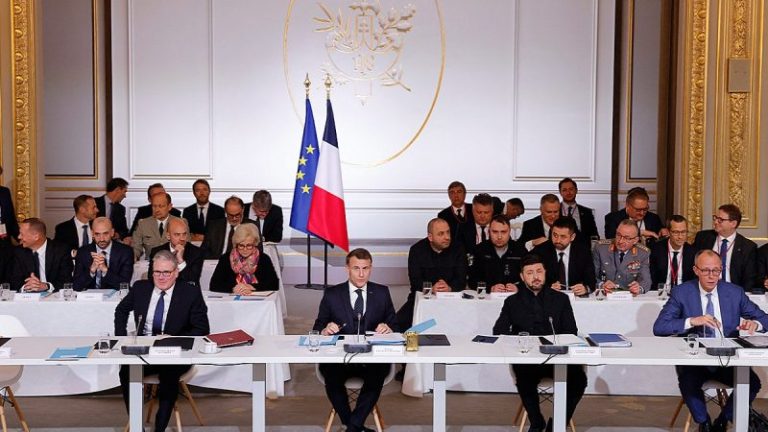
The declaration was unveiled at a joint news conference by French President Emmanuel Macron, Ukrainian President Volodymyr Zelenskyy and U.K. Prime Minister Keir Starmer.

This followed talks in Paris which were attended by Jared Kushner and the U.S. special envoy, Steve Witkoff.

This post appeared first on FOX NEWS

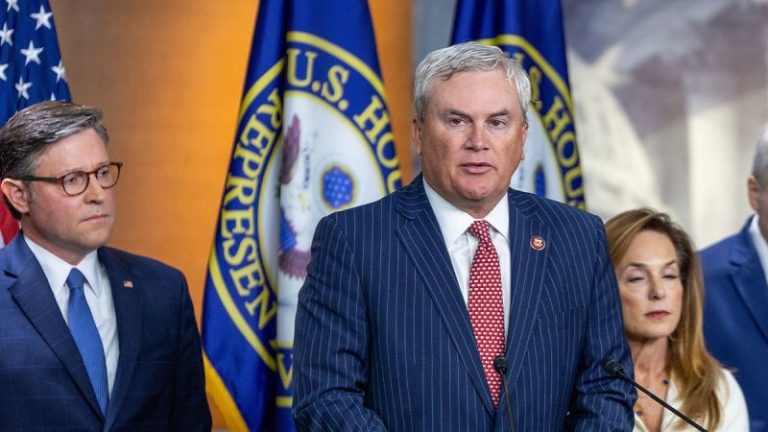
House Oversight Committee Chairman James Comer, R-Ky., will accuse top Minnesota government officials of being ‘asleep at the wheel’ at the start of his panel’s high-profile hearing into alleged fraud.

In Comer’s opening statement, obtained by Fox News Digital, he is expected to question whether ‘Governor Tim Walz, Attorney General Keith Ellison, and Minnesota’s Democratic leadership’ were negligent or ‘complicit’ in the growing scandal.

‘Minnesota’s social services — which are funded by you, the American taxpayer — are being ripped off. The most vulnerable are suffering as a result,’ Comer will say, according to his prepared remarks. 

‘The fraudsters — many of whom are from Minnesota’s Somali community — have stolen from programs meant to feed needy kids, provide services to autistic children, house low-income and disabled Americans, and provide healthcare to vulnerable Medicaid recipients.’

Federal prosecutors in Minnesota have charged multiple people with stealing more than $240 million from the Federal Child Nutrition Program through the Minnesota-based nonprofit Feeding Our Future.

However, the probe has since widened to multiple state-run programs being investigated for potential fraud. Childcare providers receiving state funding, mainly within the Somali community, are also under scrutiny.

U.S. attorneys have alleged that billions more dollars could have fallen prey to fraud in the state, something Walz has pushed back on while accusing Republicans of politicizing the scandal.

‘Fraudsters like these take millions to enrich themselves while providing nothing, overstating, or outright faking the services. How many children have gone hungry because fraudsters stole money that was intended to provide them with food?’ Comer will say.

‘How many autistic children were denied services because fraudsters instead sent this money overseas? How many low-income seniors, people with disabilities, or those with mental illnesses were denied access to housing because fraudsters drained resources and pocketed the money for themselves?’

Comer will argue in his statement that the revelations so far are ‘just the tip of the iceberg.’

The Wednesday hearing, which kicks off at 10 a.m. ET, will feature testimony from three Republicans in the state legislature.

Comer summoned Walz and Ellison for a follow-up hearing on Feb. 10, but it’s not yet clear if they will attend.

House Majority Whip Tom Emmer, R-Minn., will also take part in Wednesday’s hearing, Fox News Digital was told. Emmer is a longtime critic of Walz’s administration and represents a district that’s home to two out of three of the hearing’s GOP witnesses.

This post appeared first on FOX NEWS

A bipartisan group of senators is still working on a fix for the now-expired Obamacare subsidies and believe that they may be nearing a proposal that could hit the Senate floor.

The confab, which met a handful of times during Congress’ holiday break, adjourned once more behind closed doors on Monday night. Sens. Susan Collins, R-Maine, and Bernie Moreno, R-Ohio, are leading the talks among several Senate Republicans and Democrats looking for a compromise solution.

Most who attended the meeting were tight-lipped on specifics of the still-simmering proposal, but Collins noted the plan was similar to the initial offering from her and Moreno.

‘Parts of the bill are similar to what Senator Moreno and I proposed originally, with a two-year extension, with some reforms in the first year and then more substantial reforms in the second year,’ she said.

Their original plan — one of several floating around in the upper chamber — would have extended the subsidies by two years, put an income cap onto the credits for households making up to $200,000 and eliminated zero-cost premiums as a fraud preventive measure by requiring a $25 minimum monthly payment.

Sen. Tim Kaine, D-Va., one of the lawmakers who has routinely attended the meetings, said the talks were going well.

‘We had a really good discussion last night,’ Kaine said. ‘I don’t want to characterize it other than we had a really good discussion.’

And Senate Majority Leader John Thune, R-S.D., said that he had gotten an update on negotiations from Moreno Tuesday morning and believed that the bipartisan huddles had been productive.

Still, any plan that hits the floor has to hit several benchmarks for Republicans, including antifraud guardrails, a transition into health savings accounts (HSAs) and more stringent anti-abortion language.

‘The keys are reforms, obviously, and then how do you navigate [the Hyde Amendment],’ Thune said. ‘I think that’s probably the most challenging part of this. But again, I think there’s potentially a path forward, but it’s something that has to get a big vote, certainly a big vote.’

The Hyde Amendment issue is a barrier for both sides of the aisle, given that Senate Republicans demand that changes be made to the subsidies, and more broadly Obamacare, to prevent any taxpayer dollars from funding abortions.

That debate received a wrinkle Tuesday when President Donald Trump told House Republicans ‘you have to be a little flexible’ when it comes to the Hyde Amendment.

That triggered mixed reactions from Republicans in the upper chamber.

Sen. James Lankford, R-Okla., said that he had ‘no idea the context’ of Trump’s remarks but affirmed that he was ardently against funding abortions.

‘I’m saying I’m not flexible in the value of human life,’ Lankford said. ‘Life is valuable. I don’t believe some children are disposable, and some children are valuable. I think all children are valuable.’

Senate Democrats largely viewed Trump’s comments as a sign of progress — that maybe Republicans would budge on the Hyde issue. But flexibility goes both ways, and Sen. Ron Wyden, D-Ore., and top-ranking Democrat on the Senate Finance Committee, wasn’t ready to budge on the matter.

‘I am not going to open the door to Hyde, given what happens and what has been seen historically when you do that,’ he said. ‘If you open the door, it will get drafty in a hurry, and I’m not going to let it happen.’

Moreno signaled that Republicans might have to make a compromise on the issue if they wanted to move ahead with any kind of healthcare fix that could pass muster in the Senate.

He noted that there was a sense that ‘maybe the Obamacare language wasn’t as adherent to that philosophy [of Hyde] as it should be.’

‘But that’s not something that we’re looking — able to change right now,’ he said. ‘Because, quite frankly, if you put Hyde up to a vote among Democrats today, as opposed to Democrats 20 years ago, it would probably fail 46 to one on the Democrat side. So unfortunately, most Democrats today feel that there should be federal funding for abortion.’

This post appeared first on FOX NEWS

Perth, Australia (ABN Newswire) – Altech Batteries Ltd (ASX:ATC,OTC:ALTHF) (FRA:A3Y) (OTCMKTS:ALTHF) announced that binding conditional funding approval in the amount of 46.11 million Euro has now been granted for the CERENERGY(R) Sodium-Chloride Solid-State battery project in Saxony, Germany. The grant approval materially derisks project funding and supports progression toward construction of the planned 120 MWh CERENERGY(R) battery manufacturing facility in Saxony, Germany.

Highlights

– Altech Batteries GmbH’s CERENERGY(R) battery project has received conditional binding funding approval under Germany’s federal ‘STARK’ economic development program.

– The approval relates to a grant covering approximately 30% of eligible project CAPEX, with funding of up to EUR46.11M.

– The funding commitment is conditional on achieving full project financial close by 30 June 2026 and parliamentary approval of funds under Germany’s 2026 Federal Budget.

Conditional Binding Funding Commitment

The funding is being provided as part of the federal STARK program, which is supported by the Federal Ministry for Economic Affairs and Energy in cooperation with the EU. The aim of this program is to lead regions undergoing structural change into an ecologically, economically and socially sustainable future.

With the approval of the funding, the project has successfully completed the second and decisive stage of the approval process. The funding covers approximately 30% of the eligible investment costs and represents a significant milestone for the construction of the planned 120 MWh CERENERGY(R) battery factory in Germany.

This decision underscores the importance of the innovative CERENERGY(R) technology, which is being developed in collaboration with the Fraunhofer Society. The Sodium-Chloride Solid-State battery offers a safe, sustainable and strategically independent alternative to lithium-ion batteries and is expected to play an important role in future stationary energy storage solutions – especially for the European market.

Mr Daniel Raihani, Managing Director & Chief Executive Officer, commented ‘Securing conditional binding funding approval of up to EUR46.11 million under Germany’s STARK program is a major milestone for the CERENERGY(R) project. The support reflects the strategic importance of establishing advanced, nonlithium energy storage manufacturing capability in Europe and recognises the technical progress achieved to date in collaboration with Fraunhofer IKTS.

‘Importantly, the grant materially de-risks the project’s capital structure by covering approximately 30% of eligible investment costs and provides a strong foundation as we progress toward full project financing and construction of the planned 120 MWh production facility in Saxony, Germany.

‘We remain focused on completing financial close by mid-2026 and advancing the CERENERGY(R) technology toward commercial deployment to support long-duration, safe and sustainable stationary energy storage solutions for the European market’.

As is customary for projects of this size, the funding commitment is subject to final financial close of the CERENERGY(R) battery project by June 2026 and budgetary approval of the funds in the 2026 federal budget.

*To view tables and figures, please visit:
https://abnnewswire.net/lnk/918BT5H8

About Altech Batteries Ltd:

Altech Batteries Limited (ASX:ATC,OTC:ALTHF) (FRA:A3Y) is a specialty battery technology company that has a joint venture agreement with world leading German battery institute Fraunhofer IKTS (‘Fraunhofer’) to commercialise the revolutionary CERENERGY(R) Sodium Alumina Solid State (SAS) Battery. CERENERGY(R) batteries are the game-changing alternative to lithium-ion batteries. CERENERGY(R) batteries are fire and explosion-proof; have a life span of more than 15 years and operate in extreme cold and desert climates. The battery technology uses table salt and is lithium-free; cobalt-free; graphite-free; and copper-free, eliminating exposure to critical metal price rises and supply chain concerns.

The joint venture is commercialising its CERENERGY(R) battery, with plans to construct a 100MWh production facility on Altech’s land in Saxony, Germany. The facility intends to produce CERENERGY(R) battery modules to provide grid storage solutions to the market.

Source:
Altech Batteries Ltd

Contact:
Daniel Raihani
Managing Director
Altech Batteries Limited
Tel: +61-8-6168-1555
Email: info@altechgroup.com

Martin Stein
Chief Financial Officer
Altech Batteries Limited
Tel: +61-8-6168-1555
Email: info@altechgroup.com

News Provided by ABN Newswire via QuoteMedia

This post appeared first on investingnews.com

Here’s a quick recap of the crypto landscape for Monday (January 5) as of 9:00 p.m. UTC.

Get the latest insights on Bitcoin, Ether and altcoins, along with a round-up of key cryptocurrency market news.

Bitcoin and Ether price update

Bitcoin (BTC) was priced at US$94,127.01, up by 3.2 percent over 24 hours.

Bitcoin price performance, January 6, 2025.

Chart via TradingView.

Bitcoin started Monday strong, rising above US$92,000 in early trading before briefly breaking US$94,600, signaling a potential shift in near-term momentum after a bruising finish to 2025.

Research firm 10X said the move reflects a return to more normalized trading volumes and early signs of renewed institutional positioning at the start of the year. The firm notes that Bitcoin is holding above key moving averages, with the 21 day line emerging as a critical support level for maintaining upside bias.

It added that the shift suggests growing expectations for a push toward the US$100,000 level. The rebound follows three consecutive monthly declines — a historically rare pattern that has often preceded January recoveries.

“The strength across crypto and traditional safe havens reflects a rebalancing phase driven by geopolitical risk and liquidity positioning,” said Lacie Zhang, a research analyst at Bitget Wallet.

“In this setup, Bitcoin has room to push toward US$105,000, while Ethereum could test US$3,600, as traders balance inflation risks with crypto’s deflationary characteristics and long-term adoption narrative.’

Zhang said DeFi is currently driving significant growth, with protocols such as Uniswap (UNI) and Aave (AAVE) seeing benefits from improved governance, new revenue-sharing frameworks and institutional investor involvement.

“For large-cap altcoins, XRP and Solana stand out: XRP’s role in cross-border payments and improving regulatory clarity, combined with ETF inflows, could support price ranges of US$5 – US$10, while Solana’s high-throughput ecosystem and network expansion position it for US$500 – US$800 over the next growth phase.

“The renewed surge in memecoin activity reflects improving retail risk appetite,” she added. “It’s not a long-term thesis, but often a precursor to liquidity rotating into higher-quality, utility-driven altcoins as the cycle matures.”

Ether (ETH) was priced at US$3,239.82, up by 3.2 percent over the last 24 hours.

Altcoin price update

  • XRP (XRP) was priced at US$2.31, up by 10.4 percent over 24 hours.
  • Solana (SOL) was trading at US$137.92, up by three percent over 24 hours.

Today’s crypto news to know

Crypto investment products pull in US$47.2 billion in 2025

Global crypto exchange-traded products attracted US$47.2 billion in net inflows in 2025, falling just short of the prior year’s record despite a noticeable slowdown in Bitcoin demand, according to CoinShares.

Bitcoin-focused products added US$26.9 billion, a sharp drop from 2024 levels, as price weakness dampened inflows and modest interest emerged in short-bitcoin vehicles. The cooling in Bitcoin was offset by a surge into select altcoins, led by Ethereum products, which posted US$12.7 billion in inflows.

Meanwhile, XRP and Solana funds followed closely as each recorded multibillion-dollar inflows and triple-digit percentage growth year over year.

Japan signals crypto integration across traditional markets

Satsuki Katayama, Japan’s finance minister, has signaled stronger government backing for integrating digital assets into the country’s stock and commodities exchanges.

Speaking at the Tokyo Stock Exchange, she emphasized the role of exchanges in expanding public access to blockchain-based assets and modern investment tools. She pointed to the US experience with crypto-linked exchange-traded funds (ETFs) as a reference point, even as Japan currently lacks domestically listed crypto ETFs.

Katayama described 2026 as a “digital year,” pledging policy support for exchanges adopting advanced trading technologies. The remarks build on regulatory reforms already underway, including discussions on allowing banks to hold crypto assets and the approval of Japan’s first yen-pegged stablecoin.

Bitget’s tokenized stock milestone and TradFi launch

Bitget’s new Universal Exchange vision has reached two major milestones that signal a major shift in how digital and traditional assets are traded in one place. Bitget announced last week that its tokenized stock volume surpassed US$1 billion, with 95 percent of that total volume occurring in December alone.

Building on that momentum, and following a successful private beta with over 80,000 users, today Bitget officially opened its TradFi trading suite to the public, allowing customers access to 79 different instruments across forex, metals, indices and commodities. These products are traded as contracts for difference and are settled entirely in USDT, meaning crypto-native traders can execute macro strategies without leaving the platform or converting to fiat currency.

During the test phase, XAU/USD recorded over US$100 million in single-day trading volume, one of the highest daily figures observed during the beta.

“Traders want the flexibility to choose between assets in a unified ecosystem,” said Chen.

“They want the freedom to move between crypto and traditional markets as conditions change. TradFi going public is about giving them that accessibility in one place, without friction.”

The move signals a broader shift in how exchanges are evolving, not just as venues for speculation, but as comprehensive gateways to global markets under a unified trading experience.

Securities Disclosure: I, Meagen Seatter, hold no direct investment interest in any company mentioned in this article.

Securities Disclosure: I, Giann Liguid, hold no direct investment interest in any company mentioned in this article.

This post appeared first on investingnews.com

From established players to up-and-coming firms, Canada’s pharmaceutical landscape is diverse and dynamic.

Canadian drug companies are working to discover and develop major innovations amidst an increasingly competitive global landscape. Rising technologies such as artificial intelligence are playing a role in the landscape as well.

Read on to learn about what’s been driving the share prices of the best-performing Canadian pharma stocks.

1. HLS Therapeutics (TSX:HLS)

Year-on-year gain: 26.6 percent
Market cap: C$149.8 million
Share price: C$4.76

HLS Therapeutics focuses on drugs for cardiovascular and central nervous system problems, often through partnerships. The company specializes in acquiring and commercializing pharmaceuticals that address unmet needs, including Vascepa to reduce cardiovascular risk and Clozaril for treatment-resistant schizophrenia.

HLS in-licensed the exclusive rights to the treatments Nilemdo and Nexlizet, both of which are already approved in other countries, from Esperion (NASDAQ:ESPR) in May.

The November 2025 Health Canada approval of LDL-cholesterol lowering treatment Nilemdo represents the most significant catalyst for the company since the launch of Vascepa, positioning HLS as a dominant leader in the Canadian cardiovascular market. The company is targeting Nilemdo’s commercial launch in Q2 2026.

Along with the approval, Health Canada issued a notice of non-compliance for its Nexlizet cholesterol-reducing treatment. According to HLS, the decision was related to chemistry, manufacture and controls data, not clinical data or safety.

Additionally, the company generates revenue from a diversified portfolio of royalty interests on various products marketed by third parties.

2. Satellos Bioscience (TSXV:MSCL)

Year-on-year gain: 14.49 percent
Market cap: C$141.04 million
Share price: C$0.79

Satellos Bioscience is a Canadian pharmaceutical company expanding treatment options for muscle disorders. The company has focused specifically on Duchenne muscular dystrophy, developing therapies that target the specific biological pathways involved in regenerating and repairing muscle tissue.

Its lead candidate, SAT-3247, targets a protein called AAK1, which regulates the activity of stem cells that activate and differentiate new muscle fibers.

In Q4 2025, Satellos administered the first dose to a patient in its 11-month open-label follow-up study for adults who completed its initial Phase 1b trial. The study seeks to demonstrate the lasting impact of the significant functional improvements observed earlier in the year.

On December 9, the company received Investigational New Drug (IND) clearance from the US Food and Drug Administration (FDA) and several other global regulators to initiate BASECAMP, a global Phase 2 randomized, placebo-controlled study to evaluate SAT-3247 in pediatric patients.

3. Knight Therapeutics (TSX:GUD)

Year-on-year gain: 14.29 percent
Market cap: C$592.59 million
Share price: C$6.00

Knight Therapeutics is a specialty pharmaceutical company headquartered in Montreal, Québec. It operates on an acquisition and in-licensing model, obtaining the rights to innovative medicines from global pharmaceutical companies and commercializing them across Canada and Latin America.

The company was originally founded by the former leaders of Paladin Labs, which was acquired by Endo International in 2014. In June 2025, Knight bought the Paladin business back from Endo for C$107 million, adding over 40 products to Knight’s Canadian roster.

The additions, helped drive 32 percent revenue growth year-over-year to a record C$122.55 million in Q3. The company projects its Knight Canada subsidiary will be the company’s top revenue-contributor within two years.

4. BioSyent (TSXV:RX)

Year-on-year gain: 10.07 percent
Market cap: C$146.89 million
Share price: C$12.90

BioSyent is a specialty pharmaceutical company focused on in-licensing or acquiring established, high-margin healthcare products for the Canadian and international markets. Its growth is anchored by brands in iron health and women’s wellness. Its flagship brand, FeraMAX, has been Canada’s leading iron supplement for over a decade.

The company’s 2024 acquisition of Tibella, a treatment for menopausal symptoms, has been a major growth driver. According to its Q3 earnings report. BioSyent’s sales grew 19 percent year-over-year in Canada and 94 percent in the international market.

5. NurExone Biologic (TSXV:NRX)

Year-on-year gain: 6.45 percent
Market cap: C$47.54 million
Share price: C$0.66

NurExone Biologic is behind ExoTherapy, a drug-delivery platform that uses exosomes, which are nano-sized extracellular vesicles, to create treatments for central nervous system disorders, spinal cord injuries and traumatic brain injuries. It is a less invasive alternative to cell transplantation, which requires surgery and carries the risk of rejection.

NurExone’s first nano-drug, ExoPTEN, uses a proprietary sIRNA sequence delivered with the ExoTherapy platform to treat spinal cord injuries. ExoPTEN received orphan drug designation from the US FDA in October 2023.

The company expects to initiate its Phase 1/2a first-in-human trial for acute spinal cord injury in the second half of 2026, targeting patients with traumatic injuries.

It continues to make significant progress, with recent preclinical studies demonstrating strong, dose-dependent vision recovery in glaucoma models and improved motor function in spinal cord injury models.

The company announced plans for a US exosome production facility in Indianapolis, Indiana, in September. According to the release, ‘The GMP compliant site would produce exosomes both for NurExone’s therapeutic pipeline and for a growing business-to-business opportunity in regenerative aesthetics.’

In December, the company began planning for small-scale production of ExoPTEN in Israel to support its clinical trial.

Securities Disclosure: I, Meagen Seatter, hold no direct investment interest in any company mentioned in this article.

This post appeared first on investingnews.com

Investor Insight

Centurion Minerals offers investors an early-stage entry point into a strategically located gold exploration company positioned within one of North America’s most prolific and active mining districts. With a restructured corporate foundation, and a highly experienced geological and corporate finance team, the company is primed for value-creating discoveries.

investingnews.com

Overview

Centurion Minerals (TSXV:CTN) is a Canadian exploration company focused on the acquisition, exploration and development of precious metals projects in the Americas.

The company’s strategy is centered on advancing high-quality, early-stage gold assets through systematic exploration to define drill-ready targets and unlock the discovery potential inherent in its three-part claim package: the Newman, Noseworthy and Hepburn properties. Situated near major operations and new discoveries, these claims benefit from excellent infrastructure, year-round road access and proximity to proven mineralized structural corridors. Centurion intends to increase shareholder value through targeted geophysics, ground truthing and drilling programs designed to reveal new high-grade zones, as well as through potential future acquisitions of complementary gold assets across the Americas.

Backed by a leadership team with decades of exploration, geology, corporate finance and project development experience, Centurion is positioned to capitalize on strong gold market fundamentals and renewed investor interest in junior exploration companies. With a low current valuation and advancing work program, the company provides leverage to both exploration success and broader trends in the gold sector.

Company Highlights

  • Highly prospective gold project in a world-class district located in the central north Abitibi greenstone belt, adjacent to major deposits and producing mines including Hecla Mining’s (NYSE:HL) Casa Berardi mine and Agnico Eagle’s (TSX:AEM) Detour Lake operations.
  • Exceptional closeology advantage, with its Casa Berardi West project situated just 12 km from AMEX Exploration’s (TSXV:AMX) 1.6 Moz “Perron” discovery and along the same structural corridors that have produced multi-million-ounce deposits.
  • Significant historic drilling across the three claim groups, including results up to 38 g/t gold and multiple intervals indicating gold-bearing iron formations and shear zones.
  • Clear exploration strategy including historic data compilation, geophysical surveys, target generation and a planned program to define new mineralized zones.
  • Experienced management and technical team with decades of experience in mineral exploration, and international corporate finance, enhances the potential of uncovering additional exploration opportunities.
  • Low market capitalization and recently reactivated corporate structure, offering investors a low entry point ahead of meaningful upside catalysts.

Key Project

Casa Berardi West Gold Project

The Casa Berardi West project is Centurion’s flagship gold exploration asset, encompassing approximately 6,732 hectares across three contiguous claim groups – Newman, Noseworthy and Hepburn – located 66 km northeast of Cochrane, Ontario. The project sits along structural corridors that host some of the region’s most significant deposits, including Hecla Mining’s Casa Berardi mine (3 Moz past production, plus 4 Moz in reserves and resources), Agnico Eagle’s Detour Lake mine (15 Moz reserve, producing ~659,000 oz of gold per year ), and AMEX Exploration’s Perron discovery (1.6 Moz measured and indicated resource at 6.14 g/t gold).

Location of the three claim groups at Casa Berardi West

Geological Setting & Closeology Advantage

The project is situated within the central north Abitibi Subprovince, an Archean greenstone belt known globally for its prolific endowment of gold and base metals. The claims lie adjacent to geological features associated with multiple major deposits – iron formations, shear zones and VMS trends – creating strong analogues to high-grade gold mines such as the Musselwhite mine in Northern Ontario.

This “closeology” positioning significantly enhances the potential for Centurion’s ground to host similar mineralization.

Historic Results & Target Areas

Historic exploration across the Casa Berardi West project – spanning more than 70 RC and diamond drill holes – has already confirmed the presence of gold-bearing structures and favorable host rocks. Notably, previous work returned multiple samples above 1 g/t gold, including a standout result of 38 g/t gold, demonstrating strong mineralization potential across the claim area.

Significant historic drill results at Newman target

Across the three claim groups, drilling and geophysical surveys have identified key geological features associated with major deposits in the region, including iron formations, shear zones and sulphidized horizons. Several zones of interest remain untested or underexplored, particularly along structural trends that extend from nearby high-grade gold and VMS systems such as the Perron and Normetal areas.

These findings provide Centurion with multiple high-priority target areas for follow-up exploration, forming the foundation for its next phase of geophysical work and upcoming drill targeting.

Management Team

David Tafel – Director, President and CEO

David Tafel brings over 30 years of experience in corporate structuring, strategic planning, financing and executive management across multiple public and private resource companies. He has raised several hundred million dollars for ventures in mining, technology and life sciences, and previously managed private investment funds at Canada’s largest independent securities firm.

Jeremy Wright – Director and CFO

A seasoned financial executive with more than 20 years of experience, Jeremy Wright serves as president & CEO of Seatrend Strategy Group and has held CFO roles across numerous public companies in the resource and technology sectors. His background includes financial management, negotiations and environmental economics, supported by extensive board leadership experience.

Joseph Del Campo – Director

Joseph Del Campo has served as CFO and Interim CEO across several mining companies, including Unigold and First Nickel. With decades of corporate financial leadership and board experience, he contributes deep governance, audit and operational oversight expertise to Centurion’s board.

Mike Kilbourne – Geological Consultant

A veteran geologist with 40+ years of industry experience, Mike Kilbourne has managed over 100,000 metres of drilling across North America and Mexico, worked as a production geologist in multiple mining environments, and generated over 700 exploration targets for private and public companies.

Jamie Lavigne – Geological Consultant

Jamie Lavigne is a senior exploration geologist with more than 30 years of experience in base and precious metals. He has held senior technical roles with major mining companies and specializes in advanced exploration, resource delineation and geological modeling across global mineral belts.

This post appeared first on investingnews.com

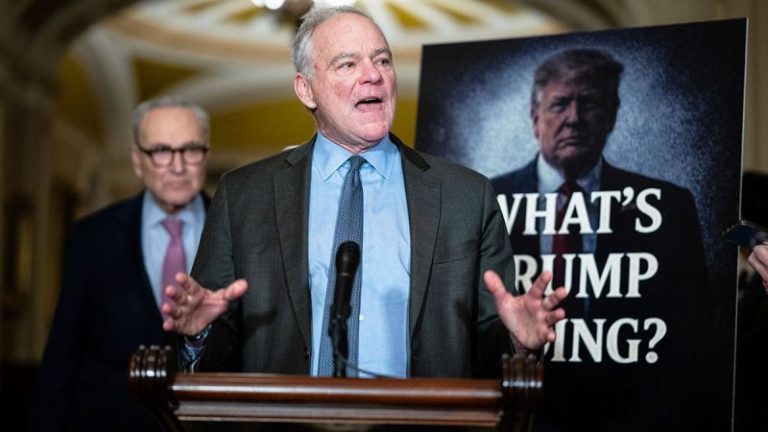
Sen. Tim Kaine, D-Va., wants Congress to take a more active role as a check on the Trump administration’s use of military force following the surprise weekend operation in Venezuela, and he plans to force a vote on legislation that would halt further military action in the country without lawmakers’ approval.

Kaine joined a chorus of congressional Democrats who were frustrated at President Donald Trump’s decision to strike Venezuela’s capital of Caracas, and subsequent capture of Venezuelan President Nicolás Maduro and his wife without oversight or approval from Congress.

Congressional Democrats have long been frustrated at Congress’ diminished role in decision-making since Trump took office last year, particularly over continued strikes in the Caribbean ahead of Operation Absolute Resolve on Saturday.

Kaine argued on a call with reporters that Congress has the constitutional authority to weigh in on military action and was frustrated throughout Trump’s second term that the check and balance was being bowled over.

‘It’s time for Congress to get its a– off the couch and do what the Constitution mandates that we do — the Constitution we take an oath to,’ Kaine said over the weekend. ‘We have to put this before the American people, not just in private settings, but in public hearings by the key oversight committees, Intelligence, Armed Services, Foreign Relations in both houses, and explore whether the United States should enter into yet another war with unforeseen consequences.’

Kaine again plans to bring a war powers resolution for a vote in the Senate, which is expected to come to the floor this week.

It’s not the first time he has tried to reassert Congress’ authority when it comes to the administration’s use of military action. Kaine earlier this year forced a vote on a war powers resolution following Trump’s strike on Iranian nuclear facilities. That resolution failed on a largely party-line vote, save for Sen. Rand Paul, R-Ky., who joined all Senate Democrats in support.

The Virginia Democrat’s latest effort would prevent further military action in Venezuela without congressional approval.

Senate Minority Leader Chuck Schumer, D-N.Y., who is a co-sponsor on the latest war powers resolution along with Kaine and Paul, said he would ensure the measure would get ‘adequate floor time so we could debate and discuss this.’

Schumer is also pushing for hearings to investigate the strikes and capture of Maduro and noted that he spoke with top Democrats on several committees who contended their Republican colleagues ‘have expressed a lot of troublesome comments about what Trump is doing and the way he is doing it.’

‘We’re going to be pushing our Republican colleagues to stand up for the American people, to get this done,’ Schumer said. ‘Congress should not be sidelined as the Trump administration gets sucked into another nation-building quagmire, and we’re going to hold them accountable, protect American lives, to protect America’s interests.’

Another issue that many congressional Democrats have is that lawmakers weren’t notified of the strikes until after the fact. Secretary of State Marco Rubio argued over the weekend that it would have been risky to notify lawmakers in advance given the sensitive nature of the operation. Trump charged that Congress was kept in the dark because lawmakers leak. 

Senate Majority Leader John Thune, R-S.D., who didn’t receive notification of the operation until afterward, said that he was ‘comfortable’ with the timing. 

‘They didn’t tell me ahead of time,’ Thune said. ‘But I think there’s a reason why, like I said, before notification of Congress in advance of really critical and hypersensitive missions, to me, seems ill-advised anyway.’

This post appeared first on FOX NEWS

Switzerland announced Monday that it has frozen assets held in the country tied to Venezuelan President Nicolás Maduro and his associates following the U.S. capture of the leader in Caracas. 

‘On 5 January 2026, the Federal Council decided to freeze any assets held in Switzerland by Nicolás Maduro and other persons associated with him with immediate effect,’ the Swiss Federal Department of Foreign Affairs (FDFA) said. 

The decision, which will remain in effect for four years, aims to prevent the transfer of assets amid concerns that the funds were acquired illegally through a regime long accused of widespread corruption, according to the agency. The freeze does not apply to members of the current government, and Reuters reported that the order will affect 37 people. 

Should future legal proceedings ‘reveal that the funds were illicitly acquired, Switzerland will endeavour to use them for the benefit of the Venezuelan people,’ the FDFA said.

The council added that the asset freeze builds on existing sanctions against Venezuela, first imposed in 2018 under the Embargo Act, which includes restrictions on economic resources, travel, and specific goods. 

The new measure, enacted under the Foreign Illicit Assets Act (FIAA), now targets prominent individuals who were not covered in previous Swiss sanctions and are perceived as supporting the Venezuelan regime.

According to the FDFA, the decision was not made based on Maduro’s capture nor the legitimacy of his removal but amid concerns that his home country or others could launch legal action later to recover the potentially illegally acquired assets. 

Freezing the assets now acts as a ‘precautionary measure’ meant to preserve them for potential future proceedings, according to the Swiss authorities. 

‘The reasons behind Mr Maduro’s fall from power do not play a decisive role in asset freezes under the FIAA,’ the Federal Council said in a statement. 

‘Nor does the question of whether the fall from power occurred lawfully or in violation of international law. The decisive factor is that a fall from power has occurred and that it is now possible that the country of origin will initiate legal proceedings in the future with regard to illicitly acquired assets.’

Authorities added that the government is monitoring the situation closely and is calling for the peaceful de-escalation of the ‘volatile’ situation.

‘The situation is volatile, and several scenarios are possible in the coming days and weeks,’ the FDFA said. ‘Switzerland is closely monitoring the situation in Venezuela. It has called for de-escalation, restraint and compliance with international law, including the prohibition of the use of force and the principle of respect for territorial integrity. Switzerland has also repeatedly offered its good offices to all sides in order to find a peaceful solution to the situation.’

This post appeared first on FOX NEWS