Archive

February 11, 2026

Browsing

(TheNewswire)


February 10, 2026 TheNewswire – Vancouver, British Columbia, Canada – JZR Gold Inc. (the ‘Company’ or ‘JZR’) (TSX-V: JZR) today announces that subject to applicable shareholder and TSX Venture Exchange approvals, the Board of Directors of the Company has approved the amendment of an aggregate of 725,000 incentive stock options (the ‘Amended Options’) previously granted to certain directors, officers, employees and consultants of the Company under the Company’s Equity Incentive Plan (the ‘Option Amendments’). Pursuant to the Option Amendments, the expiry date has been extended to February 12, 2031, with no change to the exercise price.


For further information, please contact:


Robert Klenk

Chief Executive Officer

E: rob@jazzresources.ca
T: 604.329.9092


Forward-Looking Statements


This news release contains forward-looking statements, which includes any information about activities, events or developments that the Company believes, expects or anticipates will or may occur in the future.  Forward-looking statements in this news release include statements with respect to the anticipated use of proceeds from the exercise of the Warrants.  Forward-looking information reflects the expectations or beliefs of management of the Company based on information currently available to it.  Forward-looking information is subject to known and unknown risks, uncertainties and other factors that may cause the actual results, level of activity, performance or achievements of the Company to be materially different from those expressed or implied by such forward-looking information.  These factors include, but are not limited to: risks associated with the business of the Company; business and economic conditions in the mineral exploration industry generally; the supply and demand for labour and other project inputs; changes in commodity prices; changes in interest and currency exchange rates; risks related to inaccurate geological and engineering assumptions; risks relating to unanticipated operational difficulties (including failure of equipment or processes to operate in accordance with the specifications or expectations, unavailability of materials and equipment, government action or delays in the receipt of government approvals, industrial disturbances or other job action and unanticipated events related to health, safety and environmental matters); risks related to adverse weather conditions; geopolitical risk and social unrest; changes in general economic conditions or conditions in the financial markets; and other risk factors as detailed from time to time in the Company’s continuous disclosure documents filed with the Canadian securities regulators.  The forward-looking information contained in this press release is expressly qualified in its entirety by this cautionary statement.  The Company does not undertake to update any forward-looking information, except as required by applicable securities laws.


Neither the TSX Venture Exchange nor its regulation services provider (as that term is defined in the policies of the TSX Venture Exchange) accepts responsibility for the adequacy or accuracy of this press release.


None of the securities of JZR have been registered under the U.S. Securities Act of 1933, as amended (the ‘U.S. Securities Act’), or any state securities law, and may not be offered or sold in the United States or to, or for the account or benefit of, persons in the United States or ‘U.S. persons’ (as such term is defined in Regulation S under the U.S. Securities Act) absent registration or an exemption from such registration requirements. This news release shall not constitute an offer to sell or the solicitation of an offer to buy in the United States nor shall there be any sale of the securities in any State in which such offer, solicitation or sale would be unlawful.

NOT FOR DISTRIBUTION TO U.S. NEWSWIRE SERVICES OR FOR RELEASE, PUBLICATION, DISTRIBUTION OR DISSEMINATION, DIRECTLY OR INDIRECTLY, IN WHOLE OR IN PART, IN OR INTO THE UNITED STATES.

Copyright (c) 2026 TheNewswire – All rights reserved.

News Provided by TheNewsWire via QuoteMedia

This post appeared first on investingnews.com

NOT FOR DISTRIBUTION TO U.S. NEWSWIRE SERVICES OR DISSEMINATION IN THE UNITED STATES

Questcorp Mining Inc. (CSE: QQQ,OTC:QQCMF) (OTCQB: QQCMF) (FSE: D910) (the ‘Company’ or ‘Questcorp’) is pleased to announce an upsize to its previously announced non-brokered private placement to up to 15,000,000 units (each, a ‘Unit’) at a price of $0.20 per Unit for gross proceeds of up to $3,000,000 (the ‘Offering’). Each Unit will consist of one common share of the Company (each, a ‘Share’) and one-half-of-one share purchase warrant (each whole share purchase warrant, a ‘Warrant’). Each Warrant will entitle the holder to acquire an additional common share of the Company at a price of $0.30 for a period of thirty-six months following closing of the Offering, provided that holders will not be permitted to exercise Warrants until 60 days following closing of the Offering.

The Company expects to utilize the proceeds of the Offering for exploration work at the Company’s La Union Gold and Silver Project and North Island Copper Project, and for general working capital purposes.

The Units to be issued under the Offering will be offered for sale pursuant to the listed issuer financing exemption under Part 5A of National Instrument 45-106 – Prospectus Exemptions, as amended by CSA Coordinated Blanket Order 45-935 – Exemptions from Certain Conditions of the Listed Issuer Financing Exemption (collectively, the ‘Listed Issuer Financing Exemption‘), in all provinces of Canada, except Quebec, and other qualifying jurisdictions, including the United States. The Units offered under the Listed Issuer Financing Exemption will be immediately ‘free-trading’ under applicable Canadian securities laws.

There is an offering document (the ‘Offering Document‘) related to this Offering that can be accessed under the Company’s profile at www.sedarplus.ca and at the Company’s website at https://questcorpmining.ca/. Prospective investors should read this Offering Document before making an investment decision.

In connection with completion of the Offering, the Company may pay finders’ fees to eligible third-parties who have introduced subscribers to the Offering. Completion of the Offering remains subject to receipt of regulatory approvals.

This press release is not an offer to sell or the solicitation of an offer to buy the securities in the United States or in any jurisdiction in which such offer, solicitation or sale would be unlawful prior to qualification or registration under the securities laws of such jurisdiction. The securities being offered have not been, nor will they be, registered under the United States Securities Act of 1933, as amended, and such securities may not be offered or sold within the United States or to, or for the account or benefit of, U.S. persons absent registration or an applicable exemption from U.S. registration requirements and applicable U.S. state securities laws.

About Questcorp Mining Inc.

Questcorp Mining Inc. is engaged in the business of the acquisition and exploration of mineral properties in North America, with the objective of locating and developing economic precious and base metals properties of merit. The Company holds an option to acquire an undivided 100% interest in and to mineral claims totaling 1,168.09 hectares comprising the North Island Copper Property, on Vancouver Island, British Columbia, subject to a royalty obligation. The Company also holds an option to acquire an undivided 100% interest in and to mineral claims totaling 2,520.2 hectares comprising the La Union Project located in Sonora, Mexico, subject to a royalty obligation.

Contact Information

Questcorp Mining Corp.

Saf Dhillon, President & CEO

Email: saf@questcorpmining.ca
Telephone: (604) 484-3031

This news release includes certain ‘forward-looking statements’ under applicable Canadian securities legislation. Forward-looking statements include, but are not limited to, statements with respect to the intended use of proceeds from the Offering; closing of the Offering; and filing of the Offering Document. Forward-looking statements are necessarily based upon a number of estimates and assumptions that, while considered reasonable, are subject to known and unknown risks, uncertainties, and other factors which may cause the actual results and future events to differ materially from those expressed or implied by such forward-looking statements. Such factors include, but are not limited to general business, economic, competitive, political and social uncertainties, uncertain capital markets; and delay or failure to receive board or regulatory approvals. There can be no assurance that such forward-looking statements will prove to be accurate, as actual results and future events could differ materially from those anticipated in such statements. Accordingly, readers should not place undue reliance on forward-looking statements. The Company disclaims any intention or obligation to update or revise any forward-looking statements, whether as a result of new information, future events or otherwise, except as required by law.

Neither the Canadian Securities Exchange nor its Regulation Services Provider (as that term is defined in the policies of the Canadian Securities Exchange) accepts responsibility for the adequacy or accuracy of this release.

To view the source version of this press release, please visit https://www.newsfilecorp.com/release/283532

News Provided by TMX Newsfile via QuoteMedia

This post appeared first on investingnews.com

Rising geopolitical tensions, intensifying competition for critical minerals and the accelerating breakdown of the postwar global order were some of the key themes at the Vancouver Resource Investment Conference (VRIC) in late January, as investors grappled with what a volatile world means for capital, commodities and security of supply.

In a wide-ranging panel moderated by Jesse Day, legendary mining financier Frank Giustra joined retired US Army Colonel Douglas Macgregor and geopolitical analyst Dr. Pascal Lottaz to examine flashpoints from Iran to Greenland, and why resource investors can no longer separate geopolitics from the metals that underpin modern economies.

Giustra, president and CEO of Fiore Group and co-chair of the International Crisis Group, opened the discussion by warning that tensions with Iran are approaching a critical threshold, driven by competing US and Israeli objectives.

“Israel would like to see Iran taken out as a major regional power,” Giustra said. “The US would like to see a different Iran — one it could do business with and that has stable relations with its neighbours. Those objectives are not the same.”

He added that the presence of a US carrier strike group in the region underscores the risk of escalation, but questioned whether military action would achieve Washington’s goals. “Iran is simply too large for a strike to have the intended effect,” he said, pointing to the absence of a coherent long-term policy.

Colonel Macgregor was more blunt, warning the US is “on the precipice of war” with Iran and arguing that Washington’s strategic thinking mirrors failed efforts elsewhere.

“This is the same mindset that committed us to war in Ukraine,” Macgregor said. “Destroy the country, divide it, dominate it, and take its resources. It failed there, and it will fail in Iran.”

Dr. Lottaz, an adjunct researcher at Waseda University in Tokyo and host of the ‘Neutrality Studies’ channel, said unpredictability has become the defining feature of US foreign policy.

“What Israel does is done in conjunction with the US — they are effectively one team,” Lottaz said. “Carrier groups sitting offshore are not just deterrence. They are also sitting ducks. Ships can sink.”

Greenland, minerals and power politics

The panel then turned to Greenland, a region increasingly viewed through the lens of critical minerals and Arctic security.

Giustra dismissed claims that Greenland poses an immediate security risk from Russia or China, arguing instead that resource competition is the real driver. “Greenland has always been open for business,” he said.

“The idea that the US needs to own it to access minerals is simply false.”

Instead, Giustra described Washington’s posture as coercive. “It’s essentially putting a gun to Greenland’s head and saying, ‘We want to buy you.’”

For mining investors, Greenland represents both opportunity and risk.

The island hosts significant deposits of rare earth elements, graphite and other strategic metals essential to clean energy technologies, defence systems and advanced manufacturing. But political uncertainty, including pressure from major powers, complicates development timelines and capital allocation.

Macgregor argued that US ambitions in Greenland and Venezuela reflect more optics than strategy. “This administration loves big gestures,” he said. “But unless you control what happens on the ground, nothing really changes.”

Europe’s energy crisis and deindustrialization

Lottaz traced Europe’s economic strain, particularly Germany’s deindustrialization, back to energy policy decisions, including the shutdown of nuclear power and the loss of Russian gas supplies.

“Political leadership in Europe is increasingly detached from national interests,” he said. “What matters more is positioning within EU and transatlantic institutions.”

That disconnect has direct consequences for resource markets, particularly energy-intensive industries such as metals refining, steel production and battery manufacturing, which depend on stable, affordable power.

Macgregor added that many global institutions, including NATO and the European Union, are approaching “block obsolescence,” forcing investors to rethink long-held assumptions about stability.

Critical minerals and the risk of conflict

As the discussion widened, Giustra pointed to critical minerals as one of the most dangerous fault lines in the emerging world order.

“The intense competition between China and the West over critical minerals is a major factor,” he said. “These are not just economic assets — they’re strategic weapons.”

China currently dominates processing of rare earth elements, lithium chemicals and battery-grade materials, giving it leverage over Western supply chains. Efforts by the US, Europe and allies to secure alternative sources — from Greenland to Africa to South America — are reshaping investment flows across the mining sector.

Giustra warned that history shows transitions between declining and rising powers are rarely peaceful. “The danger of conflict during a shift in world order is extremely high,” he said. “We may already be setting the stage for something far worse.”

Is there room for optimism?

Despite the grim outlook, Lottaz offered cautious optimism, arguing that even strained international systems retain some restraining influence.

“Everyone still claims to operate under the UN Charter, even when they violate it,” he said. “That tells us the idea of international law still matters.”

He also pointed to restraint in conflicts such as Ukraine, noting that NATO has avoided direct war with Russia. “There is still rationality at work. No one wants Armageddon.”

Macgregor closed with a stark reminder for investors and policymakers alike. “Rules only exist if someone enforces them,” he said. “As American power recedes, we’re entering a far more competitive and uncertain world.”

For the resource sector, that uncertainty translates into higher geopolitical risk, but also strategic opportunity. As governments scramble to secure supply chains for energy transition metals, defence materials and critical infrastructure, mining projects once considered peripheral are moving to the centre of global power politics.

Securities Disclosure: I, Georgia Williams, hold no direct investment interest in any company mentioned in this article.

This post appeared first on investingnews.com

(TheNewswire)


Drill Hole LBX25-101 — Highlights

  • 1.50 m @ 0.88 g/t Au, 13.60 g/t Ag, 0.24% Cu, 5.61% Zn (159.20 m to 160.70 m) 

    • Including 0.50 m @ 2.06 g/t Au, 31.10 g/t Ag, 0.53% Cu, 12.35% Zn (159.70 m to 160.20 m) 

  • 1.60 m @ 1.16 g/t Au, 10.21 g/t Ag, 0.30% Cu, 4.39% Zn (187.70 m to 189.30 m) 

  • 3.00 m @ 0.97 g/t Au, 4.04 g/t Ag, 0.14% Cu, 2.21% Zn (190.50 m to 193.50 m) 


Drill Hole LBX25-102 — Highlights

  • 0.50 m @ 3.89 g/t Au, 38.70 g/t Ag, 0.42% Cu, 5.37% Zn (45.00 m to 45.50 m) 

  • 1.00 m @ 2.04 g/t Au, 0.80 g/t Ag, 0.01% Cu, 0.02% Zn (108.50 m to 109.50 m) 

  • 2.04 m @ 2.63 g/t Au, 2.38 g/t Ag, 0.02% Cu, 0.17% Zn 205.96 m to 208.00 m) 

    • Including 1.00 m @ 5.14 g/t Au, 4.60 g/t Ag, 0.04% Cu, 0.30% Zn (207.00 m to 208.00 m) 

  • 0.50 m @ 2.60 g/t Au, 13.60 g/t Ag, 0.10% Cu, 6.75% Zn (230.30 m to 230.80 m) 


Toronto, Ontario – February 11, 2026 TheNewswire – Laurion Mineral Exploration Inc. (TSX-V: LME | OTCQB: LMEFF | FSE: 5YD) (‘LAURION’ or the ‘Company’) reports assay results from drill holes LBX25-101 and LBX25-102 from the Company’s recent Fall diamond drilling program totalling 1,821 metres completed in 8 drill holes at the A-Zone/McLeod/CRK Zone at the Ishkōday Project, located in the Beardmore–Geraldton Greenstone Belt of north-western Ontario, approximately 220 kilometres northeast of Thunder Bay.

Drill holes LBX25-101 and LBX25-102 were planned as part of LAURION’s model-guided A-Zone program to test interpreted mineralized horizons and strengthen continuity across the northeastern portion of the zone. (See Image DDH Cross Section.) The drill holes were positioned to validate structural interpretations and increase confidence in zones where both historical drilling and more recent Company-led drill programs have identified broad anomalous gold mineralization with localized higher-grade intervals. The assay results provide additional technical data that will support the refinement of future targeting and improve predictability for the Company’s subsequent drill campaigns. (See Image of Drill Locations of Fall Diamond Drilling.)


‘We are advancing the A-Zone through disciplined, high-confidence drill targeting designed to create measurable project value,’ said Cynthia Le Sueur-Aquin, President and CEO of LAURION. ‘Our objective is to complete drilling that answers specific geological questions, strengthens continuity, and improves predictability — because better technical clarity today supports stronger outcomes tomorrow for our shareholders.’


Geological Context


Drill hole LBX25-101 is situated approximately 265 m southwest of LBX25-100, with LBX25-102 positioned an additional 335 m southwest, extending drill coverage along the interpreted A-Zone mineralized corridor into a sparsely drilled area. LBX25-101 was established as a step-back collar to test projected mineralized horizons and structural continuity beyond the denser drill grid. Targeting incorporated projected intercept positions from holes LBX22-055, LBX22-056, LBX22-056A, LBX22-057, and historic hole K56 to improve geological and structural constraint across this portion of the zone.


Drill hole LBX25-102 was collared adjacent to the access road approximately 1.0 km south of the River Road, located north of the McLeod Zone and southwest of drill hole LBX21-041, to support continued drill coverage along this portion of the interpreted mineralized trend. This collar location enabled efficient drill access while extending geological coverage into a less densely tested portion of the corridor.


Hole ID

From

(m)

To

(m)

Core Length (m)

Au (g/t)

Ag (g/t)

Cu (%)

Zn (%)

LBX25-101

7.90

11.80

3.90

0.200

2.88

0.03

0.65

including

7.90

8.60

0.70

0.146

9.80

0.06

2.94

LBX25-101

120.2

120.80

0.60

0.224

4.80

0.12

1.54

LBX25-101

159.20

196.50

37.30

0.209

2.06

0.05

0.87

including

159.20

160.70

1.50

0.883

13.60

0.24

5.61

including

159.70

160.20

0.50

2.060

31.10

0.53

12.35

including

187.70

189.30

1.60

1.159

10.21

0.30

4.39

including

188.20

193.50

5.30

0.872

5.11

0.16

2.53

including

190.50

193.50

3.00

0.971

4.04

0.14

2.21

LBX25-102

45.00

45.50

0.50

3.890

38.70

0.42

5.37

LBX25-102

52.80

53.30

0.50

0.617

3.90

0.03

3.25

LBX25-102

82.90

83.70

0.80

0.511

0.50

0.01

LBX25-102

108.50

109.50

1.00

2.040

0.80

0.01

0.02

LBX25-102

205.96

208.00

2.04

2.630

2.38

0.02

0.17

Including

207.00

208.00

1.00

5.140

4.60

0.04

0.30

LBX25-102

212.00

213.00

1.00

0.339

0.25

0.04

LBX25-102

222.80

223.30

1.20

0.292

9.58

0.02

1.10

including

222.80

223.30

0.50

0.457

20.60

0.03

2.55

LBX25-102

226.00

245.00

19.00

0.355

2.63

0.03

0.58

including

230.30

233.60

3.30

1.114

6.35

0.07

1.78

including

230.30

230.80

0.50

2.600

13.60

0.10

6.75

NOTE: Intervals represent core length. The interval widths reported are down-hole widths. The true widths of the mineralized zones are not known at this time as there is insufficient information to determine the orientation of the mineralization.


Name

Elevation

(m)

Azimuth

Dip

Easting

Northing

Depth

(m)

LBX25-101

321

127

-50

446328

5513024

276

LBX25-102

323

115

-50

446200

5512713

300

Total


576


Sampling and QA/QC Protocols


All drill core is transported and stored inside the core facility located at the Ishkōday Project in Greenstone, Ontario. LAURION employs an industry standard system of external standards, blanks and duplicates for all of its sampling, in addition to the QA/QC protocol employed by the laboratory. After logging, core samples were identified and then cut in half along core axis in the same building and then zip tied individually in plastic sample bags with a bar code. Approximately five or six of these individual bags were then stacked into a ‘rice’ white material bag and stored on a skid for final shipment to the laboratory. All core samples were shipped to the ALS facility in Thunder Bay, Ontario, which were then prepared by ALS Global Geochemistry in Thunder Bay and analyzed by ALS Global Analytical Lab in North Vancouver, British Columbia. Samples are processed by 4-acid digestion and analyzed by fire assay on 50 g pulps and ICP-AES (Inductively Coupled Plasma – Atomic Emission Spectroscopy). Over limit analyses are reprocessed with gravimetric finish. A total of 5% blanks and 5% standard are inserted randomly within all samples. 5% of the best assay result pulps were sent for re-assays. All QA/QC were verified, and no contamination or bias have been observed. The remaining half of the core, as well as the unsampled core, is stored in temporary core racks at the core logging facility in Beardmore and moved to the core storage facility at the Ishkōday Project. Note: QA/QC review of standards and duplicates indicates analytical results are reliable. One zinc standard adjacent to a high-grade zinc interval returned elevated values consistent with expected analytical behaviour following high-grade samples.


Qualified Person


The technical contents of this release were reviewed and approved by Pierre-Jean-Lafleur P. Eng, a consultant to LAURION and a Qualified Person as defined by National Instrument 43-101 – Standards of Disclosure for Mineral Projects.


About LAURION Mineral Exploration Inc.


Laurion Mineral Exploration Inc. is a mid-stage junior mineral exploration company listed on the TSX Venture Exchange under the symbol LME and on the OTC Pink market under the symbol LMEFF. The Company currently has 278,716,413 common shares outstanding, with approximately 73.6% held by insiders and long-term ‘Friends and Family’ investors, reflecting strong alignment between management, the Board, and shareholders.


LAURION’s primary focus is the 100%-owned, district-scale Ishkōday Project, a 57 km² land package hosting gold-rich polymetallic mineralization. The Company is advancing Ishkōday through a disciplined, milestone-driven exploration strategy focused on strengthening geological confidence, defining structural continuity.


LAURION’s strategy is centered on deliberate value creation. The Company is prioritizing systematic technical advancement, integrated geological and structural modeling, and the evaluation of optional, non-dilutive pathways, including historical surface stockpile processing, that may support flexibility in LAURION’s exploration plans without diverting the Company’s focus from its core exploration objectives.


The Company’s overarching objective is to build project value before monetization, ensuring that any future strategic outcomes are supported by technical clarity, reduced execution risk, and demonstrated scale. While the Board remains attentive to strategic interest that may arise, LAURION is not driven by transaction timing. Instead, the Company is focused on advancing the Ishkōday Project in a manner that strengthens long-term shareholder value.


LAURION will continue to communicate updates through timely disclosure and will issue press releases in accordance with applicable securities laws should any material information arise.


FOR FURTHER INFORMATION, CONTACT:

Laurion Mineral Exploration Inc.

Cynthia Le Sueur-Aquin – President and CEO

Tel: 1-705-788-9186 Fax: 1-705-805-9256


Douglas Vass – Investor Relations Consultant

Email: info@laurion.ca

Website: http://www.LAURION.ca

Follow us on: X (@LAURION_LME), Instagram (laurionmineral) and LinkedIn ()


Caution Regarding Forward-Looking Information


This press release contains forward-looking statements, which reflect the Company’s current expectations regarding future events including with respect to LAURION’s business, operations and condition, management’s objectives, strategies, beliefs and intentions, the Company’s ability to advance the Ishkōday Project, the nature, focus, timing and potential results of the Company’s exploration, drilling and prospecting activities, including the Company’s diamond drill program referenced in this press release and the Company’s other planned activities for the Ishkōday Project for the remainder of 2026, and the statements regarding the Company’s exploration or consideration of any possible strategic alternatives and transactional opportunities, as well as the potential outcome(s) of this process, the possible impact of any potential transactions referenced herein on the Company or any of its stakeholders, and the ability of the Company to identify and complete any potential acquisitions, mergers, financings or other transactions referenced herein, and the timing of any such transactions. The forward-looking statements involve risks and uncertainties. Actual events and future results, performance or achievements expressed or implied by such forward-looking statements could differ materially from those projected herein including as a result of a change in the trading price of the common shares of LAURION, the TSX Venture Exchange or any other applicable regulator not providing its approval for any strategic alternatives or transactional opportunities, the interpretation and actual results of current exploration activities, changes in project parameters as plans continue to be refined, future prices of gold and/or other metals, possible variations in grade or recovery rates, failure of equipment or processes to operate as anticipated, the failure of contracted parties to perform, labor disputes and other risks of the mining industry, delays in obtaining governmental approvals or financing or in the completion of exploration, as well as those factors disclosed in the Company’s publicly filed documents. Investors should consult the Company’s ongoing quarterly and annual filings, as well as any other additional documentation comprising the Company’s public disclosure record, for additional information on risks and uncertainties relating to these forward-looking statements. The reader is cautioned not to rely on these forward-looking statements. Subject to applicable law, the Company disclaims any obligation to update these forward-looking statements. All sample values are from grab samples and channel samples, which by their nature, are not necessarily representative of overall grades of mineralized areas. Readers are cautioned to not place undue reliance on the assay values reported in this press release.


NEITHER THE TSX VENTURE EXCHANGE NOR ITS REGULATION SERVICE PROVIDER (AS THAT TERM IS DEFINED IN THE POLICIES OF THE TSX VENTURE EXCHANGE) ACCEPTS RESPONSIBILITY FOR THE ADEQUACY OR ACCURACY OF THE CONTENT OF THIS NEWS RELEASE.


Copyright (c) 2026 TheNewswire – All rights reserved.

News Provided by TheNewsWire via QuoteMedia

This post appeared first on investingnews.com

Senate Democrats aren’t ready to concede in their push for stringent reforms to the Department of Homeland Security (DHS) and are ready to buck Senate Republicans’ plans to avert a partial shutdown. 

Their resistance comes as Senate Republicans and the White House have floated a counteroffer to Democrats’ proposed DHS and Immigration and Customs Enforcement (ICE) reforms. But the two sides remain far apart on a deal to fund the agency, and they are quickly running out of time.

Sen. Chris Murphy, D-Conn., the top-ranking Senate Democrat on the Homeland Security spending panel, said he would not support another short-term DHS funding extension unless Republicans made meaningful concessions on immigration enforcement.

Murphy also dismissed the White House’s proposal as a list of ‘sophomoric talking points.’

‘We had plenty of time, they wasted two weeks,’ Murphy said. ‘They still haven’t given us any meaningful answer or response.’ 

His position is shared by several Senate Democrats who have unified around a push to codify a list of 10 DHS reforms. Those include requirements that ICE agents obtain judicial warrants, unmask and display identification, provisions Republicans have labeled red lines.

The standoff follows criticism late Monday from Senate Minority Leader Chuck Schumer, D-N.Y., and House Minority Leader Hakeem Jeffries, D-N.Y., who rejected President Donald Trump’s counteroffer.

In a joint statement, the leaders said the proposal ‘is both incomplete and insufficient in terms of addressing the concerns Americans have about ICE’s lawless conduct.’ Jeffries added he would not support another short-term funding patch, known as a continuing resolution (CR), Tuesday morning. 

Schumer argued that there was plenty of time to hash out a deal. 

‘There’s no reason we can’t get this done by Thursday,’ he said. 

With Friday’s funding deadline approaching, Senate Majority Leader John Thune, R-S.D., teed up a backup plan Tuesday night as the risk of a shutdown grew.

Thune and Senate Republicans have warned since Trump and Schumer finalized a broader funding agreement earlier this month that Congress did not have enough time to negotiate and pass a revised DHS funding bill in just two weeks.

‘I understand that, on the other side of the Capitol, the Democrats are already objecting to that, which is no big surprise since they haven’t voted for anything yet,’ Thune said.

‘I think there are Democrats in both the House and the Senate who do want to see this addressed,’ he added. ‘I’m hopeful the conversations lead to an outcome, but we probably won’t know by the time the current CR expires.’

As with most funding fights, both parties accuse the other of failing to negotiate in good faith.

‘I’m not for putting DHS on a CR until they show us they are serious about doing something,’ Sen. Patty Murray, D-Wash., the top-ranking Democrat on the Senate Appropriations Committee, told Fox News Digital.

Republicans counter that Democrats spent more than a week drafting their proposal, while the White House produced a counteroffer in less than two days.

Sen. Markwayne Mullin, R-Okla., told Fox News Digital Republicans didn’t expect their counterparts to accept their offer, ‘but we didn’t accept theirs either.’ 

‘Hopefully, this is a working footprint,’ Mullin said. ‘We can start negotiating because we’re definitely not accepting their things. But the thing is, what we’re trying to do is protect the ability for ICE and our border agents to do their job. I think it’s pretty clear, though, unless the Democrats want to shut down DHS, we’re going to have to do another CR.’

This post appeared first on FOX NEWS

The Justice Department has installed a Missouri-based U.S. prosecutor to head the Trump administration’s election probe in Fulton County, Georgia, according to recent court records, marking the latest instance in which an out-of-state prosecutor has been tasked with a leading role in a politically charged case.

The involvement of Thomas Albus, U.S. attorney for the Eastern District of Missouri, was revealed last month when he signed off on a Fulton County search warrant that authorized the FBI’s raid of a key Georgia election hub. The warrant authorized federal agents to seize a broad range of election records, voting rolls, and other data tied to the 2020 election, according to a copy reviewed by Fox News Digital.

The news, and the timing of Albus’ appointment, have sparked questions over the scope of the effort, including whether it is a one-off designed to shore up election-related vulnerabilities ahead of the midterms or part of a broader test case for expanded federal authority.

It also prompted Fulton County officials to sue the FBI earlier this month, demanding the return of the seized ballots.

The FBI’s decision to order the raid remains unclear, adding further uncertainty as to why Trump may have tapped Albus.

But the scope of the case is significant. Fulton County officials told reporters this month that FBI agents were seen carrying some 700 boxes of ballots from a warehouse near the election hub and loading them into a truck.

More answers could be revealed soon. The judge assigned to rule on Fulton County’s motion ordered the Justice Department to file by 5 p.m. Tuesday the arguments it made in its effort to obtain the search warrant. 

But it’s unclear how much information will be revealed as many of the documents are widely expected to remain under seal. 

Still, the installation comes as Fulton County emerged as ‘ground zero’ for complaints about voter fraud in the wake of the 2020 presidential elections, including from Trump, who lost the state to former President Joe Biden by a razor-thin margin.

And while it’s not the first time Trump’s Justice Department has sought to assign prosecutors to issues outside their district lines, unlike other efforts, the legality of Albus’s role in the district is likely to be upheld. 

Attorney General Pam Bondi reportedly tapped Albus last month to oversee election integrity cases nationwide, according to multiple news outlets. 

The DOJ did not immediately return Fox News Digital’s request for comment on the nature of his role in Georgia or elsewhere.

Under federal law — 28 U.S. Code § 515 — Bondi has the legal authority to appoint an individual to coordinate civil and criminal cases, including grand jury proceedings, across all federal districts nationwide. 

Albus also spent years as an assistant U.S. attorney for the Justice Department, where he helped prosecute hundreds of federal cases and jury trials, including on charges of white-collar crime, tax offenses, public corruption, and more.

Still, his installment is not completely without criticism. 

Some have played up his role as a former deputy attorney for then-Missouri Attorney General Eric Schmitt in 2020. 

Schmitt, now a U.S. senator, was one of 17 Republican attorneys general who filed a brief supporting Trump’s push to invalidate the election results of four battleground states after the election. 

There are key differences between his installment and the installment of former Trump lawyer Lindsey Halligan, tapped last year to serve as interim U.S. attorney for the Eastern District of Virginia. She was also the sole prosecutor who secured the indictments against former FBI director James Comey and New York Attorney General Letitia James.

A judge ruled in November she was illegally appointed to her role, prompting the dismissals of both cases.

Legal experts have cited differences between Halligan’s role and Albus’s role, which appears to enjoy wide protection under federal law.

‘Unlike Halligan, Albus’ appointment appears to be lawful under a federal statute that permits the attorney general to direct ‘any other officer of the Department of Justice’ to ‘conduct any kind of legal proceeding, civil or criminal … whether or not he is a resident of the district in which the proceeding is brought,’’ Barbara McQuade, a former U.S. attorney and University of Michigan Law School professor, said in a Bloomberg op-ed.

‘But sidelining Atlanta U.S. Attorney Theodore Hertzberg in favor of Albus is concerning nonetheless — especially given his ties to Trump allies.’

This post appeared first on FOX NEWS

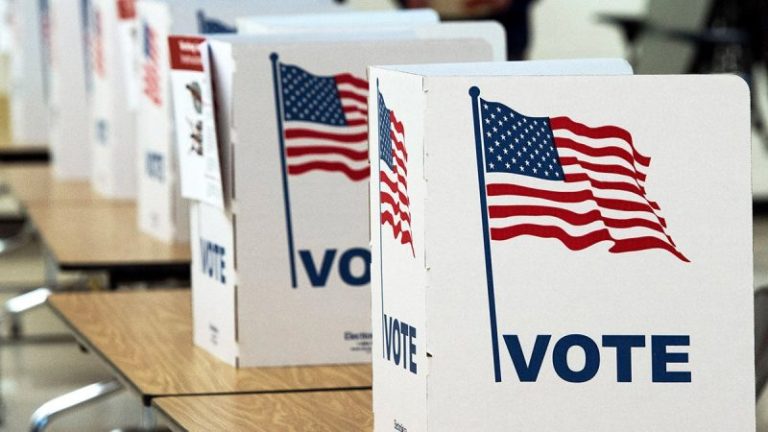
The House of Representatives is readying to vote on a bill that would mandate photo identification for voters across the United States in the coming 2026 midterm elections.

The House Rules Committee, the final gatekeeper before most bills see a chamber-wide vote, advanced the SAVE America Act on Tuesday as conservatives continue to pressure the Senate to take up the bill after its likely House passage.

It’s a sweeping piece of legislation aimed at keeping non-citizens from participating in U.S. elections.

Democrats have attacked the bill as tantamount to voter suppression, while Republicans argue that it’s necessary after the influx of millions of illegal immigrants who came to the U.S. during the four years of the Biden administration.

Speaker Mike Johnson, R-La., told reporters it would get a vote on Wednesday.

The legislation is led by Rep. Chip Roy, R-Texas, in the House, and Sen. Mike Lee, R-Utah, in the Senate.

It is an updated version of Roy’s Safeguarding American Voter Eligibility (SAVE) Act, which passed the House in April 2025 but was never taken up in the Senate.

Whereas the SAVE Act would create a new federal proof of citizenship mandate in the voter registration process and impose requirements for states to keep their rolls clear of ineligible voters, the updated bill would also require photo ID to vote in any federal elections.

It would also require information-sharing between state election officials and federal authorities in verifying citizenship on current voter rolls and enable the Department of Homeland Security (DHS) to pursue immigration cases if non-citizens were found to be listed as eligible to vote.

The legislation is highly likely to pass the House, where the vast majority — if not virtually all — Republicans have supported similar pushes in the past.

But in the Senate, where current rules say 60 votes are needed to overcome a filibuster and hold a final vote on a bill, at least seven Democrats would be needed even if all Republicans stuck together.

It’s why House conservatives are pushing Senate GOP leaders to change rules in a way that would effectively do away with the 60-vote threshold, even if alternative paths mean paralyzing the upper chamber with hours of nonstop debate.

‘[Senate Majority Leader John Thune, R-S.D.] will take it up. The only question is, will he take it up in an environment where it can pass?’ Roy posed to Fox News Digital on Tuesday. 

‘My view is that the majority leader can and should. I’m not afraid of amendment votes…we should table all their amendments, force them to run through all their speaking, make them take the floor and filibuster.’

This post appeared first on FOX NEWS

The U.S. Food and Drug Administration (FDA) refused to consider Moderna’s application for a new flu vaccine using mRNA technology, the company announced Tuesday, a decision that could delay the introduction of a shot designed to offer stronger protection for older adults.

Moderna said it received what’s known as a ‘refusal-to-file’ (RTF) letter from the FDA’s Center for Biologics Evaluation and Research (CBER), citing the lack of an ‘adequate and well-controlled’ study with a comparator arm that ‘does not reflect the best-available standard of care.’

Stéphane Bancel, chief executive officer of Moderna, said the FDA’s decision did not ‘identify any safety or efficacy concerns with our product’ and ‘does not further our shared goal of enhancing America’s leadership in developing innovative medicines.’

‘It should not be controversial to conduct a comprehensive review of a flu vaccine submission that uses an FDA-approved vaccine as a comparator in a study that was discussed and agreed on with CBER prior to starting,’ Bancel said in a statement. ‘We look forward to engaging with CBER to understand the path forward as quickly as possible so that America’s seniors, and those with underlying conditions, continue to have access to American-made innovations.’

The rare decision from the FDA comes amid increased scrutiny over vaccine approvals under Health Secretary Robert F. Kennedy Jr., who has criticized mRNA vaccines and rolled back certain COVID-19 shot recommendations over the past year.

Kennedy previously removed members of the federal government’s vaccine advisory panel and appointed new members, and moved to cancel $500 million in mRNA vaccine contracts.

The FDA authorized COVID-19 vaccines for the fall for high-risk groups only. Last May, Kennedy announced the vaccines would be removed from the CDC’s routine immunization schedule for healthy children and pregnant women.

According to Moderna, the refusal-to-file decision was based on the company’s choice of comparator in its Phase 3 trial — a licensed standard-dose seasonal flu vaccine — which the FDA said did not reflect the ‘best-available standard of care.’

Moderna said the decision contradicts prior written communications from the FDA, including 2024 guidance stating a standard-dose comparator would be acceptable, though a higher-dose vaccine was recommended for participants over 65.

Moderna said the FDA ‘did not raise any objections or clinical hold comments about the adequacy of the Phase 3 trial after the submission of the protocol in April 2024 or at any time before the initiation of the study in September 2024.’

In August 2025, following completion of the Phase 3 efficacy trial, Moderna said it held a pre-submission meeting with CBER, which requested that supportive analyses on the comparator be included in the submission and indicated the data would be a ‘significant issue during review of your BLA.’

Moderna said it provided the additional analyses requested by CBER in its submission, noting that ‘at no time in the pre-submission written feedback or meeting did CBER indicate that it would refuse to review the file.’

The company requested a Type A meeting with CBER to understand the basis for the RTF letter, adding that regulatory reviews are continuing in the European Union, Canada and Australia.

Fox News has reached out to the Department of Health and Human Services for comment.

Fox News Digital’s Alex Miller and The Associated Press contributed to this report.

This post appeared first on FOX NEWS

Israeli Prime Minister Benjamin Netanyahu will meet President Donald Trump at the White House on Wednesday in a visit expected to center on Iran, as Washington weighs diplomacy against the threat of military action and Israel pushes to shape the scope of negotiations.

Trump has signaled the Iranian file will dominate the agenda. In a phone interview with Axios, the president said Tehran ‘very much wants to reach a deal,’ but warned, ‘Either we make a deal, or we’ll have to do something very tough — like last time.’

Netanyahu, speaking before departing Israel for Washington, said he intends to present Israel’s position. ‘I will present to the president our concept regarding the principles of the negotiations — the essential principles that are important not only to Israel but to anyone who wants peace and security in the Middle East,’ he told reporters.

The meeting comes days after U.S. and Iranian officials resumed talks in Oman for the first time since last summer’s 12-day war, while the United States continues to maintain a significant military presence in the Gulf — a posture widely viewed as both deterrence and for holding leverage in negotiations with Tehran.

From the U.S. perspective, Iran is seen as a global security challenge rather than a regional one, according to Jacob Olidort, chief research officer and director of American security at the America First Policy Institute. ‘It’s an important historic time of potentially seismic proportions,’ he told Fox News Digital.

‘Iran is not so much a Middle East issue. It’s a global issue affecting U.S. interests around the world,’ he added, calling the regime ‘probably the world’s oldest global terror network… [with] thousands of Americans killed through proxies.’

Olidort said the administration’s strategy appears to combine diplomacy with visible military pressure. ‘The president has been clear… should talks not be successful, the military option cannot be off the table,’ he said. ‘Military assets in the region serve as part of the negotiation strategy with Iran.’

For Israel, the main concern is not only Iran’s nuclear program but also its ballistic missile arsenal and regional network of armed groups.

Trump indicated to Axios that the United States shares at least part of that view, saying any agreement would need to address not only nuclear issues but also Iran’s ballistic missiles. 

Israeli intelligence expert Sima Shein has warned that negotiations narrowly focused on nuclear restrictions could leave Israel exposed. ‘The visit signals a lack of confidence that American envoys, Witkoff and Kushner, alone can represent Israel’s interests in the best way. They were in Israel just a week ago — but Netanyahu wants to speak directly with Trump, so there is no ambiguity about Israel’s position,’ she added.

Shein says Iran may be stalling diplomatically to see whether Washington limits talks to nuclear issues while avoiding missile constraints. Her analysis further suggests that a sanctions-relief agreement that leaves Iran’s broader capabilities intact could stabilize the regime at a moment of internal pressure while preserving its military leverage. 

‘An agreement now would effectively save the regime at a time when it has no real solutions to its internal problems. Lifting sanctions through a deal would give it breathing room and help stabilize it,’ she said.

‘If there is an agreement, the United States must demand the release of all detainees and insist on humanitarian measures, including medical support for those who have been severely injured. Washington would need to be directly involved in enforcing those provisions.’

Netanyahu said before leaving Israel that he and Trump would discuss ‘a series of topics,’ including Gaza, where a U.S.-backed postwar framework and ceasefire implementation remain stalled. 

According to Israeli reporting, Netanyahu plans to tell Trump that phase two of the Gaza peace plan ‘is not moving,’ reflecting continued disputes over disarmament, governance and security arrangements.

The timing of Netanyahu’s visit may also allow him to avoid returning to Washington the following week for the inaugural session of the Board of Peace, Shein said, noting the initiative is controversial in Israel’s parliament. 

‘Israel is deeply concerned about the presence of Turkey and Qatar on the board of peace and their malign influence on other members as well as on the Palestinian authority’s technocratic government,’ Dan Diker, president of the Jerusalem Center for Security and Foreign Affairs, told Fox News Digital.

‘Hamas’s control of Gaza has not weakened, while international commitments to disarm Hamas have appeared to weaken,’ he added, ‘The longer the U.S. waits before taking action against the Iranian regime, the more compromised Israel is in its ability and determination to forcibly disarm Hamas, both of which require the sanction and the blessing of the new international structures on Gaza.’

‘The prime minister’s deep concern is the stalled state of affairs both against the Iranian regime and apparently in Gaza. Timing is critical on both fronts. And for Israel, the window seems to be closing,’ Diker said.  


This post appeared first on FOX NEWS

LOS ANGELES — The world’s biggest social media companies face several landmark trials this year that seek to hold them responsible for harms to children who use their platforms. Opening statements for the first, in Los Angeles County Superior Court, begin this week.

Instagram’s parent company Meta and Google’s YouTube will face claims that their platforms deliberately addict and harm children. TikTok and Snap, which were originally named in the lawsuit, settled for undisclosed sums.

“This was only the first case — there are hundreds of parents and school districts in the social media addiction trials that start today, and sadly, new families every day who are speaking out and bringing Big Tech to court for its deliberately harmful products,” said Sacha Haworth, executive director of the nonprofit Tech Oversight Project.

At the core of the case is a 19-year-old identified only by the initials “KGM,” whose case could determine how thousands of other, similar lawsuits against social media companies will play out. She and two other plaintiffs have been selected for bellwether trials — essentially test cases for both sides to see how their arguments play out before a jury and what damages, if any, may be awarded, said Clay Calvert, a nonresident senior fellow of technology policy studies at the American Enterprise Institute.

It’s the first time the companies will argue their case before a jury, and the outcome could have profound effects on their businesses and how they will handle children using their platforms.

KGM claims that her use of social media from an early age addicted her to the technology and exacerbated depression and suicidal thoughts. Importantly, the lawsuit claims that this was done through deliberate design choices made by companies that sought to make their platforms more addictive to children to boost profits. This argument, if successful, could sidestep the companies’ First Amendment shield and Section 230, which protects tech companies from liability for material posted on their platforms.

“Borrowing heavily from the behavioral and neurobiological techniques used by slot machines and exploited by the cigarette industry, Defendants deliberately embedded in their products an array of design features aimed at maximizing youth engagement to drive advertising revenue,” the lawsuit says.

Executives, including Meta CEO Mark Zuckerberg, are expected to testify at the trial, which will last six to eight weeks. Experts have drawn similarities to the Big Tobacco trials that led to a 1998 settlement requiring cigarette companies to pay billions in health care costs and restrict marketing targeting minors.

“Plaintiffs are not merely the collateral damage of Defendants’ products,” the lawsuit says. “They are the direct victims of the intentional product design choices made by each Defendant. They are the intended targets of the harmful features that pushed them into self-destructive feedback loops.”

The tech companies dispute the claims that their products deliberately harm children, citing a bevy of safeguards they have added over the years and arguing that they are not liable for content posted on their sites by third parties.

“Recently, a number of lawsuits have attempted to place the blame for teen mental health struggles squarely on social media companies,” Meta said in a recent blog post. “But this oversimplifies a serious issue. Clinicians and researchers find that mental health is a deeply complex and multifaceted issue, and trends regarding teens’ well-being aren’t clear-cut or universal. Narrowing the challenges faced by teens to a single factor ignores the scientific research and the many stressors impacting young people today, like academic pressure, school safety, socio-economic challenges and substance abuse.”

A Meta spokesperson said in a recent statement that the company strongly disagrees with the allegations outlined in the lawsuit and that it’s “confident the evidence will show our longstanding commitment to supporting young people.”

José Castañeda, a Google Spokesperson, said that the allegations against YouTube are “simply not true.” In a statement, he said, “Providing young people with a safer, healthier experience has always been core to our work.”

The case will be the first in a slew of cases beginning this year that seek to hold social media companies responsible for harming children’s mental well-being.

In New Mexico, opening statements begin Monday for trial on allegations that Meta and its social media platforms have failed to protect young users from sexual exploitation, following an undercover online investigation. Attorney General Raúl Torrez in late 2023 sued Meta and Zuckerberg, who was later dropped from the suit.

Prosecutors have said that New Mexico is not seeking to hold Meta accountable for its content but rather its role in pushing out that content through complex algorithms that proliferate material that can be harmful, saying they uncovered internal documents in which Meta employees estimate that about 100,000 children every day are subjected to sexual harassment on the company’s platforms.

Meta denies the civil charges while accusing Torrez of cherry-picking select documents and making “sensationalist” arguments. The company says it has consulted with parents and law enforcement to introduce built-in protections to social media accounts, along with settings and tools for parents.

A federal bellwether trial beginning in June in Oakland, California, will be the first to represent school districts that have sued social media platforms over harms to children.

In addition, more than 40 state attorneys general have filed lawsuits against Meta, claiming it is harming young people and contributing to the youth mental health crisis by deliberately designing features on Instagram and Facebook that addict children to its platforms. The majority of cases filed their lawsuits in federal court, but some sued in their respective states.

TikTok also faces similar lawsuits in more than a dozen states.

This post appeared first on NBC NEWS