
Archive

February 15, 2026

Browsing

Gold and silver were having a fairly quiet week until Thursday (February 12), when both precious metals experienced steep drops early in the day.

The gold price, which had been steady above US$5,000 per ounce, and even briefly breached US$5,100, tumbled by over US$100, bottoming out around US$4,900.

Meanwhile, silver sank from above US$80 per ounce to below US$75.

Market watchers have presented various reasons for these declines, with a mainstream talking point being that the precious metals were moving in line with the broader stock market.

Thursday brought declines in major US indexes as investors reportedly reacted to concerns that various industries could be negatively impacted by AI automation.

Of course, with gold and silver it’s always possible that there’s more going on beneath the surface. Many of our popular YouTube channel guests reacted to this week’s price drop on X, with some, including Willem Middelkoop and Craig Hemke, suggesting manipulation was at play.

I’ve also read that a Russian memo seen by Bloomberg may have had a dampening effect on gold — the report details proposals sent by the Kremlin that could see the country return to the US dollar settlement system as part of an economic partnership with the Trump administration.

Whatever the reason for the decrease was, gold and silver had bounced back by Friday (February 13), with silver getting back above US$77 and gold closing at the US$5,043 level.

The rebound came despite slightly cooler than expected US consumer price index data, which eased inflation concerns and boosted interest rate cut expectations from the US Federal Reserve.

Looking forward, I want to emphasize again that the broad consensus among the experts I’ve been speaking to continues to be that the run in gold and silver prices isn’t over.

However, that doesn’t mean the path will be straight up. I heard this week from Keith Weiner of Monetary Metals, who spoke about the importance of weathering volatility:

‘I mean, we’re in dollar bear market for reasons. And so people better be prepared for the volatility, because as things go off the rails, which is what’s happening to the dollar, yeah, there’s volatility. And there’s days when people can’t sell the dollar enough, and there’s days when they’re desperately, urgently trying to grab as many fistfuls of dollars as they can, and the dollar is extremely well bid — you’ll see that as the price of gold falling. So you’re going to get it both ways, but the trend is clear and the drivers are clear.’

Keith is calling for US$6,000 gold in 2026 and a silver price of US$120 by the end of the year. The US$6,000 number is in line with recent projections from BNP Paribas and CIBC, whose forecasts indicate that major banks also still see strength in gold.

Bullet briefing — Top takeover candidates

Merger talks between commodities giants Rio Tinto (ASX:RIO,NYSE:RIO,LSE:RIO) and Glencore (LSE:GLEN,OTCPL:GLCNF) have fallen through, nixing what would have been the mining industry’s biggest-ever deal, but M&A activity in the space continues to heat up.

A new survey from TD Cowen identifies IAMGOLD (TSX:IMG,NYSE:IAG) as the year’s top takeover candidate, with close to 20 percent of the 58 respondents pointing to the company.

Artemis Gold (TSXV:ARTG,OTCQX:ARGTF) was in second place at 11 percent, while Arizona Sonoran Copper Company (TSX:ASCU,OTCQX:ASCUF) was third at 7 percent.

Almost all of the respondents, who included institutional investors and mining executives, said they expect to see more gold, silver and copper M&A in 2026 compared to last year.

We’ll have to wait and see how any potential deals play out, including Barrick Mining’s (TSX:ABX,NYSE:B) planned initial public offering for its North American gold assets.

Newmont (NYSE:NEM,ASX:NEM), Barrick’s partner at the Nevada Gold Mines joint venture, said it is concerned about the management of the operation, and wants to see improvements — a clash between the two miners could end up disrupting Barrick’s plans.

Securities Disclosure: I, Charlotte McLeod, hold no direct investment interest in any company mentioned in this article.
This post appeared first on investingnews.com

Senate Republicans gained a key ally in their quest to enshrine voter ID into law, but the lawmaker’s support comes with a condition.

A trio of lawmakers, led by Sen. Mike Lee, R-Utah, have undertaken a campaign to convince their colleagues to support the Safeguarding American Voter Eligibility (SAVE) America Act, working social media and closed-door meetings to secure the votes.

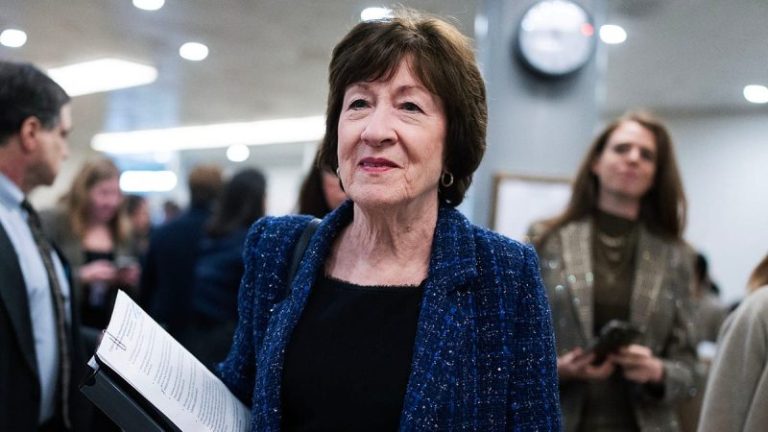
The campaign has proven successful, with the cohort gaining a crucial vote from Sen. Susan Collins, R-Maine, who announced that she would back the SAVE America Act, which recently passed the House. With Collins, Senate Republicans have at least a slim majority backing the act.

‘I support the version of the SAVE America Act that recently passed the House,’ Collins said in a statement first reported by the Maine Wire. ‘The law is clear that in this country only American citizens are eligible to vote in federal elections.’

‘In addition, having people provide an ID at the polls, just as they have to do before boarding an airplane, checking into a hotel, or buying an alcoholic beverage, is a simple reform that will improve the security of our federal elections and will help give people more confidence in the results,’ she continued.

Collins noted that she did not support the previous version of the bill, known simply as the SAVE Act, because it ‘would have required people to prove their citizenship every single time they cast a ballot.’

Her decision gives Lee and Senate Republicans the votes needed to clear a key procedural hurdle in the Senate.

‘We now have enough votes to pass a motion to proceed to the House-passed bill — even without any additional votes — with Vice President JD Vance breaking the tie,’ Lee said in a post on X.

That tie-breaking scenario would only present itself if Republicans turn to the standing, or talking, filibuster. It’s a move that Lee has been pushing his colleagues to make, and one that would require actual, physical debate over the bill. 

It’s the precursor to the current version of the filibuster, where the only hill lawmakers have to climb is acquiring 60 votes. Lee and other conservatives believe that if they turn to the standing filibuster, rather than the ‘zombie filibuster,’ they can barrel through Democratic resistance.

But some fear that turning to that tool could paralyze the Senate floor for weeks or even months, depending on Senate Democrats’ resolve.  

And Collins’ support is not enough to smash through the 60-vote Senate filibuster.

Complicating matters, Collins made clear that she does not support doing away with the filibuster, as do several other Senate Republicans, including Senate Majority Leader John Thune, R-S.D., who reiterated earlier this week that the GOP doesn’t have the votes to eliminate the legislative tool.

‘I oppose eliminating the legislative filibuster,’ Collins said. ‘The filibuster is an important protection for the rights of the minority party that requires Senators to work together in the best interest of the country.’

‘Removing that protection would, for example, allow a future Congress controlled by Democrats to pass provisions on anything they want — D.C. statehood, open borders, or packing the Supreme Court — with just a simple majority of Senators,’ she continued.

GOP senators Mitch McConnell of Kentucky, and Lisa Murkowski, of Alaska, remain the only Republicans who have not pledged support for the SAVE Act.

This post appeared first on FOX NEWS

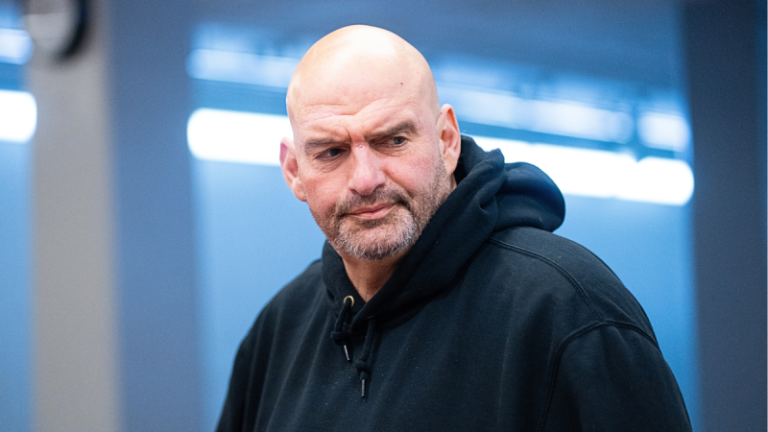
Sen. John Fetterman, D-Pa., is continuing his streak of breaking with his party — this time on voter ID legislation gaining momentum in the Senate.

Senate Minority Leader Chuck Schumer, D-N.Y., and Senate Democrats have near-unanimously rejected the Safeguarding American Voter Eligibility (SAVE) Act, election integrity legislation that made its way through the House earlier this week.

Schumer has dubbed the legislation ‘Jim Crow 2.0,’ arguing it would suppress voters rather than encourage more secure elections.

But Fetterman, who has repeatedly rejected his party’s messaging and positions, pushed back on Schumer’s framing of the bill.

‘I would never refer to the SAVE Act as like Jim Crow 2.0 or some kind of mass conspiracy,’ Fetterman told Fox News’ Kayleigh McEnany on ‘Saturday in America.’

‘But that’s part of the debate that we were having here in the Senate right now,’ he continued. ‘And I don’t call people names or imply that it’s something gross about the terrible history of Jim Crow.’

The bill would require voters to present photo identification before casting ballots, require proof of citizenship in person when registering to vote and mandate states remove non-citizens from voter rolls.

Momentum is building among Republicans. Sen. Susan Collins, R-Maine, became the 50th member of the conference to back the legislation. But Senate Democrats have all but guaranteed its demise in the upper chamber, via the filibuster.

Fetterman would not say whether he supports the bill outright. However, he noted that ‘84% of Americans have no problem with presenting IDs to vote.’

‘So it’s not like a radical idea,’ Fetterman said. ‘It’s not something — and there already are many states that show basic IDs. So that’s where we are in the Senate.’

Even if Fetterman were to support the bill on the floor, it is unlikely to pass without more significant procedural changes.

There are currently not enough votes to overcome the Senate’s 60-vote filibuster threshold.

Fetterman is also not keen on eliminating the filibuster — a position shared by most Senate Republicans.

He noted that Senate Democrats once favored scrapping the filibuster but now want to preserve it while in the minority in a Republican-controlled government.

‘I campaigned on it, too,’ Fetterman said. ‘I mean we were very wrong about that to nuke the filibuster. And we should really humble ourselves and remind people that we wanted to eliminate it — and now we love it.’

This post appeared first on FOX NEWS

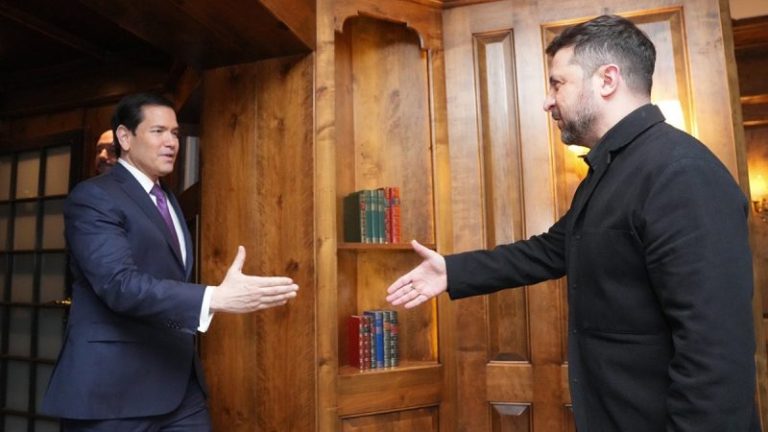
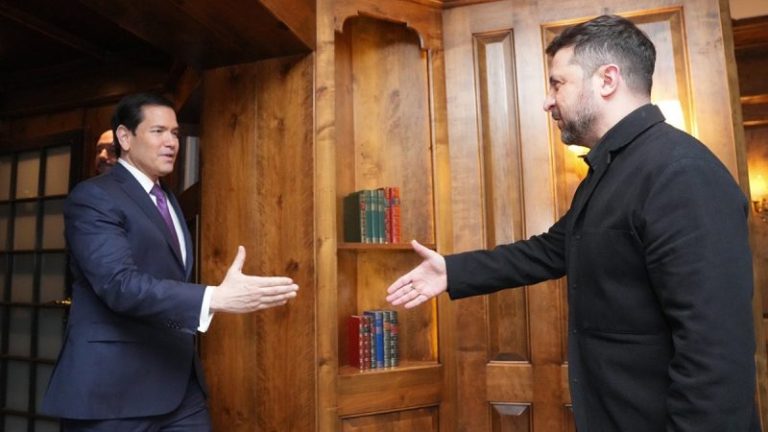
U.S. Secretary of State Marco Rubio met with Ukrainian President Volodymyr Zelenskyy on Saturday at the Munich Security Conference, saying that President Donald Trump ‘wants a solution that ends the bloodshed once and for all.’

‘Met with Ukrainian President @ZelenskyyUa on Ukraine’s security and deepening defense and economic partnerships,’ Rubio wrote in an X post where he shared a photo of him shaking hands with the Ukrainian leader. ‘President Trump wants a solution that ends the bloodshed once and for all.’

Earlier Saturday, Zelenskyy revealed he had spoken with Rubio as well as Trumpenvoy Steve Witkoff and Jared Kushner ahead of trilateral talks in Geneva, which he said his government expected to be ‘truly productive.’

I had a conversation with envoys of President Trump @stevewitkoff and @JaredKushner, ahead of the trilateral meetings in Geneva,’ Zelenskyy wrote on X. ‘We count on the meetings being truly productive.’

Zelenskyy said they also discussed ‘some developments following the meetings in Abu Dhabi, which were held at the end of last month and the beginning of this month.

‘Not everything can be shared over the phone, and our negotiating team will present Ukraine’s position next week,’ the Ukrainian president added.

After the Abu Dhabi talks, Zelenskyy told reporters that the U.S. had set a June deadline for Moscow and Kyiv to strike a peace agreement.

‘The Americans are proposing the parties end the war by the beginning of this summer and will probably put pressure on the parties precisely according to this schedule,’ Zelenskyy said at the time, according to the Associated Press.

Zelenskyy added at the time that if the June deadline is not met, the Trump administration would likely put pressure on Moscow and Kyiv to meet.

On Saturday, he also thanked the U.S. for its ‘constructive approach’ to ending the war.

‘We greatly appreciate that America consistently maintains a constructive approach and is ready to assist in protecting lives,’ Zelenskyy wrote. I thank President Trump, his team, and the people of the United States for their support.

Rubio on Saturday also said he had discussed peace between Ukraine and Russia at the Munich Security Conference with his G7 counterparts. 

‘Met with my @G7 counterparts in Munich to advance @POTUS’s vision of pursuing peace through strength,’ Rubio wrote. ‘We discussed ongoing efforts to end the Russia-Ukraine war, promote stability in Venezuela, and address global threats to achieve international peace and prosperity.’

The trilateral talks between the U.S., Russia and Ukraine are expected to start on Tuesday in Geneva.

This post appeared first on FOX NEWS

U.S. Secretary of State Marco Rubio met with Ukrainian President Volodymyr Zelenskyy Saturday at the Munich Security Conference, saying that President Donald Trump ‘wants a solution that ends the bloodshed once and for all.’

‘Met with Ukrainian President @ZelenskyyUa on Ukraine’s security and deepening defense and economic partnerships,’ Rubio wrote in an X post in which he shared a photo of him shaking hands with the Ukrainian leader. ‘President Trump wants a solution that ends the bloodshed once and for all.’

Earlier Saturday, Zelenskyy revealed he had spoken with Rubio and Trumpenvoy Steve Witkoff and Jared Kushner ahead of talks in Geneva, which he said his government expected to be ‘truly productive.’

I had a conversation with envoys of President Trump @stevewitkoff and @JaredKushner, ahead of the trilateral meetings in Geneva,’ Zelenskyy wrote on X. ‘We count on the meetings being truly productive.’

Zelenskyy said they also discussed ‘some developments following the meetings in Abu Dhabi, which were held at the end of last month and the beginning of this month.

‘Not everything can be shared over the phone, and our negotiating team will present Ukraine’s position next week,’ the Ukrainian president added.

After the Abu Dhabi talks, Zelenskyy told reporters the U.S. had set a June deadline for Moscow and Kyiv to strike a peace agreement.

‘The Americans are proposing the parties end the war by the beginning of this summer and will probably put pressure on the parties precisely according to this schedule,’ Zelenskyy said at the time, according to The Associated Press.

Zelenskyy added at the time that if the June deadline is not met, the Trump administration would likely put pressure on Moscow and Kyiv to meet.

On Saturday, he also thanked the U.S. for its ‘constructive approach’ to ending the war.

‘We greatly appreciate that America consistently maintains a constructive approach and is ready to assist in protecting lives,’ Zelenskyy wrote. ‘I thank President Trump, his team, and the people of the United States for their support.’

Rubio on Saturday also said he had discussed peace between Ukraine and Russia at the Munich Security Conference with his G7 counterparts. 

‘Met with my @G7 counterparts in Munich to advance @POTUS’s vision of pursuing peace through strength,’ Rubio wrote. ‘We discussed ongoing efforts to end the Russia-Ukraine war, promote stability in Venezuela, and address global threats to achieve international peace and prosperity.’

The talks between the U.S., Russia and Ukraine are expected to start Tuesday in Geneva.

This post appeared first on FOX NEWS

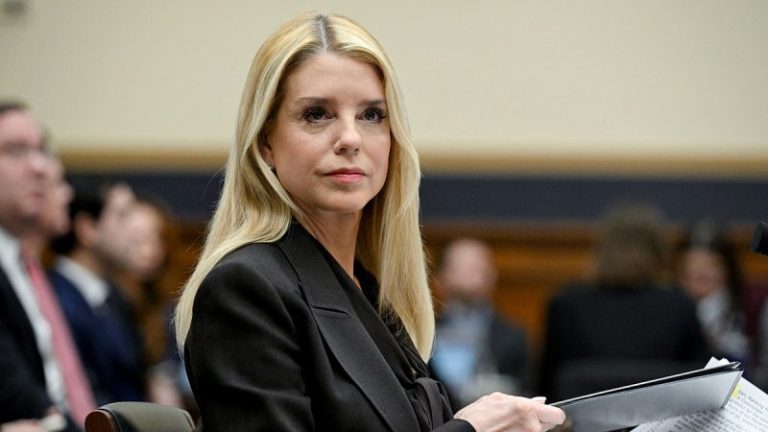
Attorney General Pam Bondi announced in a letter on Saturday that ‘all’ Epstein files have been released consistent with Section 3 of the Epstein Files Transparency Act.

The letter addressed to Senate Judiciary Committee Chairman Chuck Grassley, Ranking Member Dick Durbin, House Judiciary Committee Chairman Jim Jordan, and Ranking Member Jamie Raskin was obtained by Fox News Digital.

‘In accordance with the requirements of the Act, and as described in various Department submissions to the courts of the Southern District of New York assigned to the Epstein and Maxwell prosecutions and related orders, the Department released all ‘records, documents, communications and investigative materials in the possession of the Department’ that ‘relate to’ any of nine different categories,’ the letter read.

The letter includes a list of more than 300 high-profile names, including President Donald Trump, Barack and Michelle Obama, Prince Harry, Bill Gates, Woody Allen, Kim Kardashian, Kurt Cobain, Mark Zuckerberg and Bruce Springsteen.

The letter adds, ‘No records were withheld or redacted ‘on the basis of embarrassment, reputational harm, or political sensitivity, including to any government official, public figure, or foreign dignitary.”

The document outlines the broad range of Epstein-related materials the Justice Department says are encompassed, including records concerning Jeffrey Epstein and Ghislaine Maxwell; references to individuals—up to and including government officials—connected to Epstein’s activities; and documents tied to civil settlements and legal resolutions such as immunity deals, plea agreements, non-prosecution agreements, and sealed arrangements. 

It also includes information on organizations and networks allegedly linked to Epstein’s trafficking and financial operations across corporate, nonprofit, academic, and governmental spheres, as well as internal DOJ emails, memos, and meeting notes reflecting decisions about whether to charge, decline, or pursue investigations.

The documents also cover records addressing potential destruction or concealment of relevant material and documentation surrounding Epstein’s detention and death, including incident reports, witness interviews, and medical examiner/autopsy-related records.

The letter adds, ‘No records were withheld or redacted ‘on the basis of embarrassment, reputational harm, or political sensitivity, including to any government official, public figure, or foreign dignitary.”

‘Any omissions from the list are unintentional and, as explained in the previous letters to Congress, a result of the volume and speed with which the Department complied with the Act,’ the letter states. ‘Individuals whose names were redacted for law-enforcement sensitive purposes are not included.’

The letter says the redaction process was ‘extensive’ including consultation with victims and victim counsel, to redact ‘segregable portions’ that contain information identifiable to victims, such as medical files that could jeopardize an active federal investigation or ongoing prosecution, or depict/contain images of death, physical abuse, or injury. 

‘Any omissions from the list are unintentional and, as explained in the previous letters to Congress, a result of the volume and speed with which the Department complied with the Act,’ the letter states. ‘Individuals whose names were redacted for law-enforcement sensitive purposes are not included.’ 

This post appeared first on FOX NEWS

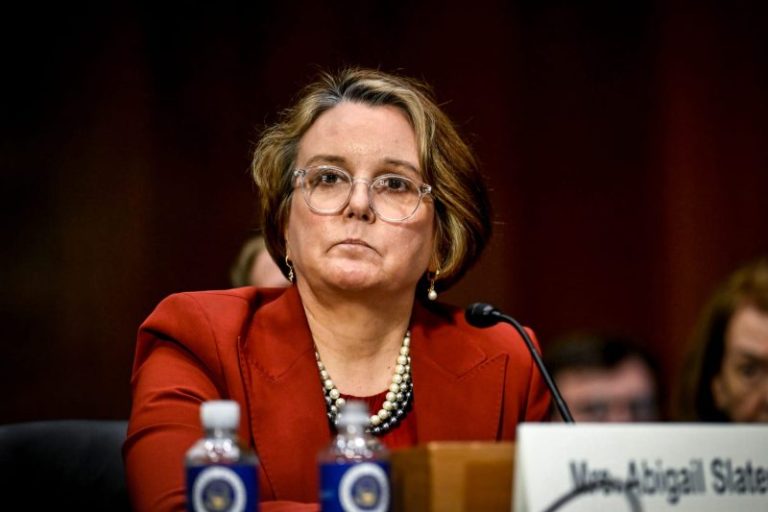
The head of the Justice Department’s antitrust unit said Thursday she is leaving the role, effective immediately, at a critical moment for corporate mergers in America.

Gail Slater, the assistant attorney general in charge of the Antitrust Division, wrote on X: ‘It is with great sadness and abiding hope that I leave my role as AAG for Antitrust today.’

Slater continued, ‘It was indeed the honor of a lifetime to serve in this role. Huge thanks to all who supported me this past year, most especially the men and women of’ the Department.

The White House referred questions to the Justice Department.

Attorney General Pam Bondi said in a statement, “On behalf of the Department of Justice, we thank Gail Slater for her service to the Antitrust Division which works to protect consumers, promote affordability, and expand economic opportunity.”

Slater is leaving just as media giants Netflix and Paramount Skydance battle for control of Warner Bros. Discovery.

President Donald Trump had said he was going to get involved in reviewing whichever Warner Bros. deal proceeds, an uncommon occurrence in antitrust matters.

But in an interview with NBC News, Trump slightly changed his tune. ‘I’ve been called by both sides, it’s the two sides, but I’ve decided I shouldn’t be involved,’ he said.

‘The Justice Department will handle it.’

Trump has met with executives from both of Warner Bros.’ bidders.

The Justice Department will also head to court in weeks in a bid to challenge concert venue manager Live Nation’s ownership of Ticketmaster.

Shares of Live Nation jumped as much as 5.8% after Slater announced her departure. By 1 p.m. ET, the rally had abated to around 2.5%.

When the Senate confirmed Slater, 78 senators from both sides of the aisle voted in her favor. Only 19 opposed her confirmation.

This week, her deputy in the Antitrust Division also departed.

Mark Hamer, deputy assistant attorney general for the Antitrust Division, wrote on LinkedIn, ‘Decided the time is right for me to return to private practice.’ He praised Slater as a ‘leader of exceptional wisdom, strength and integrity.’

This post appeared first on NBC NEWS