
Archive

March 1, 2026

Browsing

Bold Ventures Inc. (TSXV: BOL,OTC:BVLDF) (the ‘Company’ or ‘Bold’) is pleased to provide an update on diamond drilling progress at its Burchell Base and Precious Metals Project, located 100 km west of Thunder Bay, Ontario. 4 holes totaling 669 meters have now been completed in the vicinity of the 111 Zone, where channel sampling results from last Fall were reported last December (see Bold news release dated December 2nd, 2025), and where one grab sample from December 2024 returned 68 gt Au (see Bold news release dated January 9th, 2025). 663 samples of drill core have now been submitted to the laboratory and results are pending. While awaiting results from this first phase of drilling, the drill has been moved to Bold’s Wilcorp property located approximately 13 km east of Atikokan, Ontario, and drilling has commenced there.

Bold’s CEO David Graham, President and COO Bruce MacLachlan, and VP Exploration Coleman Robertson will be meeting with investors at booth #2610 at the Prospectors and Developers Association of Canada (PDAC) Mineral Exploration and Mining Convention in Toronto from March 1st to 4th, 2026. Coleman Robertson will be presenting at the PDAC Spotlight with a talk titled ‘From Burchell to the Ring of Fire,’ at 11:10 a.m. on Monday March 2nd in the Northern Lights Learning Hub, Level 300, Hall A of the North Building of the Metro Toronto Convention Centre. During PDAC Bruce MacLachlan will also be interviewed by the Northern Miner on March 1st, and by CEO.CA on Monday March 2nd.

In continuing to build Bold’s name recognition and corporate message via video and digital media platforms, the Company will pay fees of $4,520 to the Northern Miner Group and $4,350 to CEO.CA for the interviews which will conclude at the end of the conference and will remain available for viewing at Bold’s website, www.boldventuresinc.com. The Northern Miner draws on 110 years of experience as the leading mining industry journal in Canada to cover the top developments and newsmakers around the globe. CEO.CA is a community for investors & traders in junior resource & venture stocks and is one of the most popular free financial websites and apps in Canada and for small-cap investors globally — with industry leading audience engagement and mobile functionality.

The Company has registered for the Resourcing Tomorrow 2026 convention to be held from Dec. 1-3 2026 at the Business Design Centre in London, UK. To optimize that event and to build Bold’s name recognition and brand in the United Kingdom, Bold has signed a 12-month contract with The Armchair Trader (Armchair Trader Limited) based in the United Kingdom. The contract begins immediately and provides promotional services to Bold Ventures for a fee of $10,000.

The Northern Miner Group, CEO.CA and Armchair Trader Limited are all arm’s length to the Company and do not have any interest, directly or indirectly, in the Company or its securities, or any right or intent to acquire such an interest.

Ring of Fire News

In other news, the Marten Falls Community Access Road project has moved to the public review stage. The road, which will provide year-round access to the community, is proposed to connect to a forestry road north of Aroland First Nation. The road is part of a broader plan to connect the Ring of Fire to Ontario’s highway network, which also includes the Northern Road Link and Webequie Supply Road projects. See links below:

Marten Falls road project moves to public review stage – Northern Ontario Business

Ontario First Nations complete fast-tracked assessments for Ring of Fire road | Globalnews.ca

The proposed Eagle’s Nest mine in the Ring of Fire has also cleared another regulatory hurdle. The Federal government has decided not to designate the mine for impact assessment. See link below:
https://globalnews.ca/news/11688531/ring-of-fire-northern-ontario/

About Bold’s Koper Lake Project in the Ring of Fire

The Koper Lake Project is a joint venture between Bold Ventures Inc. and Canada Chrome Corporation Inc. (CCC – formerly KWG Resources Inc.) where CCC is the Operator of the exploration effort.

Bold holds a 10% carried interest (through to production) in the Black Horse Chromite deposit on the Koper Lake Project which hosts an NI 43-101 Inferred Resource of 85.9 Mt grading 34.5% Cr2O3 at a cut-off of 20% Cr2O3 (KWG Resources Inc., NI 43-101 Technical Report, Aubut 2015). Bold also holds a 40% working interest in all other metals found within the Koper Lake claims and has a Right of First Refusal on a 1% NSR covering all metals found within the claim group.

The Black Horse is contiguous with the Blackbird Chromite deposits owned by Ring of Fire Metals (formerly Noront Resources Inc.). The Koper Lake claims are located approximately 300 m from the Eagle’s Nest Ni-Cu Massive Sulphide Deposit that is in the permit acquisition stage.

Chromite, nickel and copper are critical minerals that will play an important role in the electrification plans of Ontario and North America. The Company is encouraged by these ongoing developments in this emerging critical mineral mining camp.

The technical information in this news release was reviewed and approved by Coleman Robertson, B.Sc., P. Geo., the Company’s V.P. Exploration and a qualified person (QP) for the purposes of NI 43-101

Bold Ventures management believes our suite of Battery, Critical and Precious Metals exploration projects are an ideal combination of exploration potential meeting future demand. Our target commodities are comprised of: Copper (Cu), Nickel (Ni), Lead (Pb), Zinc (Zn), Gold (Au), Silver (Ag), Platinum (Pt), Palladium (Pd) and Chromium (Cr). The Critical Metals list and a description of the Provincial and Federal electrification plans are posted on the Bold website here.

About Bold Ventures Inc.

The Company explores for Precious, Battery and Critical Metals in Canada. Bold is exploring properties located in active gold and battery metals camps in the Thunder Bay and Wawa regions of Ontario. Bold also holds significant assets located within and around the emerging multi-metals district dubbed the Ring of Fire region, located in the James Bay Lowlands of Northern Ontario.

For additional information about Bold Ventures and our projects, please visit boldventuresinc.com or contact us at 416-864-1456 or email us at info@boldventuresinc.com.

‘Bruce A MacLachlan’ ‘David B Graham’
Bruce MacLachlan David Graham
President and COO CEO

Direct line: (705) 266-0847 

Email: bruce@boldventuresinc.com

Neither TSX Venture Exchange nor its Regulation Services Provider (as that term is defined in the policies of the TSX Venture Exchange) accepts responsibility for the adequacy or accuracy of this release.

Cautionary Note Regarding Forward-Looking Statements: This Press Release contains forward-looking statements that involve risks and uncertainties, which may cause actual results to differ materially from the statements made. When used in this document, the words ‘may’, ‘would’, ‘could’, ‘will’, ‘intend’, ‘plan’, ‘anticipate’, ‘believe’, ‘estimate’, ‘expect’ and similar expressions are intended to identify forward-looking statements. Such statements reflect our current views with respect to future events and are subject to such risks and uncertainties. Many factors could cause our actual results to differ materially from the statements made, including those factors discussed in filings made by us with the Canadian securities regulatory authorities. Should one or more of these risks and uncertainties, such actual results of current exploration programs, the general risks associated with the mining industry, the price of gold and other metals, currency and interest rate fluctuations, increased competition and general economic and market factors, occur or should assumptions underlying the forward looking statements prove incorrect, actual results may vary materially from those described herein as intended, planned, anticipated, or expected. We do not intend and do not assume any obligation to update these forward-looking statements, except as required by law. Shareholders are cautioned not to put undue reliance on such forward-looking statements.

NOT FOR DISTRIBUTION TO U.S. NEWSWIRE SERVICES OR FOR DISSEMINATION IN THE UNITED STATES

To view the source version of this press release, please visit https://www.newsfilecorp.com/release/285792

News Provided by TMX Newsfile via QuoteMedia
This post appeared first on investingnews.com

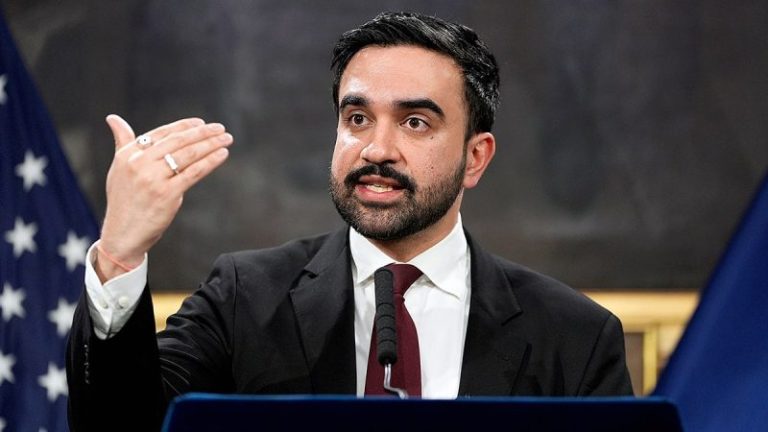
New York City’s socialist Mayor Zohran Mamdani is facing blowback from conservatives on social media over his post condemning the U.S. attack on Iran that led to the killing of Iran’s supreme leader, Ayatollah Ali Khamenei.

On Saturday, as a joint strike on Iran by the United States and Israel was developing, Mamdani blasted the Trump administration’s decision in a post on X that has been viewed roughly 20 million times. 

‘Today’s military strikes on Iran — carried out by the United States and Israel — mark a catastrophic escalation in an illegal war of aggression,’ Mamdani wrote.

‘Bombing cities. Killing civilians. Opening a new theater of war. Americans do not want this. They do not want another war in pursuit of regime change.’

Mamdani said Americans prefer ‘relief from the affordability crisis’ before speaking directly to Iranians in New York City.

‘You are part of the fabric of this city — you are our neighbors, small business owners, students, artists, workers, and community leaders,’ Mamdani said. ‘You will be safe here.’

The post was quickly slammed by conservatives on social media making the case that Mamdani’s response appeared sympathetic to Iran’s brutal regime and pointing to his lack of public reaction to the Iranian protesters killed in recent years.

‘Comrade Mayor is rooting for the Ayatollah,’ GOP Sen. Ted Cruz posted on X. ‘They can chant together.’

‘Do u say anything pro American ?’ Fox News host Brian Kilmeade posted on X. ‘do u know any Iranians – ? they hate @fr_Khamenei they celebrate his death, you should be celebrating his death ! hes killed thousands of American’s and just killed 30k Iranians, did u even say a word about that? You are an embarrassment !! Please quit.’

‘I don’t feel safe in New York listening to someone like you, Mamdani, who sympathizes with the regime that killed more than 30,000 unarmed Iranians in less than 24 hours,’ Iranian American journalist Masih Alinejad posted on X. 

‘We Iranians do not allow you to lecture us about war while you had nothing to say when the Islamic Republic shot schoolgirls and blinded more than 10,000 innocent people in the streets. You were busy celebrating the hijab while women of my beloved country Iran were jailed and raped by Islamic Security forces for removing it. 

‘And NOW you find your voice to defend the regime? No. I will not let you claim the moral high ground. The people of Iran want to be free. Where were you when they needed solidarity?’

‘How is it that you can’t differentiate between good and evil?’ Billionaire hedge fund manager Bill Ackman posted on X. ‘Why is this so hard for you?’

‘It takes a particular kind of audacity, or ignorance, for a city mayor to appoint himself the conscience of American foreign policy while his constituents step over garbage on their way to work,’ GOP Rep. Nancy Mace posted on X. ‘History will not remember his bravery. It will not remember him at all.’

‘Iranian New Yorkers are thrilled today and see right through you,’ Republican New York City Councilwoman Vickie Paladino posted on X. 

‘When Kuwait, Saudi Arabia, Qatar, Turkey, UAE, Bahrain all support today’s operation eliminating world’s #1 sponsor of terror, but New York City’s Mayor @ZohranMamdani is shilling for Iran,’ Republican New York City Councilwoman Inna Vernikov posted on X. 

Fox News Digital reached out to Mamdani’s office for comment.

Shortly after Mamdani’s post, it was announced by President Trump and Israeli officials that the military operation resulted in Khamenei’s death.

Israeli leaders confirmed Khamenei’s compound and offices were reduced to rubble early Saturday after a targeted strike in downtown Tehran.

‘Khamenei was the contemporary Middle East’s longest-serving autocrat. He did not get to be that way by being a gambler. Khamenei was an ideologue, but one who ruthlessly pursued the preservation and protection of his ideology, often taking two steps forward and one step back,’ Behnam Ben Taleblu, senior director of FDD’s Iran program, told Fox News Digital.

Related Article

Omar, Squad lash out at Trump in response to Iran strike: ‘Illegal regime change war’
This post appeared first on FOX NEWS

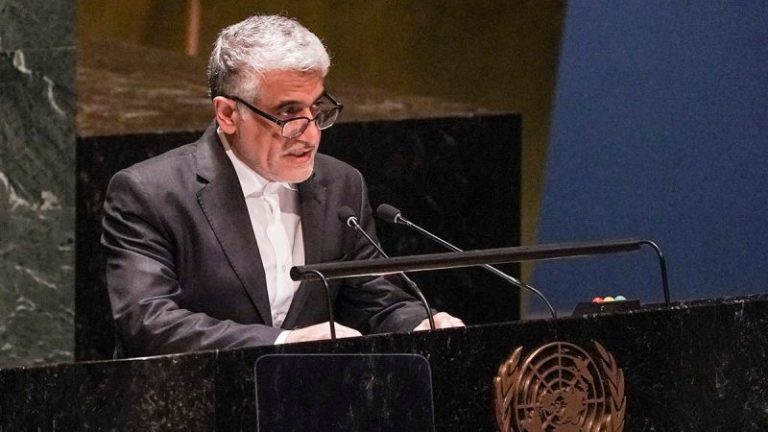
Iranian Ambassador to the United Nations Amir-Saeid Iravani condemned U.S. strikes against Iran that targeted the country’s military leadership and killed Supreme Leader Ali Khamenei, calling the attack a double standard and promising the country would defend itself at a U.N. Security Council meeting Saturday.

Iravani accused the U.S. of undermining its claims of pursuing international stability while attacking a sovereign country for its ‘domestic’ activities.

‘Neither the charter nor international law recognize internal matters of a state as justification for the use of force by other states. The rule of law would be replaced by the rule of force,’ Iravani said.

‘Iran will continue to exercise its right of self-defense decisively and without hesitation until the aggression ceases in full and unequivocal terms.’

On Saturday morning, President Donald Trump ordered the execution of Operation Epic Fury, citing Tehran’s continued efforts to develop a nuclear weapon.

‘It has always been the policy of the United States, in particular my administration, that this terrorist regime can never have a nuclear weapon. I’ll say it again. They can never have a nuclear weapon,’ Trump said in remarks about the attack Saturday.

Trump said the strikes were meant to ‘defend the American people by eliminating imminent threats from the Iranian regime’ and that they had come after Iran had refused to abandon plans to develop nuclear capabilities.

Iravani called the attack a continuation of longstanding U.S. aggression against Iran.

‘Mr. president, this morning the United States regime, jointly and in coordination with the Israeli regime, initiated an unprovoked and premeditated aggression against the Islamic Republic of Iran for the second time in recent months,’ Irvani said, referring to strikes the U.S. carried out against its nuclear enrichment sites last year.

‘The president of the United States and the prime minister of the Israeli regime have openly claimed responsibility for this act of aggression and have explicitly articulated regime change as their objective, an unmistakable admission of their intent to violate Iran’s sovereignty and territorial integrity.’

U.N. Ambassador Mike Waltz pushed back on Iravani’s characterizations.

‘For 47 years, the Iranian regime has chanted, quote, ‘Death to America’ at every turn. At every opening, it has sought to eradicate the state of Israel. It has waged an unending campaign of bloodshed and mass murder,’ Waltz said.

Iravani did not address the negotiations between the U.S. and Iran on its nuclear development plans.

Related Article

Bipartisan revolt targets Trump’s war powers after massive Iran strikes
This post appeared first on FOX NEWS

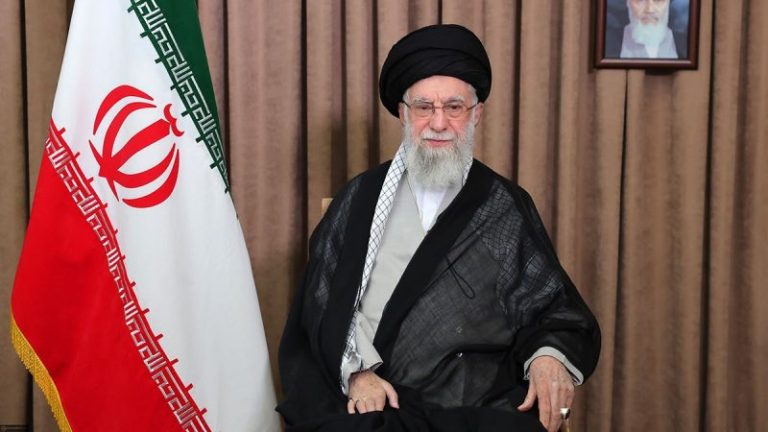
Iran entered a new chapter Saturday after Supreme Leader Ayatollah Ali Khamenei was killed, abruptly ending more than three decades of authoritarian rule and setting in motion a leadership transition the regime has long prepared.

A senior Arab diplomat told The Times of Israel that while Khamenei’s demise is a ‘massive blow’ to the Islamic Republic, Tehran anticipated the possibility and took steps to withstand such a scenario.

‘Mere survival, at this point, would be considered a victory,’ the diplomat said of the regime, according to the outlet, following U.S. and Israeli strikes across the country.

A recent report from the Council on Foreign Relations (CFR) outlined three broad trajectories for a post-Khamenei Iran: managed regime continuity, an overt or creeping military takeover, or systemic collapse.

CFR cautioned that even a leadership change at the top would not necessarily translate into meaningful political reform in the near term, given the regime’s deeply institutionalized power structure and its record of using force to maintain control.

The report notes that the real balance of power rests within a tight circle of clerical elites and the Islamic Revolutionary Guard Corps (IRGC).

It describes a likely ‘continuity’ scenario as producing ‘Khamenei-ism without Khamenei,’ in which a successor from within the regime preserves the ideological framework of the Islamic Republic while relying on established security institutions to preserve stability.

‘The Islamic Republic’s constitution includes a succession process. The Assembly of Experts, a clerical body, is constitutionally charged with selecting the next supreme leader,’ Jason Brodsky, policy director of United Against Nuclear Iran (UANI), told Fox News Digital. 

‘In the interim, should there be a leadership vacancy, an interim leadership council is formed comprised of the president, chief justice, and a member of the Guardian Council selected by the Expediency Council,’ he added. ‘The IRGC is a key stakeholder in this process, and will heavily influence its outcome.’

Over the past three decades, the Bayt-e Rahbari, or the Office of the Supreme Leader, expanded into what a February report by UANI described as a ‘sprawling parallel state’ operating alongside Iran’s formal institutions.

The analysis characterizes the Office as the regime’s ‘hidden nerve center,’ extending control across the military, security establishment and major economic foundations in ways that make the system’s authority institutional rather than dependent on Khamenei’s physical presence.

‘The supreme leader today is no longer just one man; he is represented through an all-encompassing institution that consolidates power, manages succession, and guarantees continuity,’ the non-partisan policy organization said. ‘The Islamic Republic’s most enduring strength lies in this hidden architecture of control, which will continue to shape the country’s future long after Khamenei himself departs from the scene.’

Related Article

World leaders split over military action as US-Israel strike Iran in coordinated operation
This post appeared first on FOX NEWS

As coordinated U.S. and Israeli strikes on Iran continue, current and former defense officials say that while a limited strike lasting several days is feasible, sustaining a broader confrontation — one involving potentially hundreds of incoming missiles — is far more complicated.

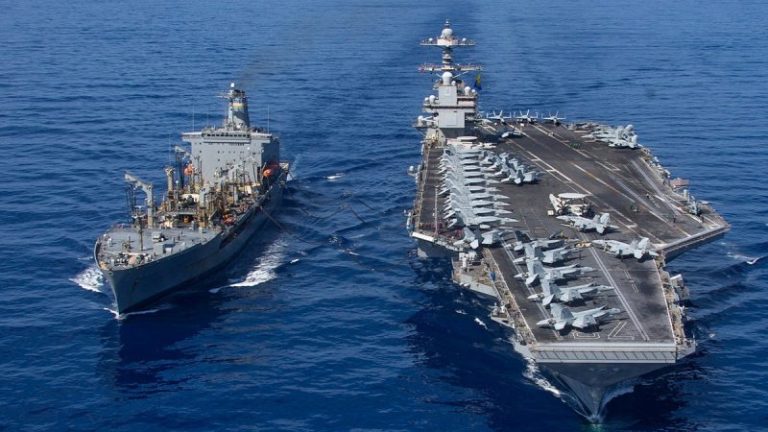
The U.S. and Israel undertook a mission known as Operation Epic Fury, targeting Iranian leadership and military sites Saturday. Its duration is still unclear, but the campaign may go on for days, according to U.S. officials. 

Sustaining operations beyond the initial window presents a more complex challenge — one shaped by a ‘zero-sum’ competition for missile defense inventories between the Middle East and Europe.

Officials and analysts warn that certain U.S. missile and air-defense interceptor inventories have been severely drawn down by the relentless pace of recent operations. The strategic dilemma for the Pentagon is that the systems required to shield U.S. bases from Iranian retaliation are the same ones being depleted by the defense of Ukraine and the ongoing protection of Israel.

Iran already has fired counterattacks near U.S. positions in Bahrain, Qatar, the United Arab Emirates, Kuwait and Jordan, with several host governments saying their air defense systems intercepted incoming projectiles. No U.S. service member fatalities or injuries have been reported as of Saturday, a U.S. official told Fox News Digital. 

U.S. authorities have not publicly released casualty figures or formal damage assessments.

During the intense June 2025 Iran–Israel conflict, U.S. forces fired more than 150 Terminal High Altitude Area Defense Interceptors — roughly a quarter of the total global inventory — and a large number of ship-based standard missiles to protect allies, according to published defense assessments.

This shortfall largely is attributed to the dual pressure of supplying Ukraine against Russian cruise missiles and the surge of batteries to the Middle East. Replenishing these high-end systems can take more than a year, analysts say, because production lines are optimized for peacetime and cannot be surged overnight.

Independent groups have noted the U.S. currently produces roughly 600–650 Patriot PAC-3 MSE missiles annually, reflecting recent contracts to boost production capacity. Analysts say that in a high-intensity war with a near-peer adversary like Iran — where multiple interceptors are often used to defeat a single incoming missile — even a year’s worth of production could be consumed in a matter of weeks, especially after recent drawdowns in Ukraine and the Middle East.

‘The Department of War has everything it needs to execute any mission at the time and place of the President’s choosing and on any timeline,’ Chief Pentagon spokesman Sean Parnell said in response to readiness questions.

Retired Air Force Gen. Charles Wald, former deputy commander of U.S. European Command, said the United States retains the ability to surge conventional strike munitions into the region and draw from prepositioned stocks if a campaign is ordered. 

‘From a conventional munition standpoint, we can always fly in more weapons from around the world,’ Wald told Fox News Digital. ‘There are a lot of weapons stored there with this type of mission in mind.’

The greater concern, he acknowledged, lies on the defensive side. 

‘The issue will be defensive weapons — Patriot, SM-3, and the Arrow system in Israel,’ Wald said. ‘You can never have enough defense.’

Regional analysts caution that in a sustained missile exchange, interceptor inventories — not offensive strike weapons — could become the binding constraint. 

‘There is a limit to how many THAAD missiles can be used,’ Israeli defense analyst Ehud Eilam said. ‘These are not systems you can reproduce overnight.’

Iran is believed to possess between 1,500 ballistic missiles and 2,000 ballistic missiles, as well as drones and shorter-range rockets capable of striking U.S. bases and Gulf energy infrastructure.

Several experts also pointed to the psychological impact of recent U.S. operations. 

The swift Operation Absolute Resolve in Venezuela in January 2026 and summer 2025’s 12-day exchange with Iran have reinforced confidence in American military capability. However, one former defense official cautioned that success in these tightly scoped missions can create a false sense of momentum toward action in far more complex scenarios.

‘Iran is a very different problem,’ the official said — a large, heavily armed state with extensive missile forces and regional proxy networks that would not resemble a short, surgical operation.

Wald acknowledged that risk. 

‘You don’t want to get people so confident that you don’t consider the risks. It’s not going to be as clean or pure as, say, Venezuela was, or the 12-day war.’

Even as the strikes continue, officials warn that retaliation from Iran and its network of allied militias could broaden the conflict. Iran’s ballistic missiles and drones — coupled with allied groups in Iraq, Lebanon and Yemen — already have prompted missile salvos against U.S. bases and Gulf partners, according to defense reporting.

Experts say the 2025 conflict underscored how quickly escalation can test both defensive systems and political will. 

‘Once these things break, you own what follows,’ one former official said, underscoring the risk that missiles and proxy actions could quickly widen a limited U.S. strike.

Wald warned that even a successful military phase would not eliminate the political uncertainty. 

‘Bombing Iran is not going to do regime change,’ he said, emphasizing that air power can degrade capability but cannot guarantee a stable political outcome.

Beyond the immediate exchange, officials say the economic consequences could prove just as consequential. Roughly one-fifth of the world’s oil supply transits the Strait of Hormuz, and even limited disruption could send global energy markets sharply higher.

For Washington, the strategic calculus extends beyond the Middle East. China remains the primary long-term competitor, with the war in Ukraine already consuming significant resources. 

A sustained regional conflict would draw on naval assets and air-defense systems that planners must also consider for potential future contingencies in Taiwan or North Korea.

Officials familiar with internal deliberations say President Donald Trump has sought a high degree of confidence in how an Iran contingency would unfold — a standard that becomes harder to meet in scenarios involving escalation and political fallout.

Fox News Digital has reached out to the White House for comment.

Related Article

Trump issues stern Iran warning as Tehran angrily reacts to speech amid muted world reaction
This post appeared first on FOX NEWS

After radical students overthrew Iran’s shah in 1979 and took hostages in the U.S. embassy, the Middle Eastern nation became a strident and blood-soaked adversary of what its new Islamic fundamentalist dictatorship has long called the ‘Great Satan.’

Since then, Tehran has sponsored terrorism around the globe, including targeting the U.S. in multiple, high-profile instances. Former Reagan Justice Department Chief of Staff Mark Levin said Sunday there are at least 44 examples of Iran targeting Americans either directly or indirectly.

‘The Iranian-Nazi regime … [has] murdered more than 1,000 Americans [and] relentlessly pursued nuclear weapons to use against us — they are genocidal warmongers,’ said Levin, an author, attorney and Fox News Channel host.

The stage for Iran’s transformation from ally to enemy of the U.S. was set in the 1960s, when Shah Mohammed Reza Pahlavi began clashing with influential Islamic cleric Ruhollah Khomeini. The monarch infuriated the theocrat by liberalizing the national constitution to allow faiths other than Islam to be sworn into office on holy books of their choice.

Khomeini’s rhetoric from France, where he was exiled, intensified during the period known as the White Revolution, including misogynistic and xenophobic sermons and demands that Pahlavi be ousted.

Early aggression toward the US

With Pahlavi as a U.S.-aligned leader, this marked an early instance of antagonism by proxy. As protests engineered by Khomeini broke out in fall 1978, the shah declared martial law, and military police fired on a massive crowd of protesters.

Pahlavi and Empress Farah Pahlavi soon fled on a ‘vacation’ to Egypt but never returned. By February 1979, Khomeini returned to Tehran with significant sectarian support.

Failed Carter strategy develops into hostage crisis

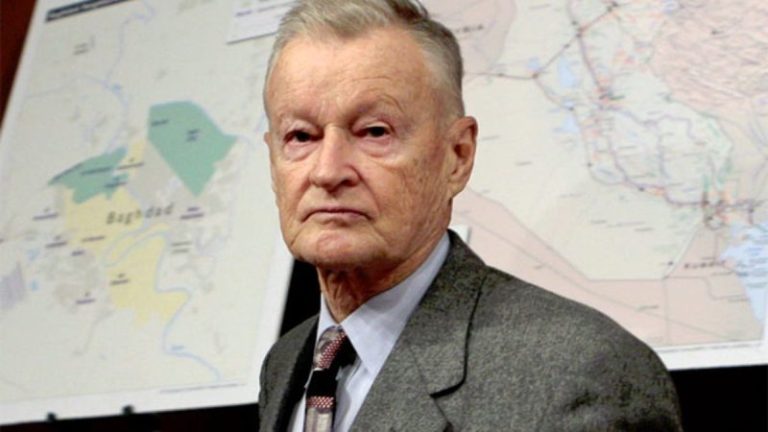
Carter National Security Adviser Zbigniew Brzezinski — the father of ‘Morning Joe’ host Mika Brzezinski — coined the term ‘arc of crisis’ and advanced an ultimately failed ‘Green Belt’ strategy that supported an arc of largely unstable but fundamentalist regimes across the Middle East that were also viewed as oppositional to the Soviet Union.

Brzezinski’s envisioned buffer strategy soon collapsed when Khomeini proved to be just as anti-American as anti-Soviet.

In October 1979, after months of debate over whether to admit him to the U.S. amid the new turmoil in Iran, President Jimmy Carter relented and permitted the cancer-stricken shah to seek medical care in New York.

That November, the group ‘Muslim Student Followers of the Imam’s Line’ stormed the U.S. embassy, beginning 444 days of captivity for 52 American hostages.

The U.S. severed diplomatic ties the following April, and one rescue mission failed and left several U.S. servicemembers dead. The shah died that summer in Egypt, leaving Khomeini in full control of the government.

In what was seen as the final offense to Carter, Iran suddenly released the hostages minutes into President Ronald Reagan’s administration on Jan. 20, 1981.

Lebanon hostage crisis

On July 5, 1982, the years-long saga known as the Lebanon Hostage Crisis began with the systematic abductions of foreigners, including Americans, by Hezbollah and Iranian proxies in the Mideast country, according to United Against a Nuclear Iran.

That group, founded by former Florida Gov. Jeb Bush and former Ambassador Mark Wallace, maintains a comprehensive history of Iranian aggression on its website and is a nonpartisan policy organization formed to combat the threats posed by the Islamic Republic.

During the Lebanon Hostage Crisis, several victims spent years imprisoned by Hezbollah, where they were forced to undergo psychological and medical torture, including CIA Beirut Station Chief William Buckley, who was not related to the National Review founder of the same name. 

Buckley was tortured for months by Dr. Aziz al-Abub, a Lebanese Hezbollah psychiatrist and medical expert who reportedly forced him to take phenothiazines and experimented on him to induce interrogation and make an example of him to the West.

Buckley reportedly died in custody amid these experiments on June 3, 1985.

The CIA later memorialized him on its wall in Langley, Va., and Obama-era Director John Brennan said in a 2014 statement that ‘we remember Bill not for the manner in which he died but for the legacy he left behind. From his time as an Army lieutenant colonel to his tenure with the Agency, Bill inspired those around him to do great things despite often dangerous conditions.’

The agency later caught up with the figurehead of the Hezbollah-linked Islamic Jihad terrorist group — carrying out what the Washington Institute described as a rare contemporary CIA assassination nearly 25 years later.

Imad Mughniyeh’s group had announced Buckley’s execution in October 1985, but the actual date was determined later, with allegations that he died not from execution but from the side effects of the medical torture he endured. Former hostage David Jacobsen told the institute that Buckley was often sick and delirious in his cell and ultimately died ‘drowning in his own lung fluids’ after a bout of torture.

David Dodge, then-president of the American University in Beirut, was also kidnapped for about a year, and U.S. journalist Terry Anderson was held in captivity for more than six years.

Reagan-era bombings and murders of American servicemembers

On April 18, 1983, an Iran-backed group seen as the predecessor to today’s Lebanese Hezbollah bombed the U.S. embassy in Beirut, killing 63 people, including 17 Americans.

That October, a suicide truck bomb linked to Iran hit a U.S. Marine barracks in Lebanon, killing 241 servicemembers, in what remains the deadliest single day for the Corps since Iwo Jima.

According to the MEMRI translation of Khomeini’s representative to Lebanon, Sayyed Issa Tabatabai’s interview with the IRNA: ‘I quickly went to Lebanon and provided what was needed in order to [carry out] martyrdom operations in the place where the Americans and Israelis were.’ 

He added, ‘The efforts to establish [Hezbollah] started in [Lebanon’s] Baalbek area, where members of [Iran’s] Islamic Revolutionary Guards Corps (IRGC) arrived. I had no part in establishing the [political] party [Hezbollah], but God made it possible for me to continue the military activity with the group that had cooperated with us prior to the [Islamic] Revolution’s victory.’

The MEMRI report continued, ‘It is noteworthy that the part of the interview in which Tabatabai acknowledged receiving Khomeini’s fatwa ordering attacks on American and Israeli targets in Lebanon was removed by IRNA from its website shortly after publication. This is apparently because no official representative of Khomeini, the father of the Islamic Republic, or of Khamenei, Iran’s Supreme Leader, had ever said that Iran had any involvement in ordering, planning and carrying out the massive bombings in Lebanon against U.S.’

In 1985, Iran-backed Hezbollah hijacked Trans World Airlines (TWA) Flight 847 as it departed Athens. The hijackers collected IDs from the passengers and singled out U.S. Navy Seabee Robert Stethem of Waldorf, Md., mistaking him for a Marine and blaming him for involvement in the Lebanese Civil War.

The hijackers tortured Stethem as they flew to Beirut before shooting him dead, dumping him on the tarmac, and shooting him again.

Operation Praying Mantis

In 1988, the USS Samuel B. Roberts struck an Iranian mine in the Persian Gulf and nearly sank. The Roberts had been escorting Kuwaiti oil tankers as a protective measure.

After the mines were matched to the Iranian ship Ajr, which had been captured by the Americans earlier that year, President Reagan sprang into retaliatory action.

Reagan’s operation destroyed two oil platforms reportedly used as Iranian Revolutionary Guard Corps (IRGC) surveillance structures, leading Iran to begin attacking nonmilitary targets.

The mission also claimed two other Iranian ships and was considered the largest naval surface engagement since World War II.

Two Americans died in a helicopter crash during the operation, while dozens of Iranian officers were killed.

Clinton-Bush-Obama era; 9/11

The FBI linked a 1996 attack on an American military housing complex in Saudi Arabia to another Iranian-backed terrorist group.

Hezbollah al-Hejaz was blamed for the Khobar Towers bombing in June of that year, which killed 19 U.S. servicemembers.

In the aftermath of Al Qaeda’s 2000 attack on the U.S.S. Cole destroyer in Aden, Yemen, American courts found Iran indirectly liable in that it provided support for the terrorists – in part by letting them be trained in Tehran-linked Hezbollah bases in Lebanon.

In 2015, FISA Judge Rudolph Contreras found Iran and Sudan liable, and during the Biden administration. Sudan agreed to settle claims of murdered sailors’ families.

After 9/11, when the U.S. went to war in Iraq, Iran and its proxies were suspected of causing a large portion of American casualties by supplying land mines to the Iraqi Shia insurgents. In 2019, the Department of Defense officially raised its estimate to more than 600 troop casualties directly tied to Iran or its proxies, meaning one in six Iraq War losses were caused by Tehran.

Navy Cmdr. Sean Robertson told the Army Times at the time that ‘these [American] casualties were the result of explosively formed penetrators (EFPs), other improvised explosive devices (IEDs), improvised rocket-assisted munitions (IRAMs), rockets, mortars, rocket-propelled grenades (RPGs), small arms, sniper fire, and other attacks in Iraq.’

During his first term in the White House, President Donald Trump ordered a strike on the IRGC, killing its legendary commander, Qassem Soleimani.

While Iran was not directly implicated as having specific knowledge of the Sept. 11, 2001 attacks in New York, Pennsylvania and Virginia, it was found to be complicit in facilitating the planned terrorism.

The report, led by former New Jersey Republican Gov. Tom Kean Sr., found a ‘persistence of contacts’ between Iranian officials and Al Qaeda.

Chapter 7 of the report found that Iran at least knew that the terrorists being trained by Hezbollah were going to act against the U.S. and/or Israel. The findings thereby blew apart critics’ claims that the Sunni terror group could get along with its religious archenemy, the Shia who ran Iran.

Tehran border patrol officials also did not stamp passports of Al Qaeda operatives traveling around the region, as the marking would have been flagged upon application for any U.S. visa.

In 2016, hackers linked to the IRGC were indicted by the Justice Department – including one 34-year-old Iranian national who allegedly gained access to the controls of a major dam in Rye Brook, N.Y., near the confluence of Interstate 287 and the New England Thruway.

In 2011, the U.S. also foiled an IRGC plot targeting the homeland, in which a District of Columbia restaurant was to be bombed to kill Saudi Ambassador to the U.S. Adel al-Jubeir.

Iranian-born U.S. citizen Manssoor Arbabsiar and Quds Force member Gholam Shakuri were charged in the incident. Arbabsiar was arrested at New york’s JFK Airport and Shakuri remains at large.

A confidential federal source met with Arbabsiar in Mexico that July, where the suspect agreed to pay $100,000 toward a $1.5 million bounty placed on al-Jubeir, according to the Justice Department.

Then-FBI Director Robert Mueller said at the time that the arrests depict the U.S. ‘increased ability … to bring together the intelligence and law enforcement resources necessary to better identify and disrupt those threats, regardless of their origin.’

Biden era

By 2020, Iran was blamed for several recent attacks on commercial oil tankers, and after Trump ordered the killing of Soleimani, Ayatollah Ali Khamenei dispatched ballistic missiles at Al-Asad Air Base in Iraq.

Several dozen U.S. troops were wounded.

After Hamas militants massacred Israelis on Oct. 7, 2023, Iran-backed Hamas and Hezbollah launched about 180 attacks on Western forces in the region, including a drone strike on a base in Jordan that killed three Americans.

Trump era: Assassination plot on the president

After an Afghan-born Iranian proxy and two American men were charged with allegedly trying to hunt down and assassinate an Iranian-born American critic of the ayatollah’s regime, the Justice Department disclosed that Trump was also the subject of a similar assassination plot.

Farhad Shakeri, who had spent 14 years in a New York state prison for robbery and made U.S. contacts to create a ‘network of criminal associates’ to ‘supply the IRGC with operatives’ domestically, was allegedly seeking to kill Masih Alinejad — a journalist who often appears on Fox News Channel.

Shakeri remained at large, likely in Iran, as of 2024, but his American counterparts were put on trial in Brooklyn.

Jonathon Loadholt of Staten Island and Carlisle Rivera of Brooklyn allegedly ‘were recruited as part of that network to silence and kill, on U.S. soil, an American journalist who has been a prominent critic of the regime,’ according to then-Attorney General Merrick Garland.

‘We will not stand for the Iranian regime’s attempts to endanger the American people and America’s national security,’ Garland said, as the criminal complaint suggested Shakeri and Rivera first met while serving time.

The two men stalked Alinejad and were also accused of rotating plates on Loadholt’s car to avoid suspicion, while then-FBI Director Christopher Wray mentioned Trump as another target of an Iranian plot in a related statement on the Alinejad case.

Shakeri reportedly spoke to the FBI voluntarily from Iran, where he disclosed efforts to assassinate Trump, according to The New York Times.

Shakeri said he was told to create a plan to kill Trump after an IRGC meeting that October and that, if he could not, the assumption from the militia was that Trump would lose to Kamala Harris and be ‘easier to assassinate’ while out of office.

‘Thanks to the hard work of the FBI, their deadly schemes were disrupted.  We’re committed to using the full resources of the FBI to protect our citizens from Iran or any other adversary who targets Americans,’ Wray said in a statement at the time.

Trump has since warned Iran repeatedly to back down, with Secretary of War Pete Hegseth overseeing 2025 airstrikes on nuclear facilities, and the administration ultimately taking what it described as long-term military action to force regime change.

‘Our objective is to defend the American people by eliminating imminent threats from the Iranian regime,’ Trump said Saturday.

Fox News Digital’s Benjamin Weinthal contributed to this report.

This post appeared first on FOX NEWS